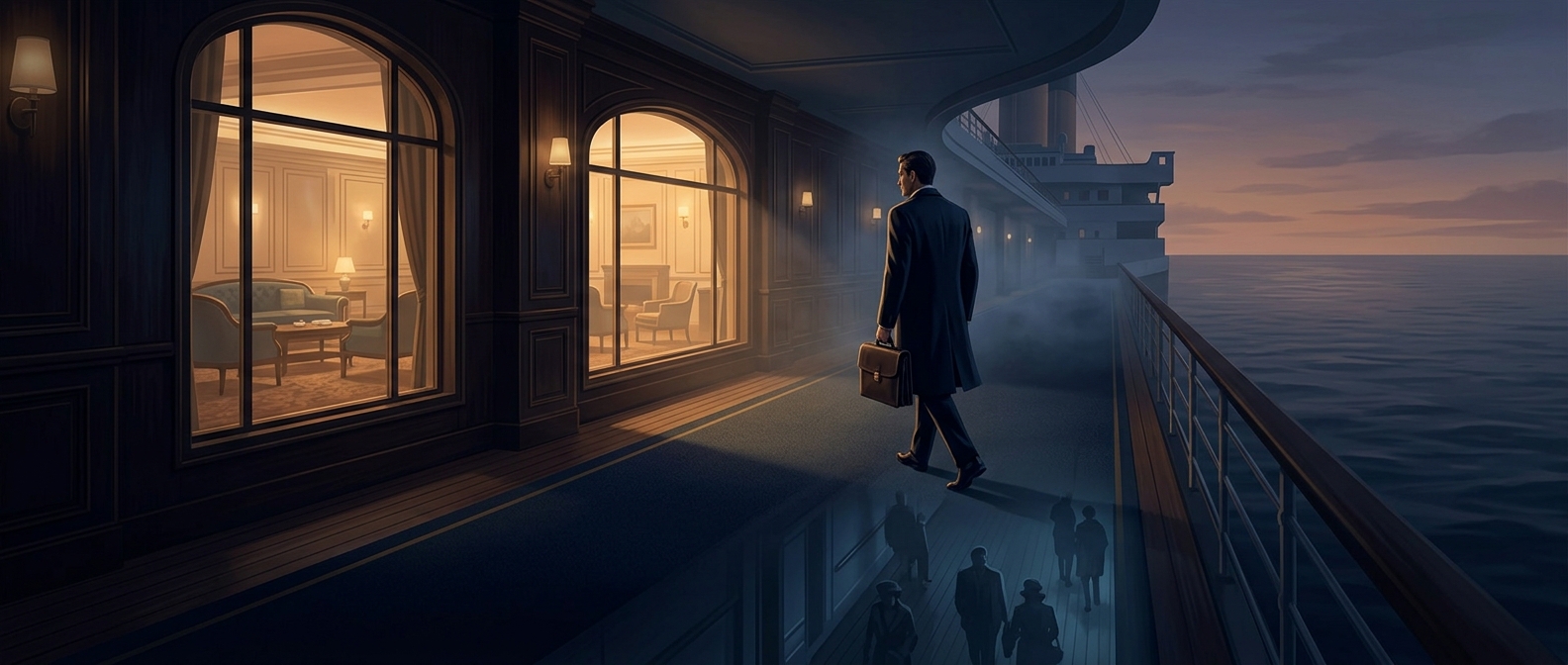
A cabin chosen for shade
The story behind “port out, starboard home” begins with a practical concern on a long sea voyage: sunlight could make a cabin uncomfortably hot. On a route where the sun fell more strongly on one side of the ship during the outward journey, passengers might prefer cabins on the opposite side for the return. The initials of those two sides—port going out, starboard coming home—supposedly gave rise to posh.
Port and starboard are the ship’s left and right sides, named from the perspective of someone facing the bow, or front. They stay the same as the ship turns; “port out” and “starboard home” describe which side faced a particular direction of travel, not fixed sides of the map.
A tidy story, not a settled origin
The explanation is memorable because it turns a small travel luxury into a neat acronym: a better-positioned cabin becomes a marker of wealth, and the initials become a word associated with elegance. But the nautical expansion is a popular origin story, not a confirmed account of how posh entered English. The word’s history is uncertain, so the appealing cabin tale is best treated as an explanation people repeat rather than a proven derivation.
Its staying power comes from how readily it connects comfort to status: on a long voyage, even the side of a ship could matter.