How rationing changed the meaning of a purchase
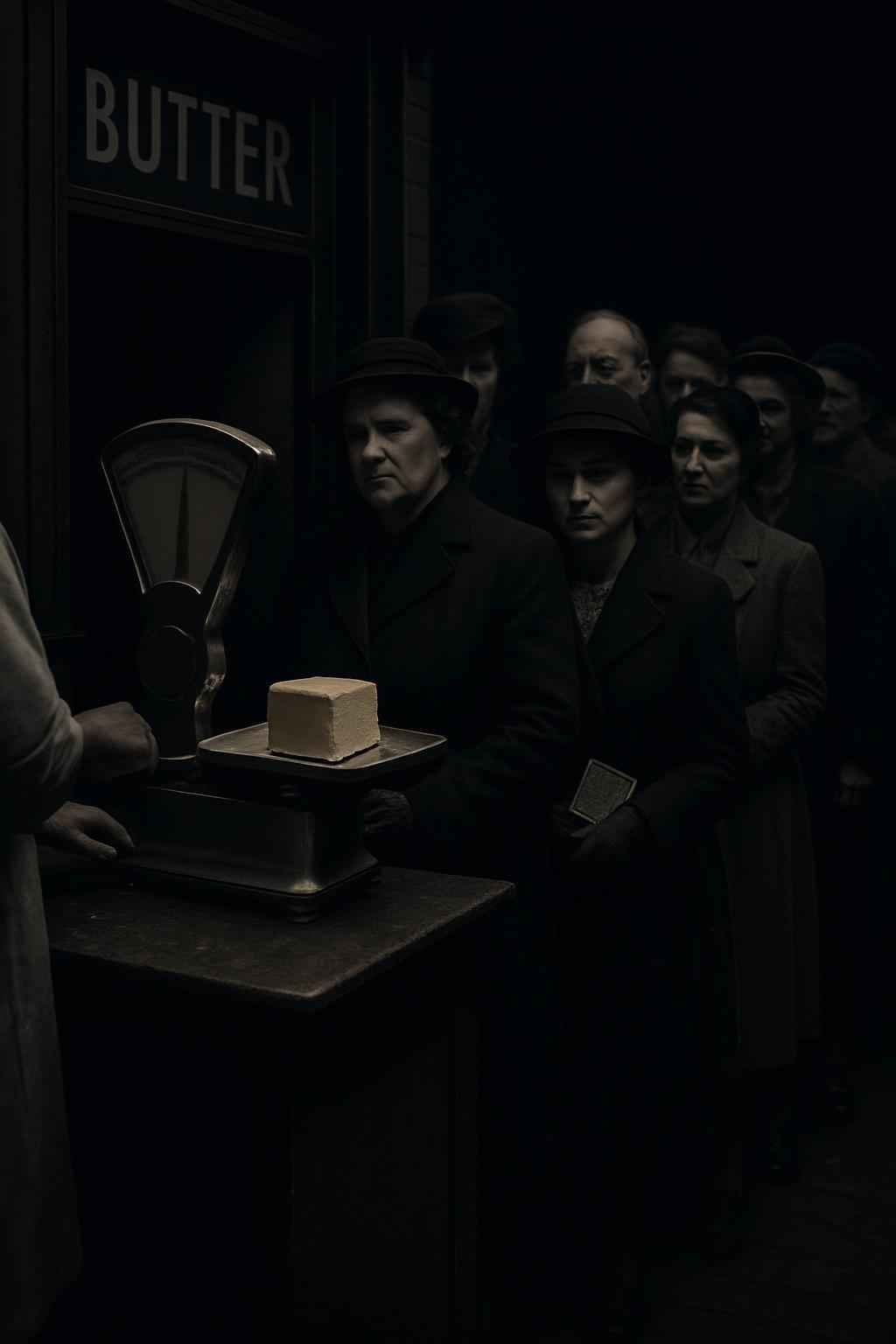
Britain depended heavily on food shipped from abroad, and wartime attacks on merchant vessels made those supplies harder to bring in. The government therefore had to manage not just how much food existed, but how it was distributed. A ration book tied a person’s access to scarce goods to an official allowance; money alone could not guarantee more butter at the shop.
That system made shopping a public encounter with scarcity. A long queue did not necessarily mean a shopkeeper had failed to order enough: deliveries were limited, and customers had to wait for their turn to buy their share. The ration book also put a visible boundary around consumption. People with different incomes faced restrictions on the same basic goods, which could make the system feel fairer than a market where wealth determined who got the most.
Why the sense of equality faded
Equal allowances did not erase differences in income, health, household needs, or access to other sources of food. Nor did the end of fighting immediately end shortages. Rationing continued into the postwar years, so the return of plentiful choice was gradual rather than a sudden switch.
As goods became easier to obtain, sellers had a different problem: persuading people to choose one product over another. Advertising and packaging could make a purchase signal taste, modernity, or social standing. Under rationing, the central question was often whether a household could obtain its share. In an expanding consumer market, it increasingly became what a person chose—and what that choice seemed to say about them.