The Boat Was Part of the Opponent
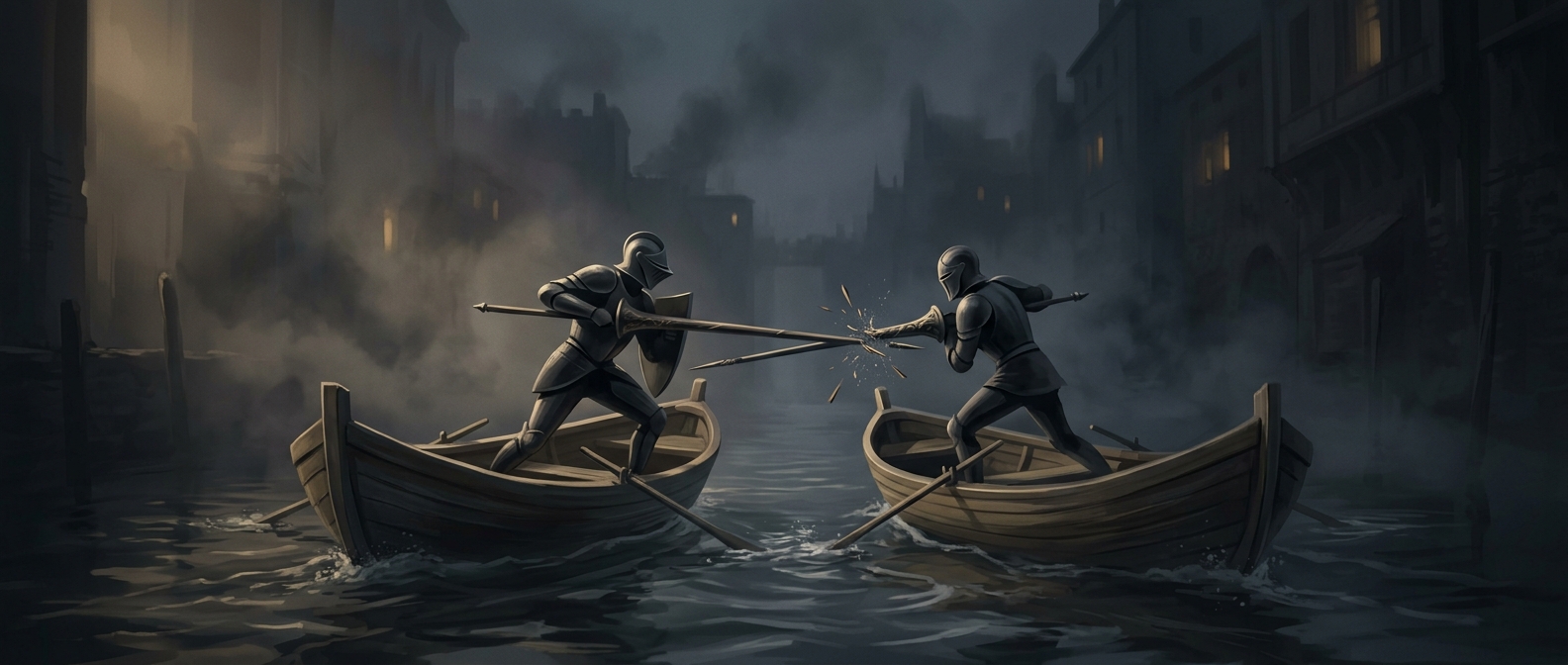
In southern France’s water jousting, the contest was not simply a test of who could thrust harder. Each competitor had to keep a footing on a platform attached to a rowboat while bracing a long pole against an oncoming rival. A shove that might be manageable on solid ground could become decisive when the platform shifted beneath the jouster.
That made timing and balance inseparable from force. The attacker had to land a blow firmly enough to unseat the other person without losing control of their own stance. The defender, meanwhile, had to absorb the impact while staying upright on a moving craft. The boats turned a direct clash into a problem of leverage: every lunge could unsettle both people, not just the target.
A Fall Was the Score
The water supplied a clear consequence. Rather than judging a touch or a point, spectators could see whether a competitor remained on the platform or went overboard. The aim was to knock the opponent into the river, so a successful move had to combine a well-placed strike with enough balance to survive the counterforce.
The setting also shaped the spectacle. Rowboats brought the rivals together, while the narrow platforms left little room to retreat or recover. A jouster could be forced to defend against the pole and the motion of the boat at once. The river was not just the venue: it made balance a central part of the contest and made defeat visible in an instant.