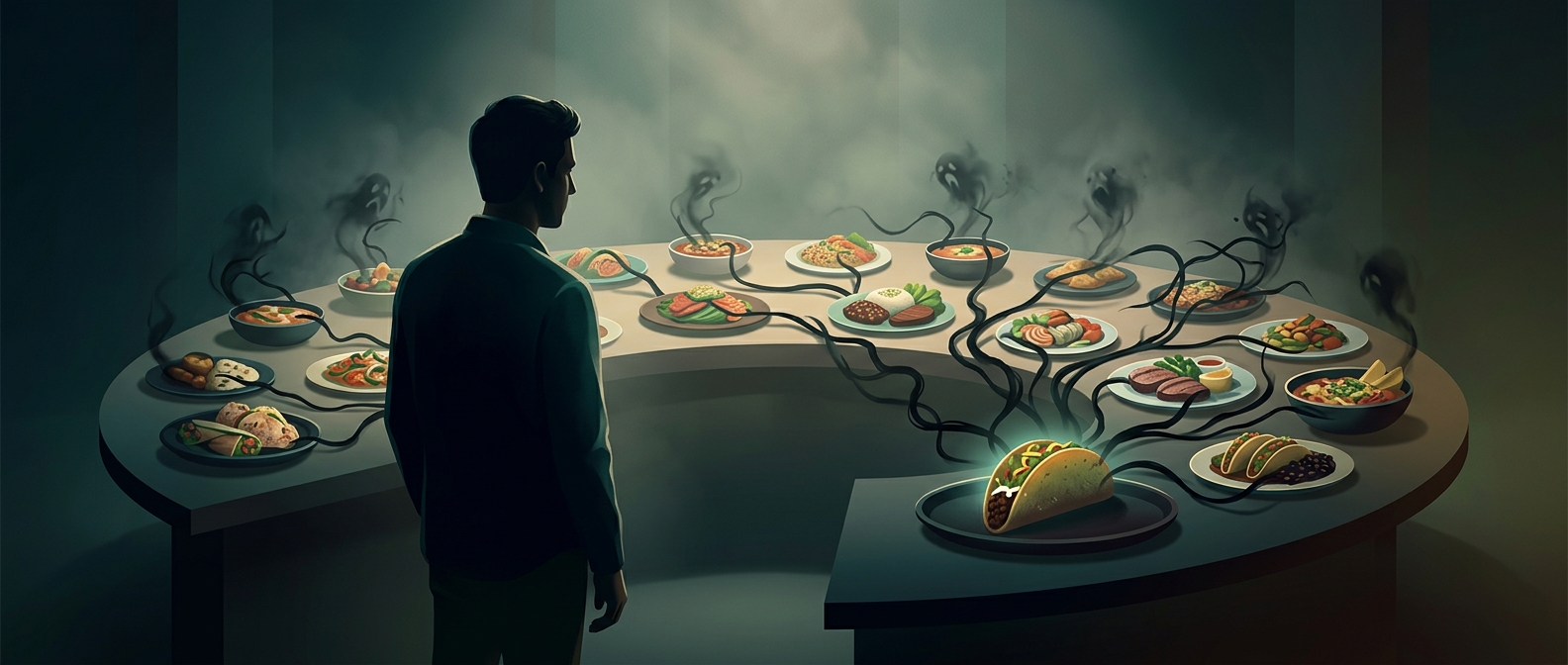
Why burnout can turn every need up
Burnout is not simply being tired after a demanding day. It can develop when prolonged work stress outlasts a person’s chances to recover, leaving ordinary tasks feeling unusually costly. When effort has repeatedly brought little rest, control, or sense of progress, the brain may begin treating even small demands as expenses it cannot afford.
That can make the desire for food, sleep, silence, or time alone feel urgent. These needs are not interchangeable, but they can all promise relief from the same felt problem: too much demand and too little capacity.
The body’s signals are real, but not always specific
Stress and exhaustion affect attention, mood, and the ability to regulate feelings. When someone is depleted, discomfort may be harder to interpret precisely. A person might notice a broad sense of “I need something now” before they can tell whether they need a meal, a break, reassurance, or a change in workload.
Food can be especially appealing because it is immediate and concrete. Eating may ease genuine hunger, and it can also offer comfort or a brief pause. That does not mean burnout is secretly starvation, or that every craving has one psychological cause. It means a strained person may experience several kinds of need at once, with fewer resources for sorting them out.
Why pushing through can deepen the loop
If someone answers every sign of depletion by demanding more effort, the original problem remains: recovery is not keeping pace with demands. The useful question is not whether a need is “valid,” but what kind of replenishment would actually help. A meal can address hunger; rest may require sleep or protected downtime; persistent overload may require changing the demands themselves.
The striking part is how ordinary needs can become messages about a larger shortage. When everything feels like fuel, the missing resource may not be food alone—it may be the recovery that makes everyday effort manageable again.