How one bout of nausea can turn a food into a warning signal
A meal does not have to be poisonous for the body to connect it with feeling sick. If nausea follows a distinctive taste or smell, the brain can learn to treat that sensory cue as a predictor of danger. Psychologists call this conditioned taste aversion: a learned dislike in which a food’s flavor becomes tied to an unpleasant bodily reaction.
The connection can form after just one experience, and the sickness may arrive well after the meal. That is unusual compared with many kinds of learning, which tend to depend on events occurring close together. For food, however, a delay makes practical sense: something eaten hours earlier could be responsible for a later stomach upset. The association does not require the eater to identify the true cause; it can form simply because the food was present before the nausea.
Why the reaction can arrive before the explanation
Later, encountering the food’s taste or smell can trigger disgust or queasiness quickly. That response is not a considered judgment about whether the food is safe. It is a learned alarm, so it may surface before someone recalls the original illness—or before they can reason that another cause, such as a stomach bug, might have made them sick.
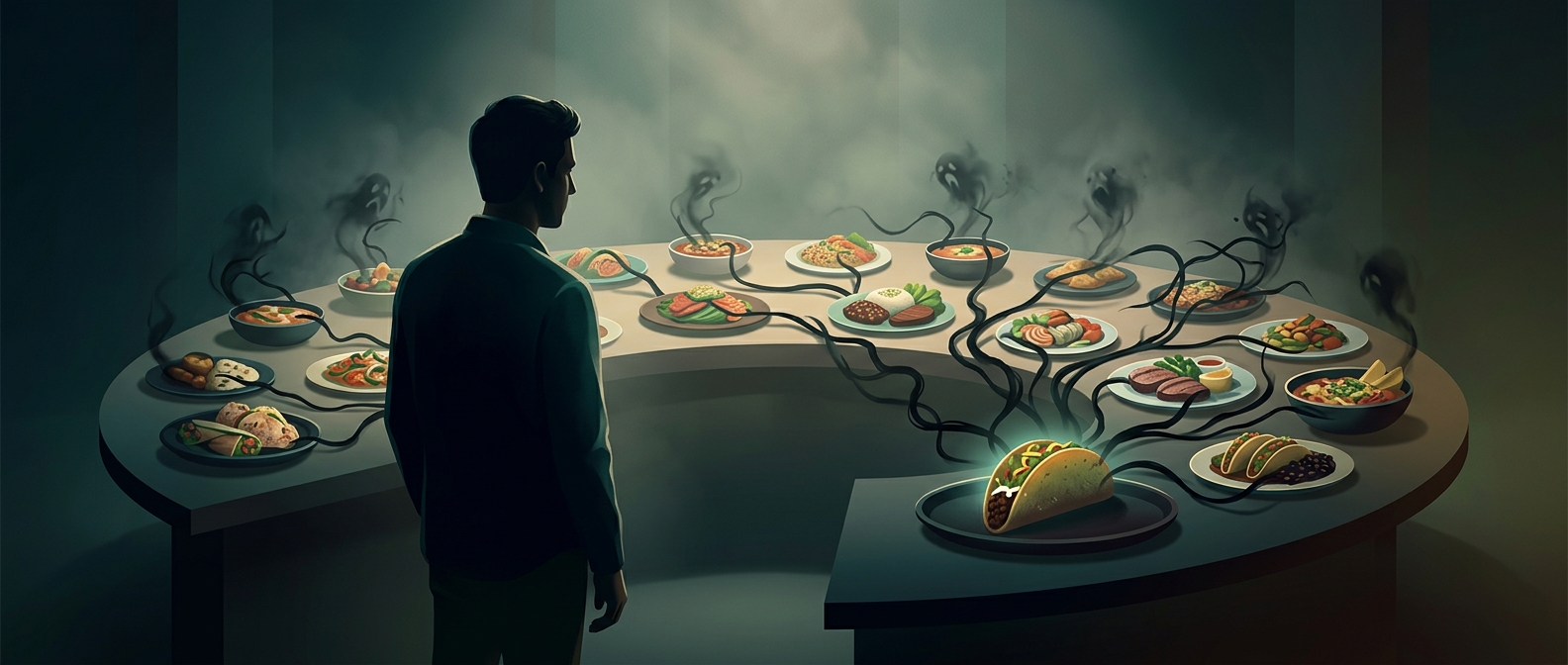
The reaction can also spread beyond the exact dish. Foods with similar flavors, smells, or ingredients may become suspect, making it feel as though an entire category has been ruled out. How far the aversion spreads varies; the brain is responding to cues it has linked with the bad experience, not applying a careful ingredient test.
A protective shortcut with a stubborn aftertaste
Avoiding a suspected food can be protective when it really did cause illness. But the same quick-learning system can preserve a false association, and knowing that intellectually does not necessarily switch off the body’s disgust response. The memorable twist is that one miserable meal can leave its mark not only on what a person thinks of the food, but on how its smell feels the next time it appears.