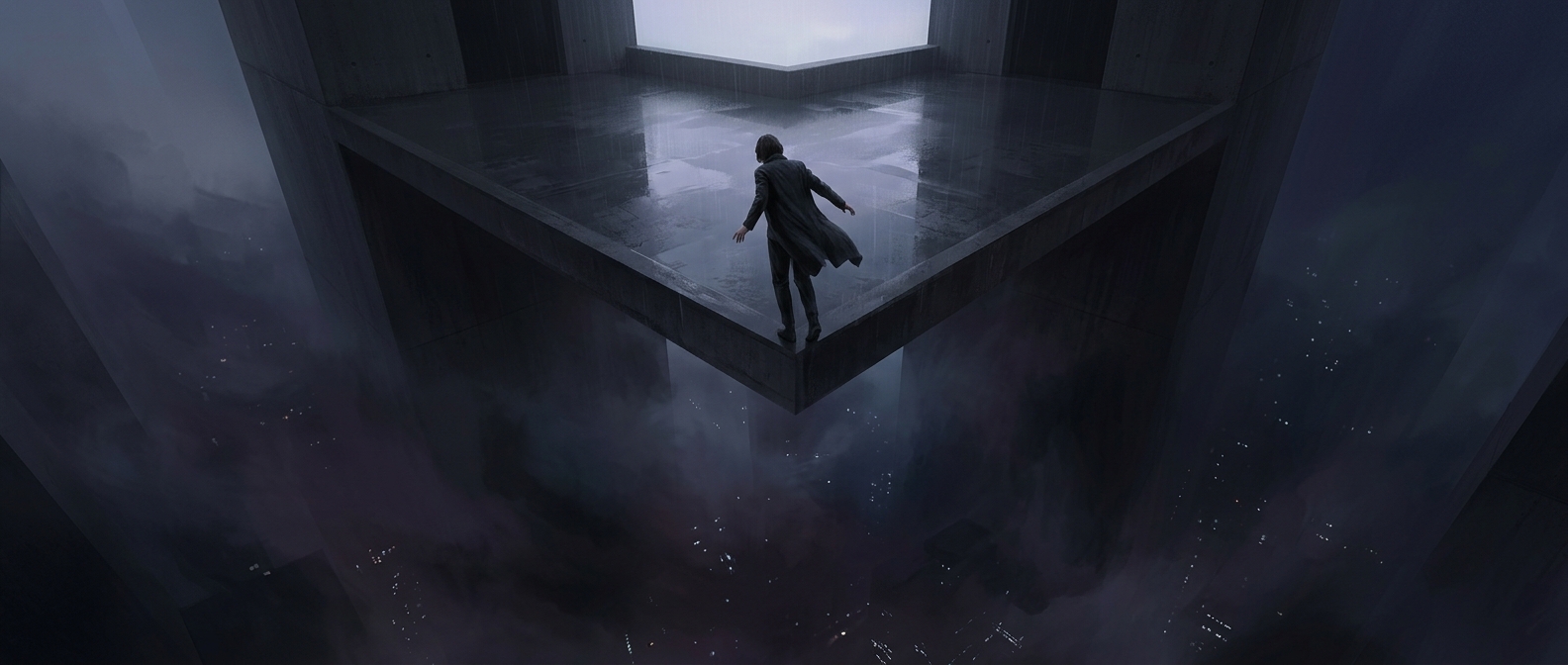
Why a frightening thought can appear at a safe moment
A sudden image of stepping off a ledge can feel like a desire, but an image is not the same as an intention. Psychologists often call this the high-place phenomenon: a brief, unwanted thought or impulse that some people notice near a drop, even when they have no wish to hurt themselves.
The mind’s safety check can feel like a warning
Near an edge, the brain has to keep track of a simple but consequential possibility: one misstep could mean a fall. It can rapidly register the danger and prompt a protective response—step back, hold the railing, watch your footing. For some people, that check arrives with a vivid mental image of the very action they want to avoid.
The thought may then seem to say, “What if I jumped?” Yet its appearance can reflect attention to risk, not a hidden plan. In effect, the mind briefly pictures a hazard while trying to prevent it. That mismatch—an alarming image paired with a protective response—is what makes the experience so unsettling.
A thought is not a command
Unwanted thoughts can feel unusually important because they are vivid and emotionally charged. But having one does not, by itself, reveal what someone wants or predict what they will do. The more useful clue is the surrounding experience: a fleeting image that brings alarm and a wish to move away is different from a sustained desire or intention to act.
That distinction explains the strange twist: sometimes the mind’s safety system makes danger feel mentally close precisely because it is trying to keep the body away from it.