The Inca collected work, not coins
The Inca state did not rely on coin payments to gather most of its revenue. Its basic tax was labor owed by households. In a system known as mit’a—a rotating service obligation—communities supplied workers for tasks such as farming state lands, building roads, weaving cloth, or serving in the army.
Local leaders helped organize who worked and when. That made the obligation a practical resource: the state could direct labor toward a harvest, a construction project, or military service without collecting money and then hiring workers. It also meant a household’s tax burden was paid in time and effort, not a fixed sum of cash.
Labor moved food as well as stone
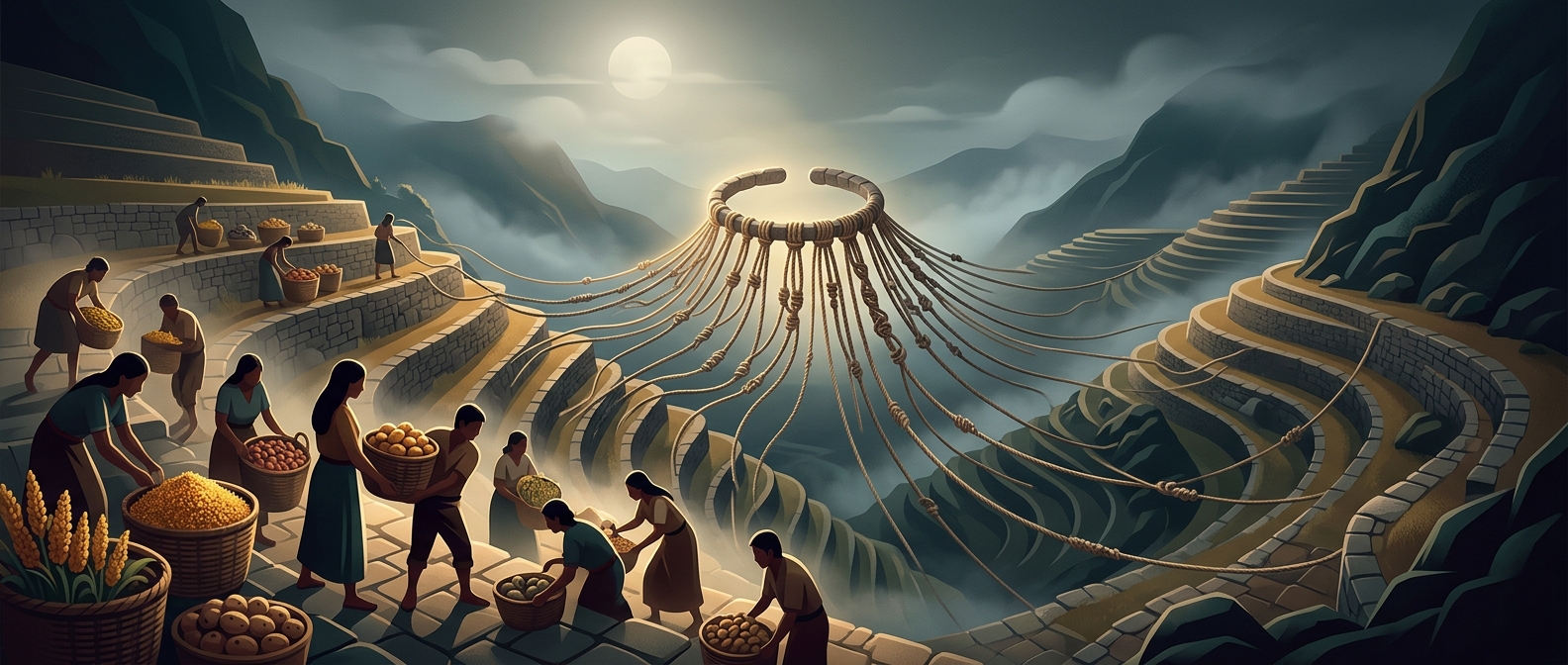
The system depended on organized communities and state storehouses. Workers cultivating state fields produced food that could be stored; other labor built the roads and facilities that helped move supplies across the empire’s difficult terrain. Storehouses held provisions for officials, armies, workers on state projects, and communities facing shortages.
This was not simply unpaid work followed by a handout. The state also had to feed people while they labored and coordinate supplies across long distances. In return, communities gained access to stored provisions and support, though the arrangement was unequal: the state could command substantial labor, and households had to meet their obligations.
A tax system built around coordination
Without a cash economy to do the accounting, power depended on knowing which communities could provide people, goods, and work—and on getting those resources where they were needed. The Inca’s roads, administrative structure, and storehouses made that system possible at scale.
The striking consequence is that an empire could finance major projects without collecting coins: its wealth was measured in organized labor, harvested food, woven cloth, and the ability to move them.