How Roman Windows Turned Light Into a Building Material
A Roman glass window was not a modern sheet of perfectly clear glass. Early panes were often thick, uneven, and cloudy: they admitted daylight while blurring what lay beyond. That distinction mattered. A room could be brighter and less exposed to wind and rain without giving passersby a sharp view inside—or giving its occupants a perfectly sharp view out.
Small panes, labor-intensive production
Roman glassmakers could form window glass by pouring or spreading molten glass onto a flat surface, then cooling it into a pane. Because the result was difficult to make evenly and large sheets were impractical, windows were assembled from relatively small pieces fitted into frames. Producing, transporting, and installing them cost more than leaving an opening uncovered, so glazed windows were most feasible for wealthy households and substantial buildings.
The panes did not make rooms uniformly bright. Their thickness and surface could soften the light, while the frame divided the view into sections. Still, even a modest window could make an interior usable in daylight while shielding it from rain and some drafts.
A boundary with two directions
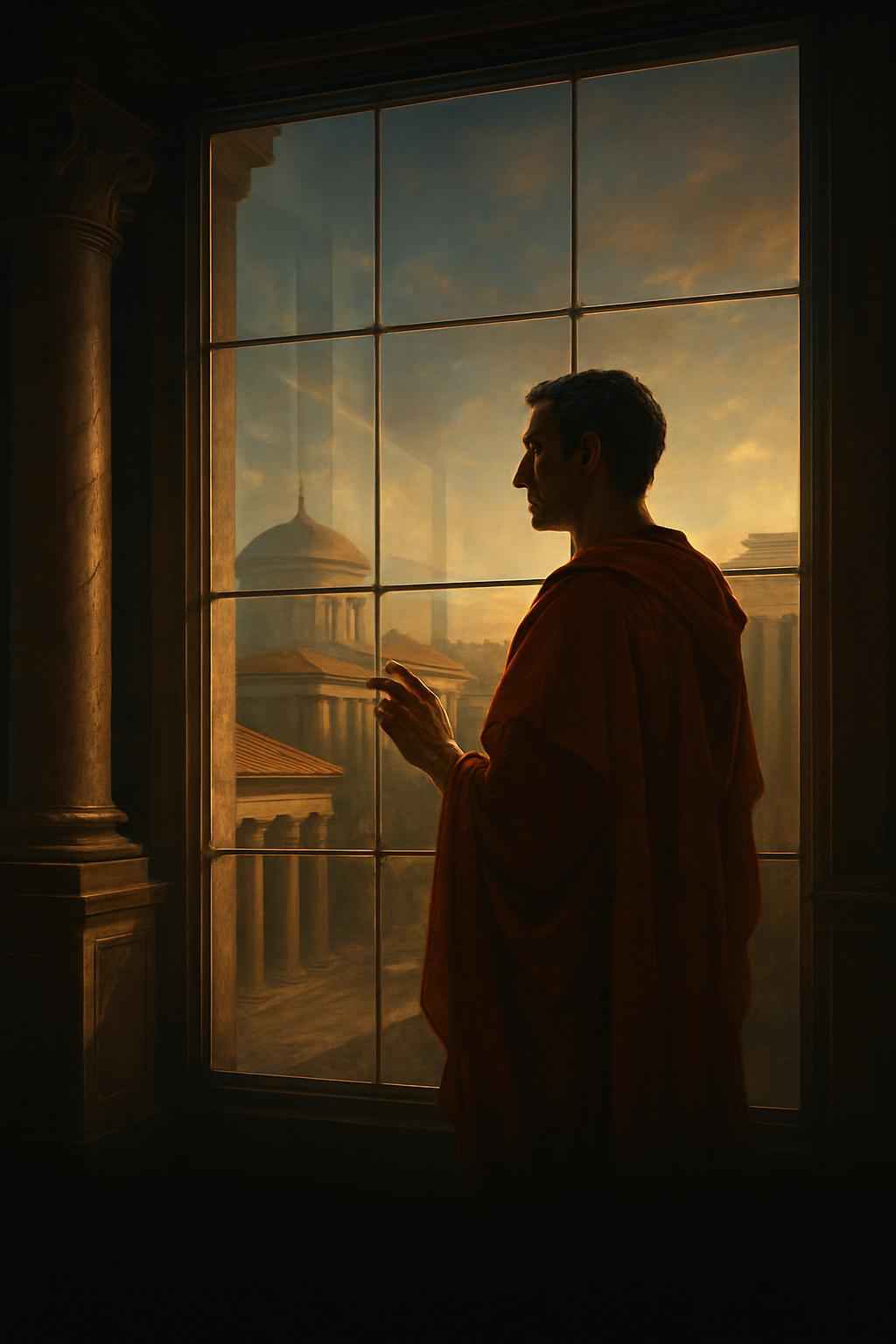
Glass changed the window from a simple opening into a barrier that people could partly see through. From indoors, an occupant might notice movement outside without standing in the opening; from the street, the pane could obscure details inside. How much either side could see depended on the glass, the light, and the angle—not on a one-way effect.
That combination made glazing valuable for more than comfort. It let a household control exposure: bringing light into a room while keeping the weather, and some unwanted attention, at a distance. The result was not a fully transparent modern façade, but a small and costly shift in how Romans could arrange the boundary between private life and the street.