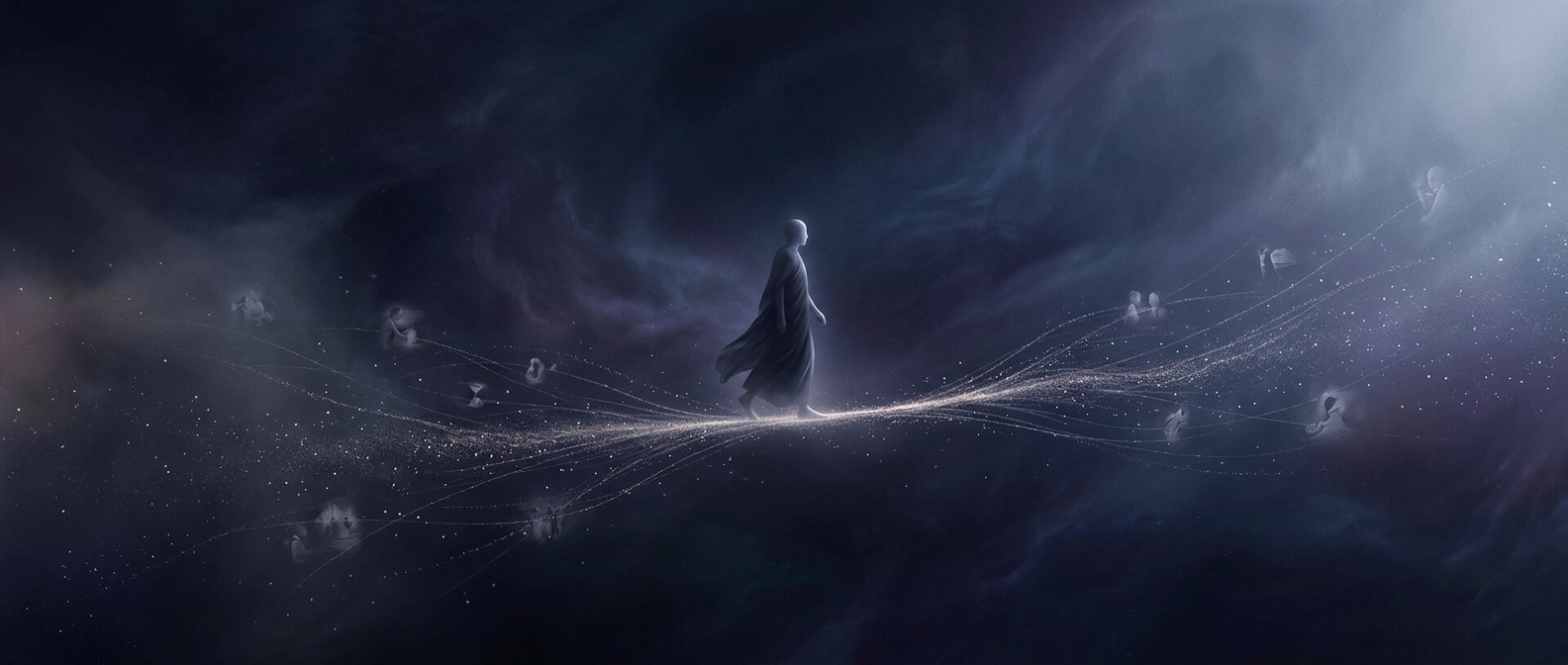
Consciousness at the building blocks
Panpsychism is the view that consciousness is a basic feature of the physical world, rather than something that appears only when matter becomes highly organized. In its more modest forms, it proposes that elementary particles have extremely simple forms of experience—not thoughts, plans, or awareness like ours, but something far more minimal.
That distinction matters: having experience is not the same as thinking. Cognition involves processing information in ways that support abilities such as learning or making decisions. A coffee mug, even on a panpsychist account, is not thereby a little mind that recognizes its owner.
The puzzle it tries to solve
The idea addresses a stubborn question: how could physical activity in a brain produce felt experience—the redness of red or the sting of pain? Explaining how neurons signal one another is not obviously the same as explaining why those signals feel like anything from the inside.
Panpsychism offers a different starting point. If simple forms of experience already belong to matter, then the task is to explain how they combine into the unified, rich consciousness of a person. This is known as the combination problem. A brain contains vast numbers of interacting parts, but it is not clear how many tiny experiences could become one person’s point of view.
A proposal with a difficult next step
The view does not claim that everyday objects think or feel as humans do. It shifts the mystery: instead of asking how experience emerges from wholly non-experiential matter, it asks how basic experience could be organized into the complex consciousness we know.
That change in question is why the coffee mug is a useful image—and a misleading one. The proposal reaches down to matter’s most basic ingredients; it does not turn the assembled object into a miniature thinker.