How Ruysch made anatomy hold its shape
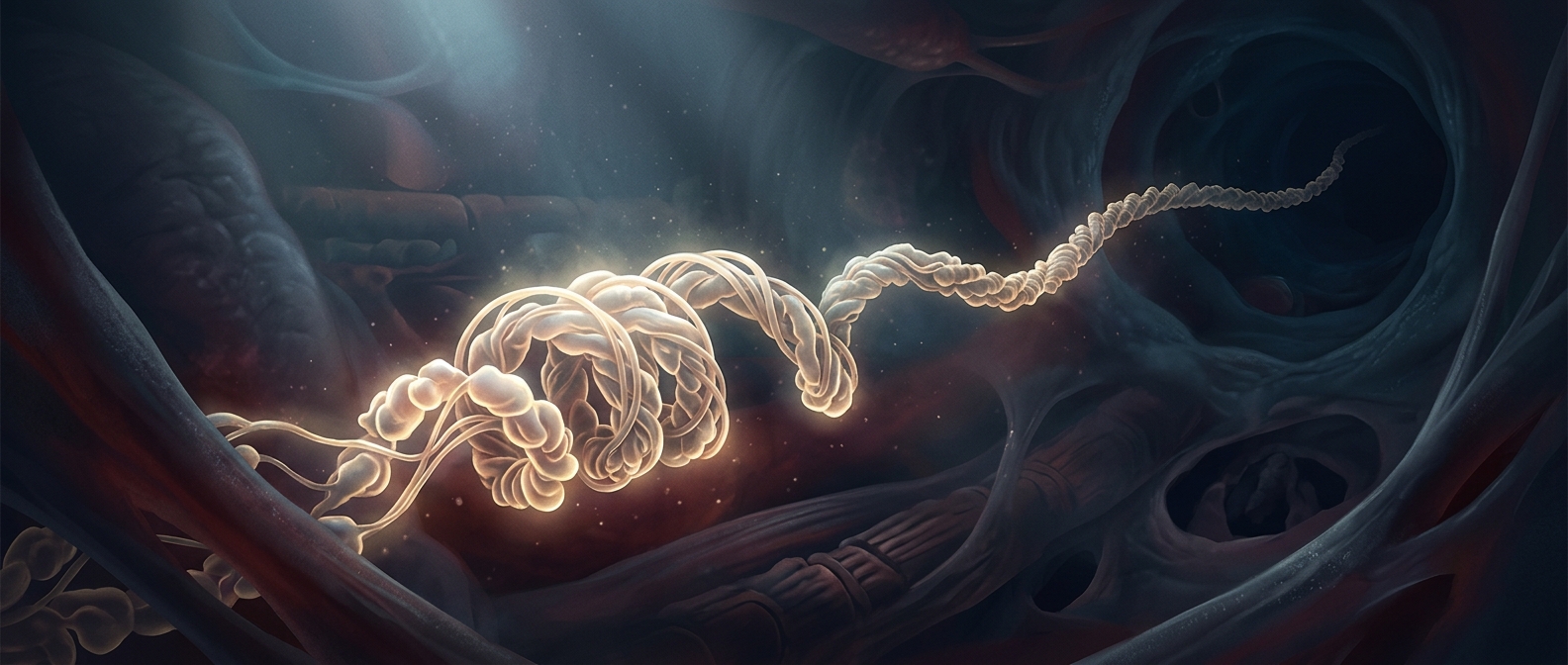
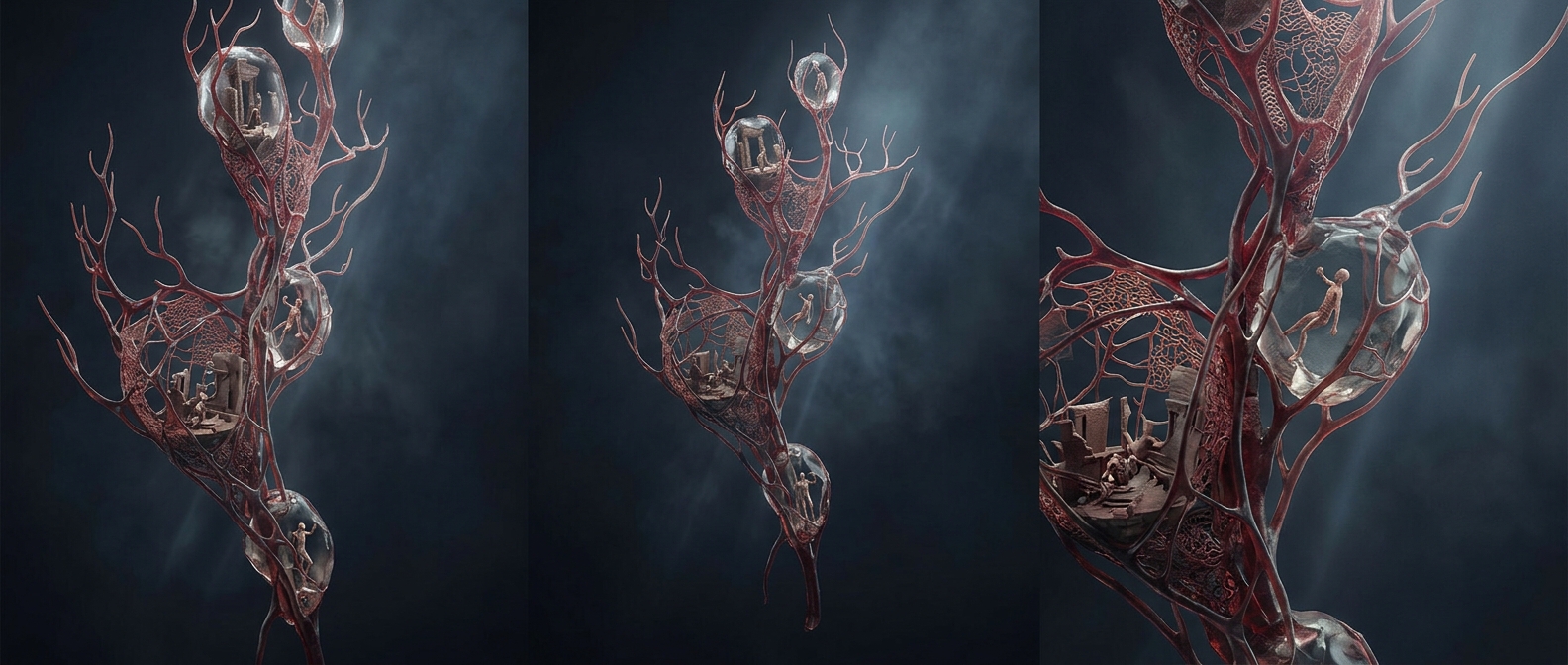
A blood vessel is easiest to follow when it contains something that makes its route visible. Ruysch’s red wax did more than color the vessels: injected while warm, it flowed through branching channels and then solidified. The hardened wax acted like a cast of the vessel network, preserving its fine structure so it could be seen after the body’s own tissues had lost their shape.
That mattered because delicate anatomy is difficult to display. Empty vessels can collapse, and a specimen stored in a jar offers a very different view from one whose branching structure remains distinct. Ruysch could use the wax-filled vessels to make small organs and other specimens legible at close range.
From specimen to staged scene
Ruysch did not treat preservation as the end of the work. He arranged anatomical materials into carefully composed displays, using small objects and gestures to guide the viewer’s eye. A tiny handkerchief placed beside a specimen, for example, could make a body part seem to participate in a human scene rather than sit passively behind glass.
The effect joined two ways of looking: the close inspection of anatomy and the emotional force of miniature theater. The wax made the hidden branching structure visible; the arrangement made viewers feel that they were encountering more than a diagram. That combination is what turned preserved parts into dioramas—and made an anatomical display unsettling as well as instructive.