A drone’s final flight
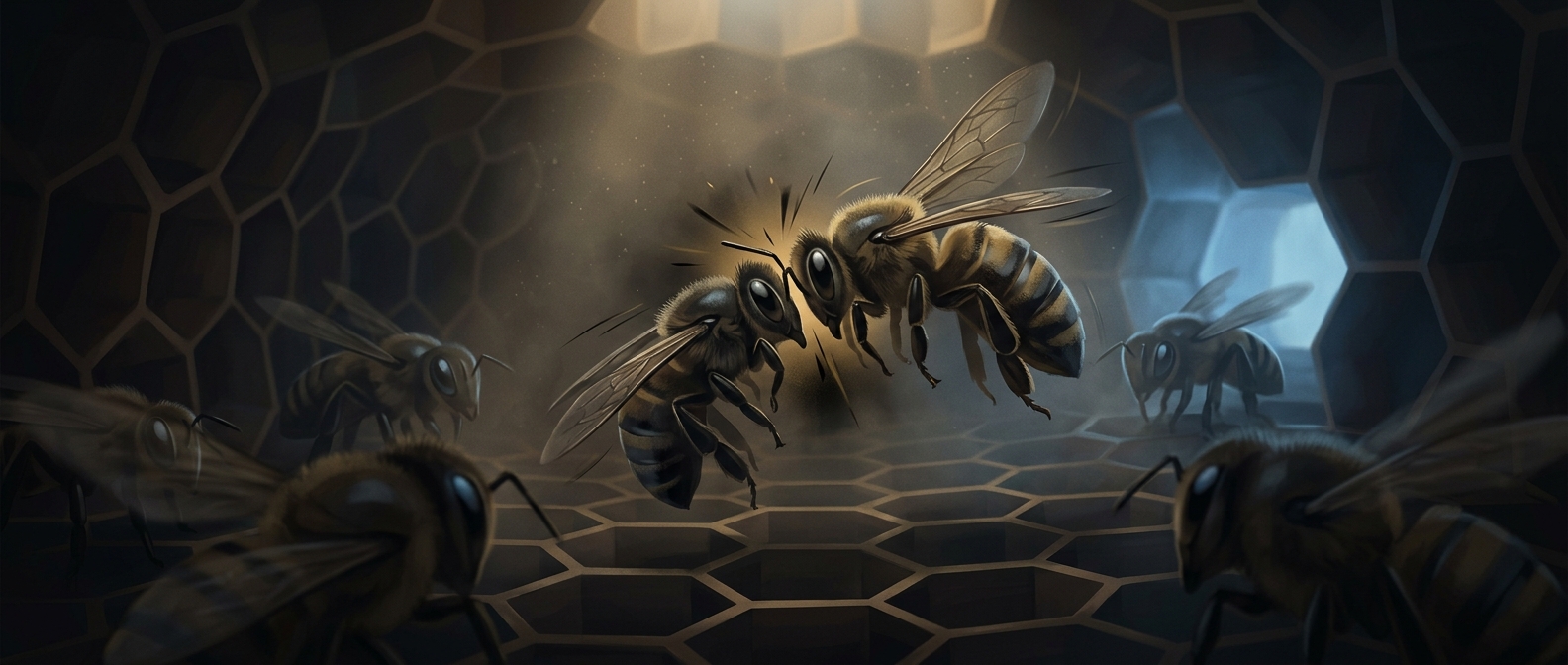
A honeybee queen mates during a flight, meeting drones—male bees—from her own and other colonies in the air. When a drone succeeds, he delivers sperm in a forceful ejaculation. His reproductive organ, called an endophallus, everts (turns inside out) and becomes lodged in the queen’s reproductive tract. As the bees separate, the organ tears away from his body, causing fatal injury. He falls; the queen continues flying.
The event can look like an explosion, but it is the sudden release and rupture of the mating apparatus, not the drone’s whole body bursting apart. A mating sign may remain on the queen briefly and can be removed during a later mating.
How a brief encounter supplies future eggs
The queen typically mates with multiple drones on her mating flights. She stores their sperm in a small internal organ called the spermatheca, rather than using it all at once. Over much of her life, she can release a small amount to fertilize each egg as it is laid. Fertilized eggs generally develop into female workers or queens; unfertilized eggs develop into males.
This storage system lets a queen keep laying fertilized eggs long after her flights are over. The drone’s death is therefore tied to a reproductive strategy built around one short, dangerous encounter: he contributes sperm that can help produce workers and future queens over an extended period, while the queen carries that stored supply back to the colony.