Why samarium-cobalt resists being demagnetized
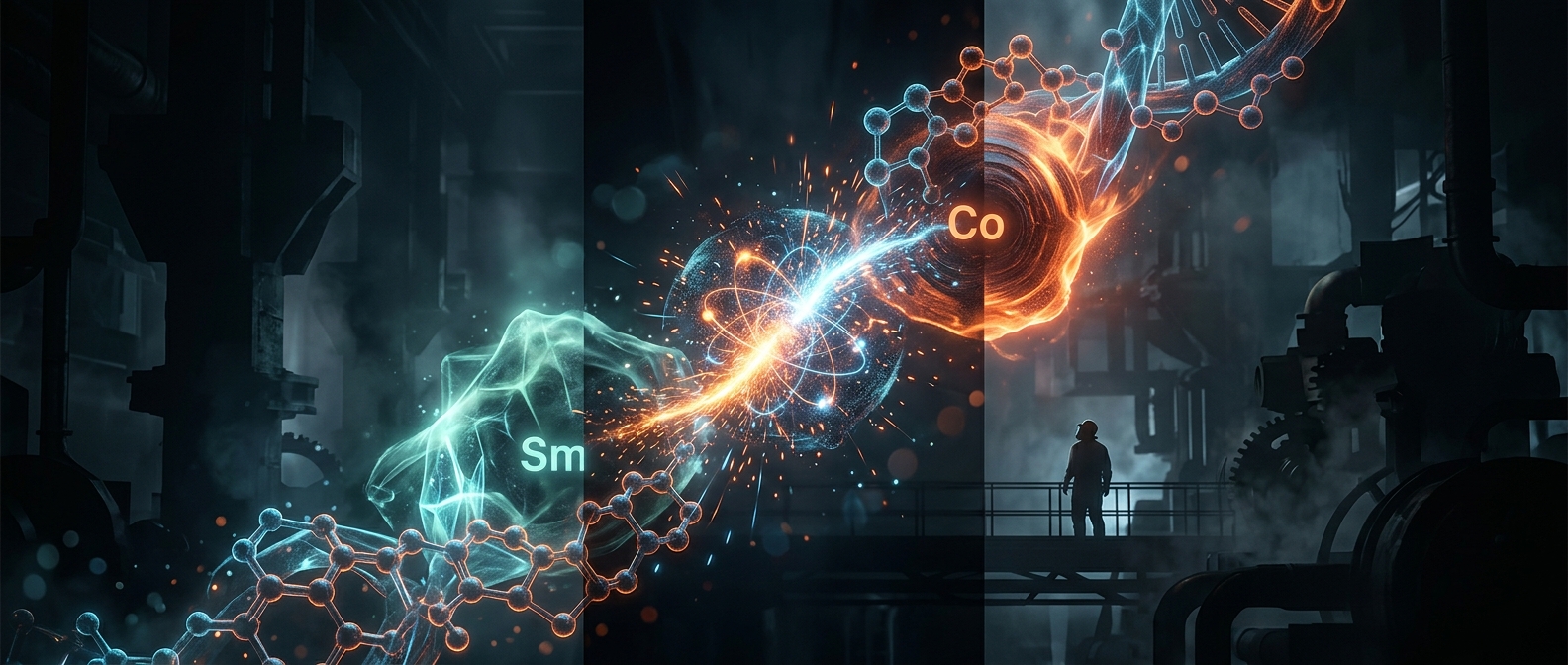
Samarium-cobalt is an intermetallic compound: samarium and cobalt atoms occupy an ordered crystal rather than forming a loose mixture. Their different roles help make the material magnetic. Cobalt contributes strongly magnetic electrons, while samarium’s electrons help create a crystal with a pronounced preferred direction for magnetization.
That preference is called magnetic anisotropy. In samarium-cobalt, interactions between the electrons’ magnetic properties and the crystal lattice make it energetically difficult to turn the magnetization away from its favored direction. The lattice is not merely holding the atoms in place; it helps set the direction the magnet wants to keep.
A barrier against heat and opposing fields
A permanent magnet contains many tiny regions whose magnetic directions are aligned. Heat jostles atoms and can make those directions easier to disturb; an opposing magnetic field can also try to flip them. In samarium-cobalt, the strong directional preference creates a high barrier to those changes. The material therefore resists losing its magnetization, including when it is hot compared with many other permanent-magnet materials.
This resistance matters wherever a magnet must keep doing its job near heat or under demanding operating conditions. Samarium-cobalt magnets are used in applications such as motors and aerospace equipment, where a weaker magnet could lose performance as temperatures rise. Their advantage comes from a tradeoff: cobalt and samarium make them specialized materials, but the carefully ordered crystal gives them a stubbornness that ordinary magnets do not automatically have.