How a Few Hecklers Could Tilt an Opening Night
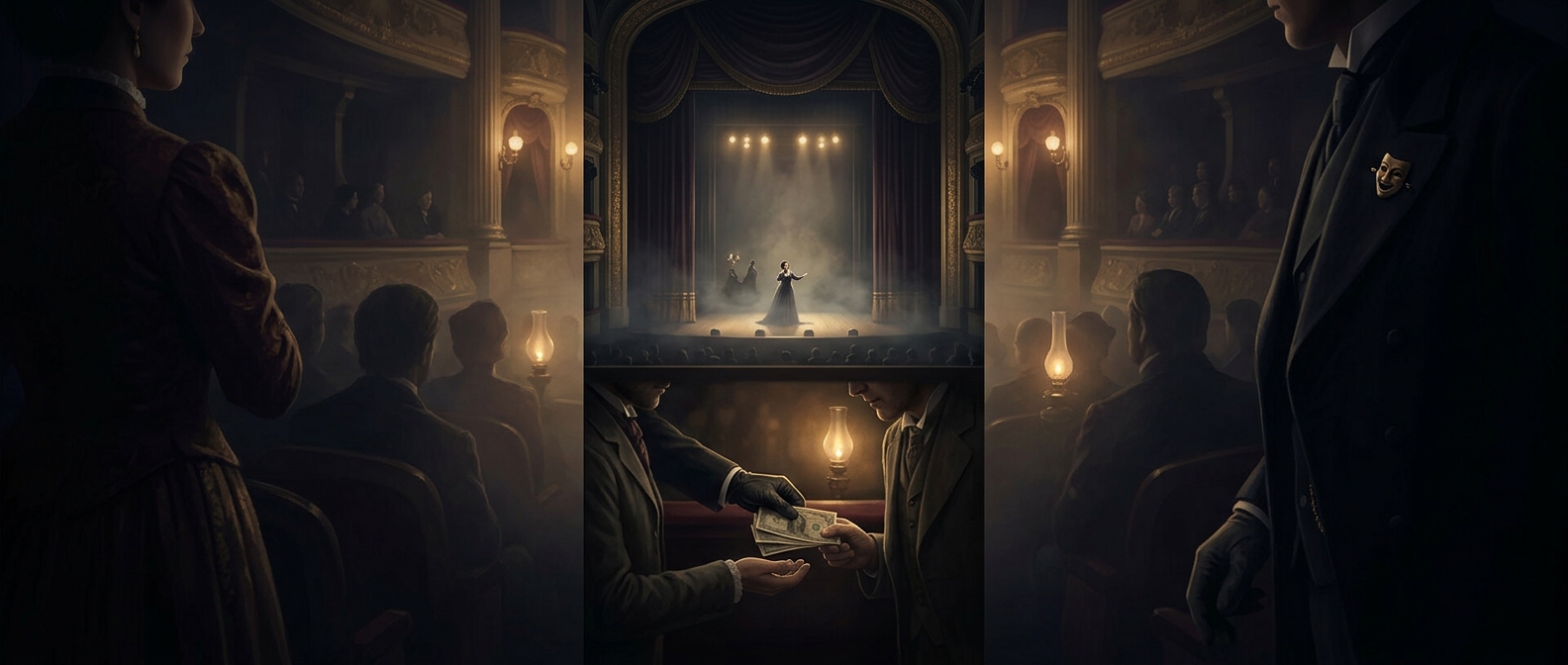
An opening-night audience did more than watch a play: it supplied the first public verdict. Its reaction could shape the mood in the room and influence what people heard afterward about a new production. A paid heckler exploited that vulnerability by making a supposedly spontaneous response look like the audience’s own judgment.
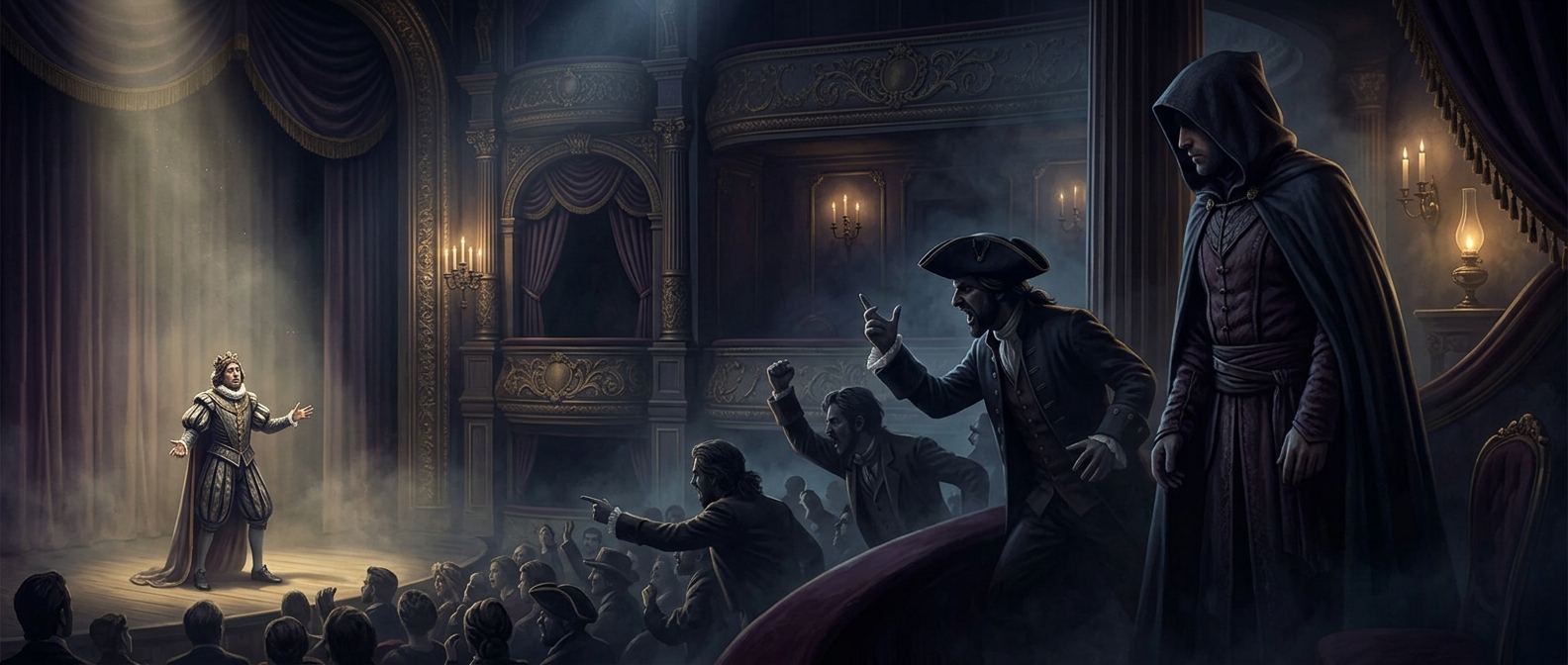
The tactic depended on timing. A groan, jeer, or piece of tossed rubbish could interrupt a scene just as the performers were trying to establish its rhythm. Once attention shifted from the stage to the disturbance, nearby spectators had to decide whether to ignore it, join in, or defend the show. The interruption itself became part of the performance.
Why the Front Row Mattered
People close to the stage were hard to miss. Their reactions were visible to performers and fellow patrons, and their noise could carry through the theater. A small number of planted voices could therefore seem more influential than their numbers warranted—especially if an uneasy audience was already waiting for cues about whether a play was succeeding.
That did not mean hecklers could guarantee a production’s failure. A strong performance might win the room back, and a hostile reaction could be recognized as suspicious. But opening night was unusually exposed: before a show had built a reputation, the first loud response could help set the terms on which everyone else judged it.
The ambush worked by disguising one person’s paid reaction as a public consensus. In a theater, where hundreds of people hear and watch one another at once, that disguise could briefly matter as much as the play itself.