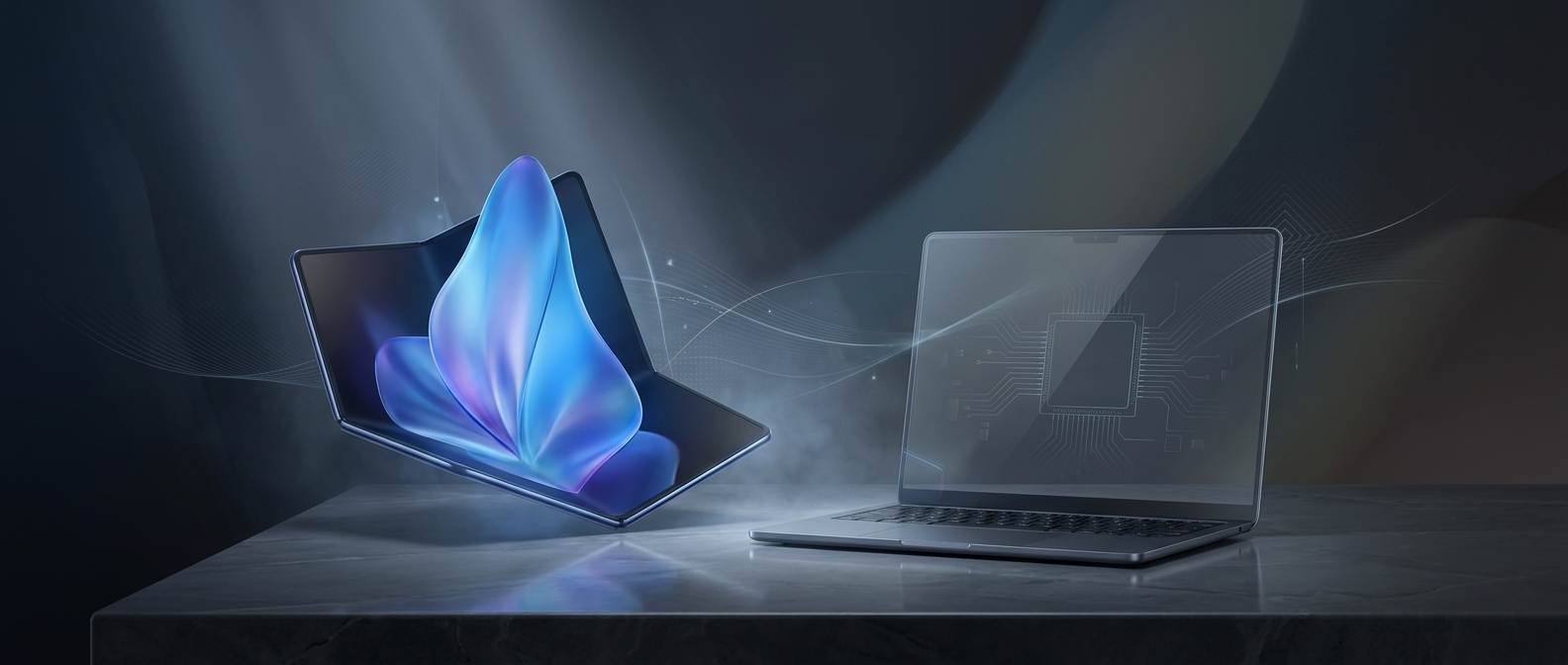
A screen can be a material, not just a surface
A conventional laptop screen is a rigid panel held open like a book. Newer concepts challenge that shape in two different ways: some explore displays that let light pass through, while others use flexible panels that fold. The important change is not simply a different silhouette. It asks what a screen must do when it is no longer a solid, fixed rectangle.
Transparency trades concealment for visibility
A transparent display places image-making elements in a surface that also allows a view through it. That can make a screen seem to float over whatever sits behind it, but it creates a practical balancing act: the image must be bright and clear enough to read without entirely blocking the background. And because the display does not hide what is behind it, the same openness that looks striking in a demonstration can be awkward for private work or a cluttered desk.
Transparency therefore changes how a device might be used, not just how it looks. It is most compelling when the surrounding view contributes useful information or atmosphere; it is less useful when the screen needs to act as an opaque canvas.
Folding makes the whole device an engineering problem
A foldable display must bend repeatedly without the image-producing layers separating or failing. The hinge has to guide that bend, while the screen’s surface and supporting layers must tolerate motion that ordinary rigid panels avoid. Even a small crease or unevenness can become noticeable because it crosses the area where text and images appear.
That is why a foldable laptop is more than a familiar computer with a flexible screen substituted in. Its shape can change how much display space is available and how the device is positioned, but the hinge, panel, and software all have to work together. These designs make the screen itself part of the computer’s structure—and turn the old question of how large a laptop should be into a question of what shape it can take.