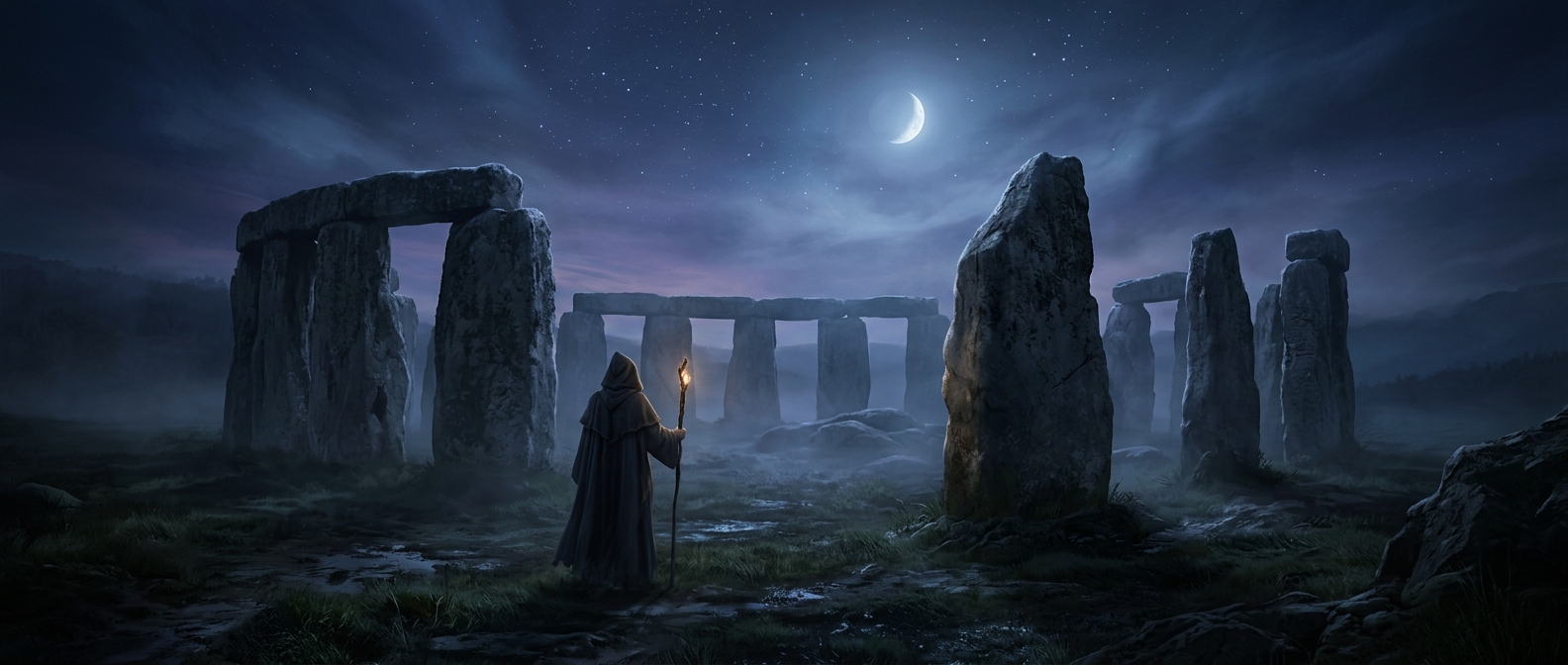
Why Stone Circles Keep Their Secrets
A stone circle does not come with a label. Its builders left no surviving written explanation, so archaeologists have to reconstruct its purpose from the stones themselves: their arrangement, traces of activity nearby, and how the site relates to the surrounding landscape. Those clues can show how a place was built and used, but they rarely reveal exactly what its makers believed.
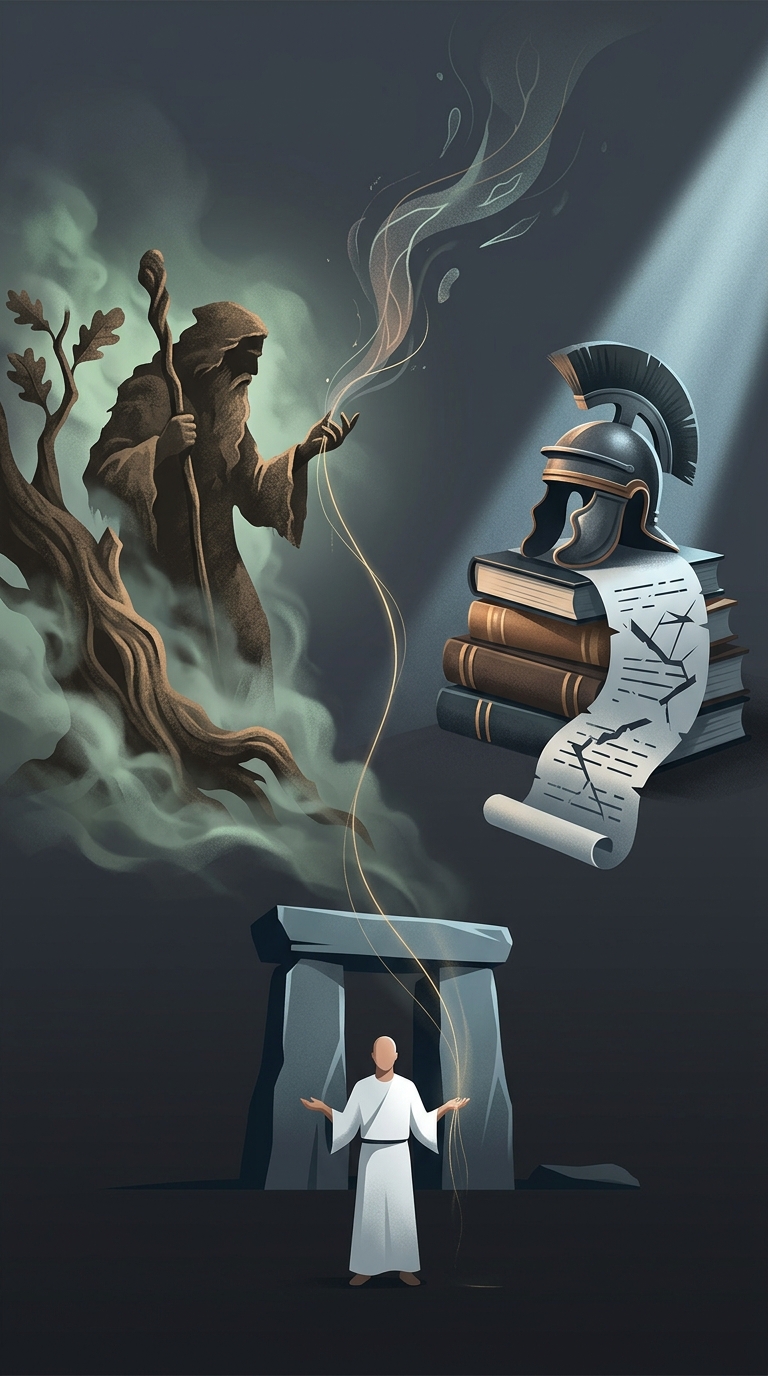
Oral tradition can preserve knowledge across generations, yet it leaves a different kind of record from writing. Stories and practices change as they are retold, and they are difficult to recover centuries later unless they are recorded. That makes it impossible to treat a later tradition as a direct transcript of what the original builders intended.
The Druid Connection Is Later
There is an important wrinkle in the familiar story: Britain’s best-known stone circles were built thousands of years before the Druids described in ancient accounts. The Druids may have used or interpreted ancient monuments in their own time, but there is no direct evidence that they built those circles or left instructions for them.
Archaeology can still narrow the possibilities. A circle’s position, construction, and associated finds may point to gatherings, ceremonies, or attention to the changing seasons. But a practical clue is not the same as a complete explanation of its meaning. The stones endure; the spoken words and customs that once made sense of them do not. That gap is why a circle can be studied in detail and still resist a single, certain interpretation.