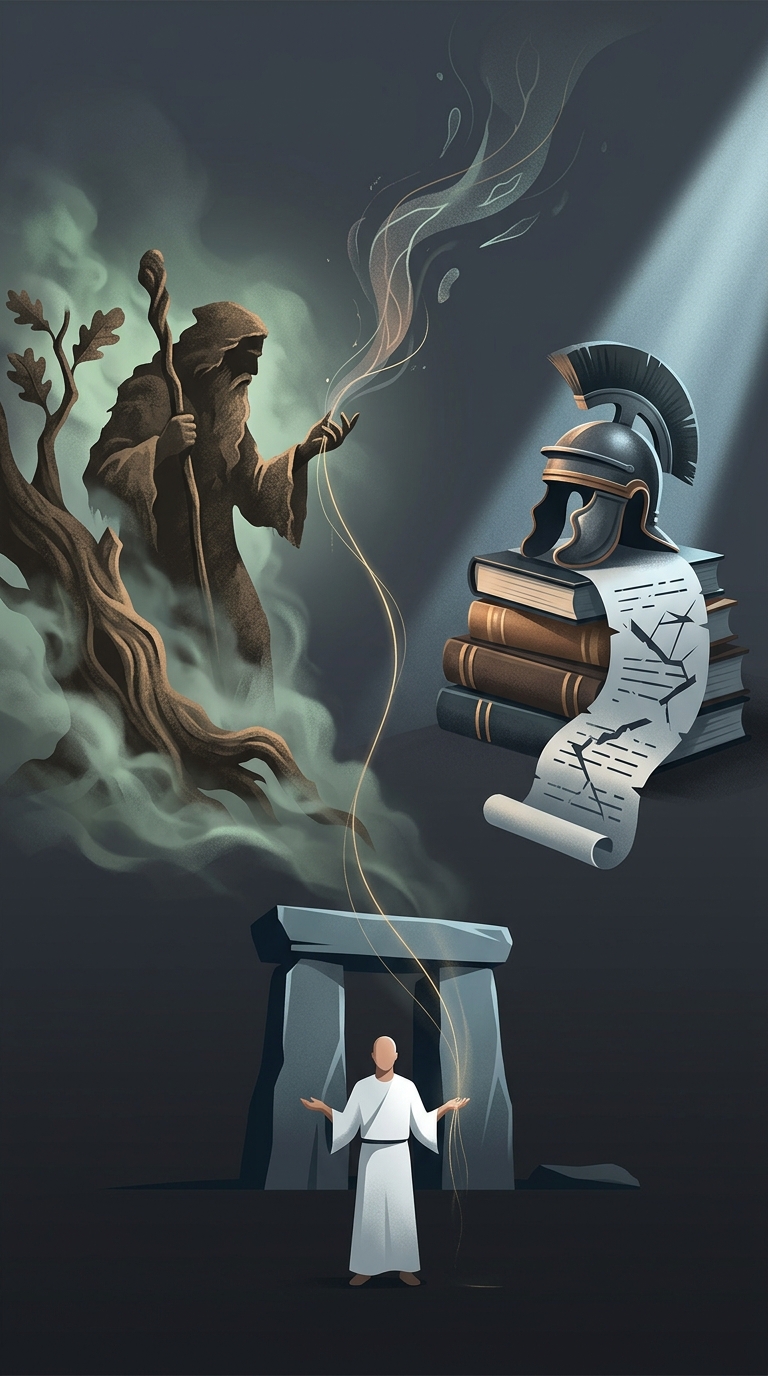
What Caesar said about the wicker figures
Julius Caesar’s account of the Gauls describes enormous figures woven from branches and filled with living people, who were then burned. He says the Gauls believed that offering human lives pleased the gods. The passage is the source of the famous “wicker man” image—but it does not say the sacrifice was specifically meant to produce a good harvest of vegetables.
Caesar wrote about peoples in Gaul during Rome’s campaigns there, not as a neutral observer recording a ceremony step by step. His description tells us how he presented the practice to Roman readers; it does not establish how often such sacrifices occurred or whether every detail was firsthand.
A claim with a powerful image
The account’s force comes from the contrast between a structure made of ordinary materials—interwoven branches—and the immense, terrifying ritual Caesar describes inside it. In his telling, sacrifice was a way to seek divine favor, but he does not tie this particular rite to one crop, season, or promised harvest.
That distinction matters because later retellings often make the story more specific than its ancient source. The striking claim is that Caesar attributed large-scale human sacrifice to the Gauls and associated it with appeasing their gods—not that he documented a ritual designed to grow vegetables.