Knowledge kept in the mind
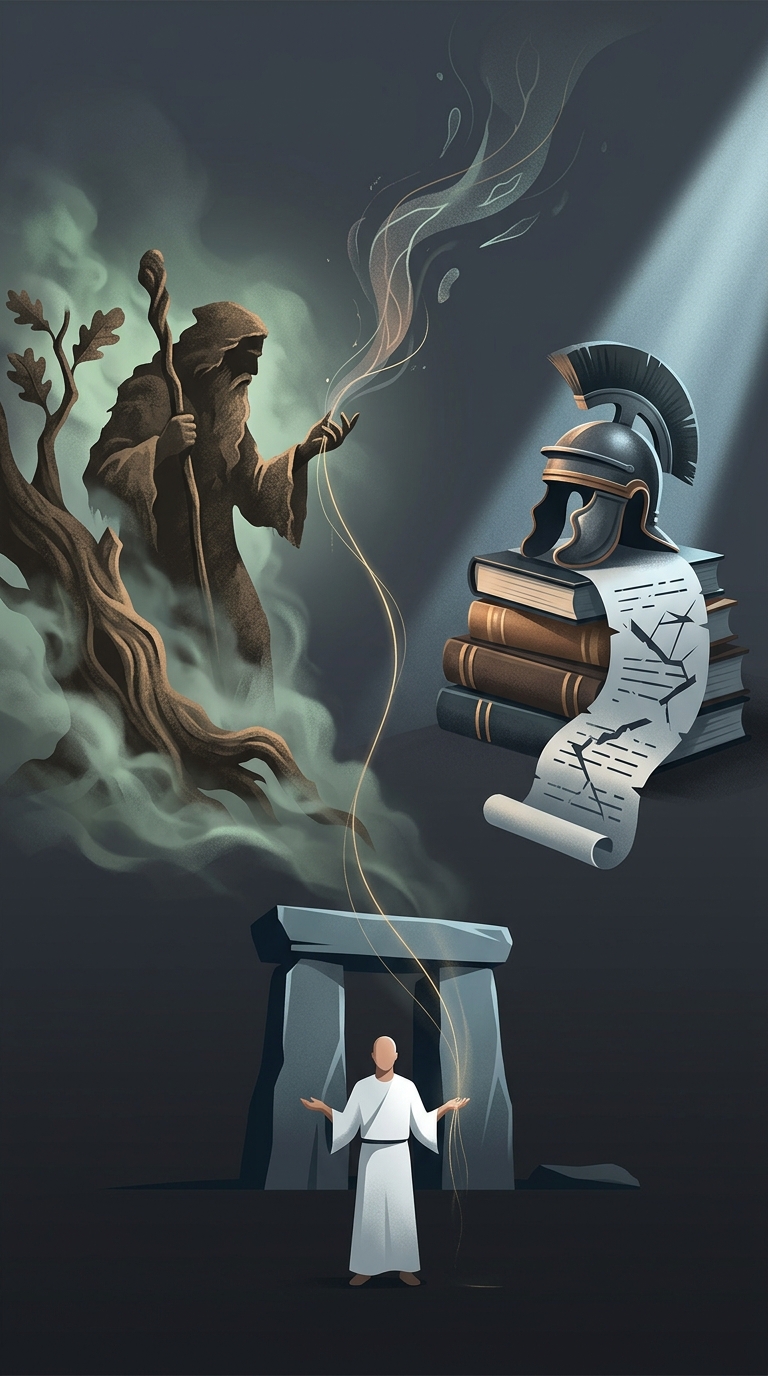
Druids’ preference for oral teaching made learning a long apprenticeship rather than a matter of consulting a written handbook. A student had to hear teachings, memorize them, and reproduce them accurately. Julius Caesar says that some learners spent as many as 20 years in training; whether or not every student followed the same path, his account suggests that preserving knowledge depended on disciplined recall and direct instruction.
Caesar gives two reasons for this practice: Druids did not want their teachings widely circulated, and they believed writing could weaken memory. That did not mean people in Celtic societies never wrote. The claim concerns sacred or specialized instruction, not every kind of record or communication.
A record shaped by conquest
The Druids left no surviving body of teachings that can be set beside Caesar’s description. Much of what readers know comes through Greek and Roman writers, who described Celtic peoples from the outside. Caesar was also a military commander campaigning in Gaul, so his account is valuable evidence—but not a neutral transcript of Druidic life.
That imbalance has a lasting consequence: the people who controlled the teaching tradition did not leave the main written account of it. Their knowledge reached later readers through observers who had their own purposes, while the teachings themselves depended on students carrying them forward in memory. The result is a portrait of Druidic learning that is vivid, but necessarily incomplete.