Why a Hairline Crack Matters on Mount Rushmore
The carved faces are cut into granite, a tough rock that can still develop fractures under years of exposure. Rain and melting snow can seep into a narrow crack. When that water freezes, it expands and presses against the rock; repeated freeze-and-thaw cycles can gradually pry the fracture wider.
The risk is not that one cold night will suddenly break a carving. It is that small amounts of water, acting again and again, can loosen pieces of stone over time. Keeping water out helps slow that process.
A Sealant Applied on the Rock Face
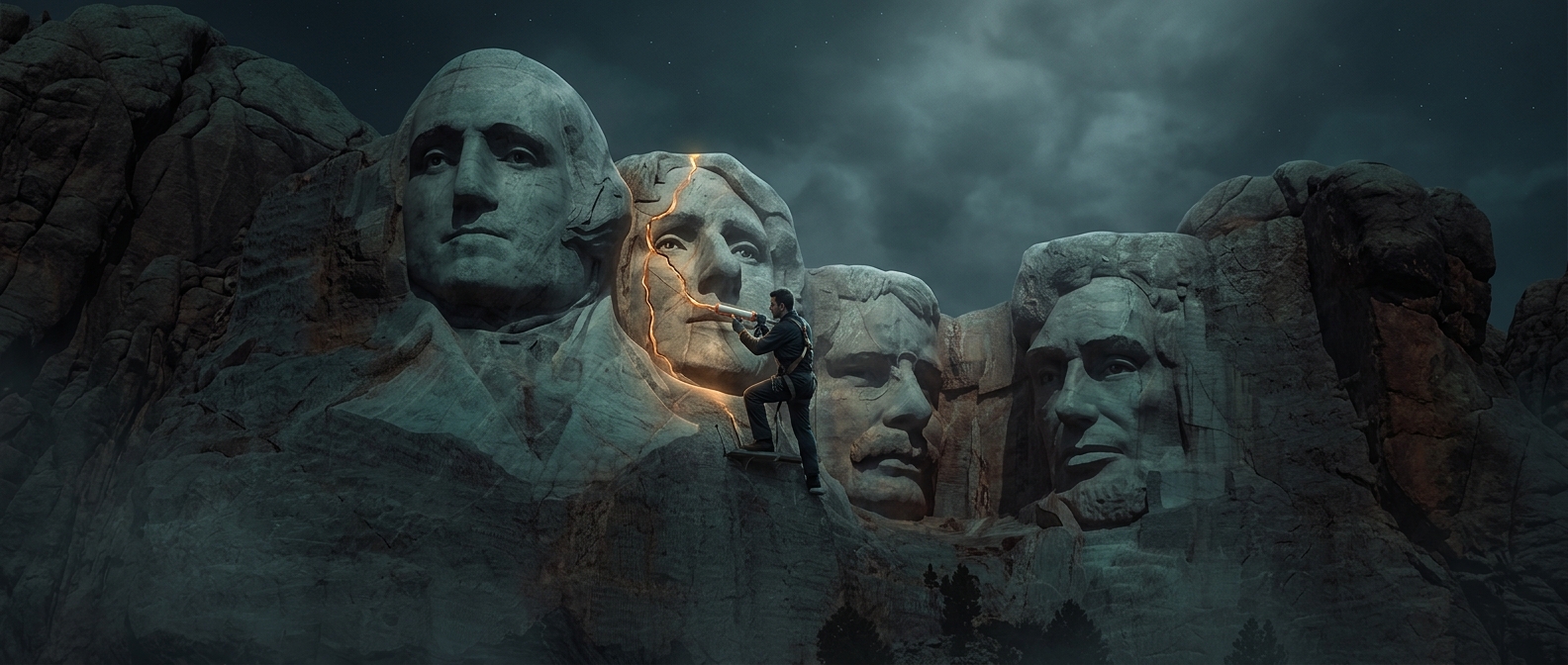
Maintenance crews reach hard-to-access areas by rappelling down the mountain. They fill cracks with industrial caulk, creating a barrier that limits water from entering. This is preventive work: the sealant does not restore missing stone or make the granite immune to weather. It reduces one of the forces that can worsen existing fractures.
The method turns preservation into a recurring, hands-on task. From the ground, the carvings can look solid and finished; up close, protecting them means finding tiny openings before water and winter can exploit them.