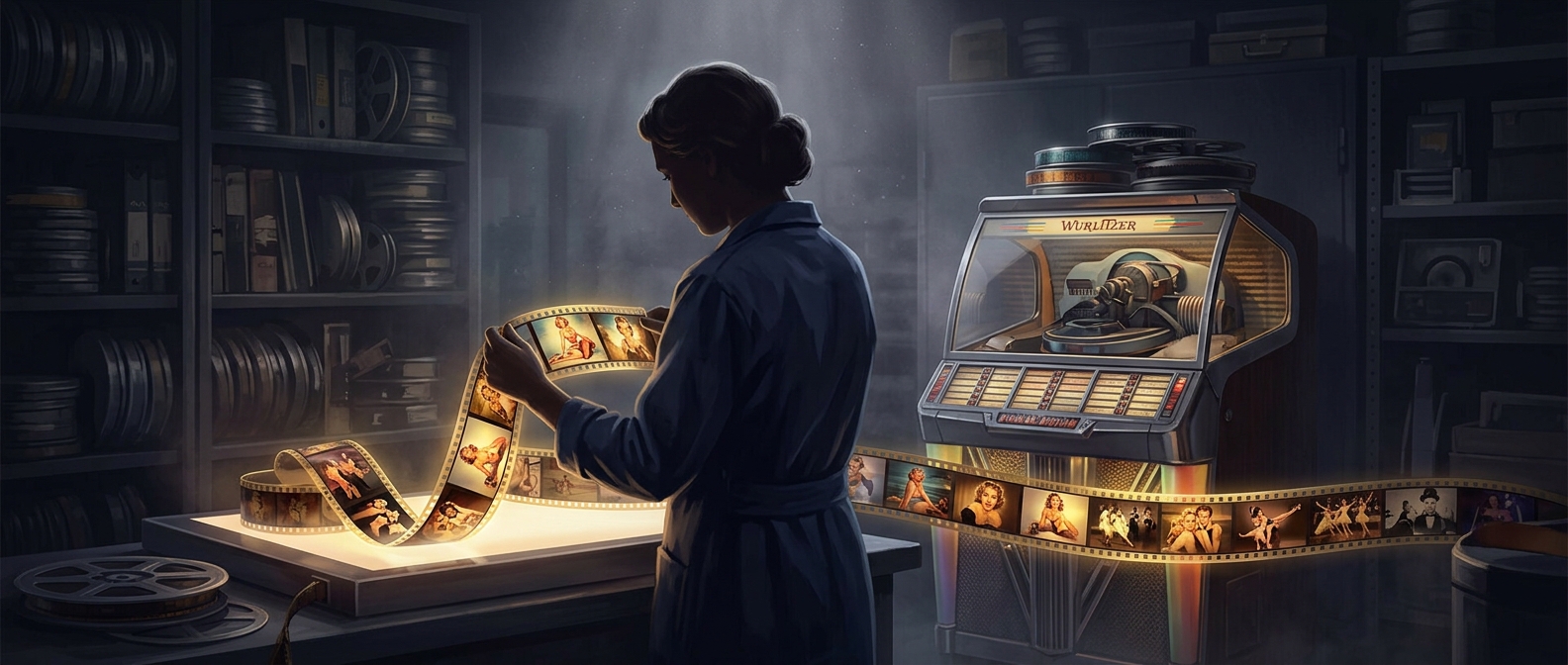
A jukebox that played a movie with the music
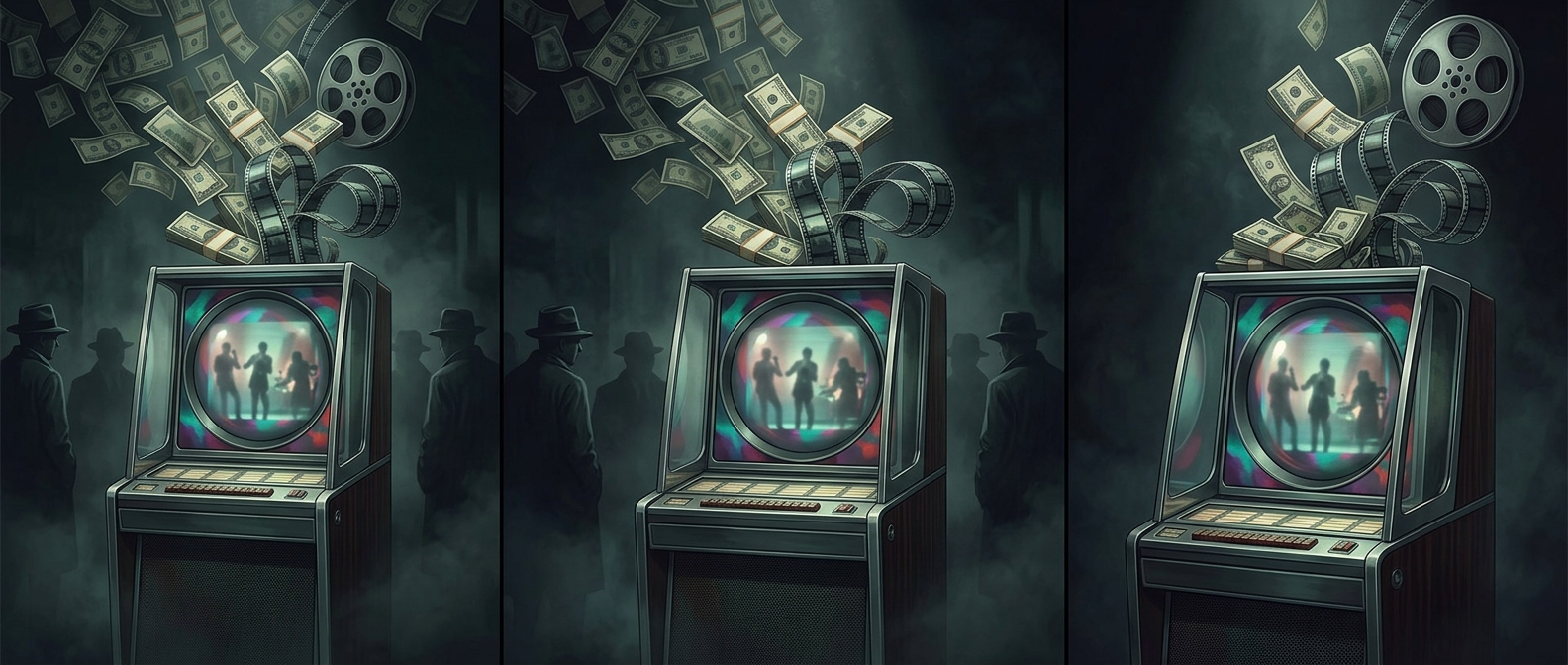
Scopitone machines were video jukeboxes: customers selected a song, and the machine projected a short film of a performer singing it. Unlike a modern screen-based playlist, each selection depended on a physical 16mm film reel, with the image and soundtrack presented together. Micki Marlo’s performances were made for this format, so the reels preserve more than songs: they show how a performer was staged for a machine in a public venue.
When the machines faded, the reels were left behind
Scopitone’s popularity waned, and the films did not receive the orderly archival care that might have made them easy to find later. That neglect gives the surviving material an unusual history: recordings made as disposable entertainment have become rare evidence of a brief media format. The films’ survival is not the same as comprehensive preservation; it means these particular reels endured despite the absence of a reliable archive.
More than a performance record
A Scopitone film captures a moment when popular music was being sold as both sound and spectacle, before music video became a familiar part of everyday media. Marlo’s surviving appearances let viewers see that experiment in its original form—not reconstructed from later memories, but on the kind of film the jukebox itself played.