A move could become a contest of patience
Chess gives each player a turn, but a turn has no natural endpoint: a player can keep studying the board before moving. In a game without a shared limit on thinking time, that made delay a tactic as well as a nuisance. The player who waited could force an opponent to spend hours at the board, even when the position itself had not changed.
How a chess clock changed the bargain
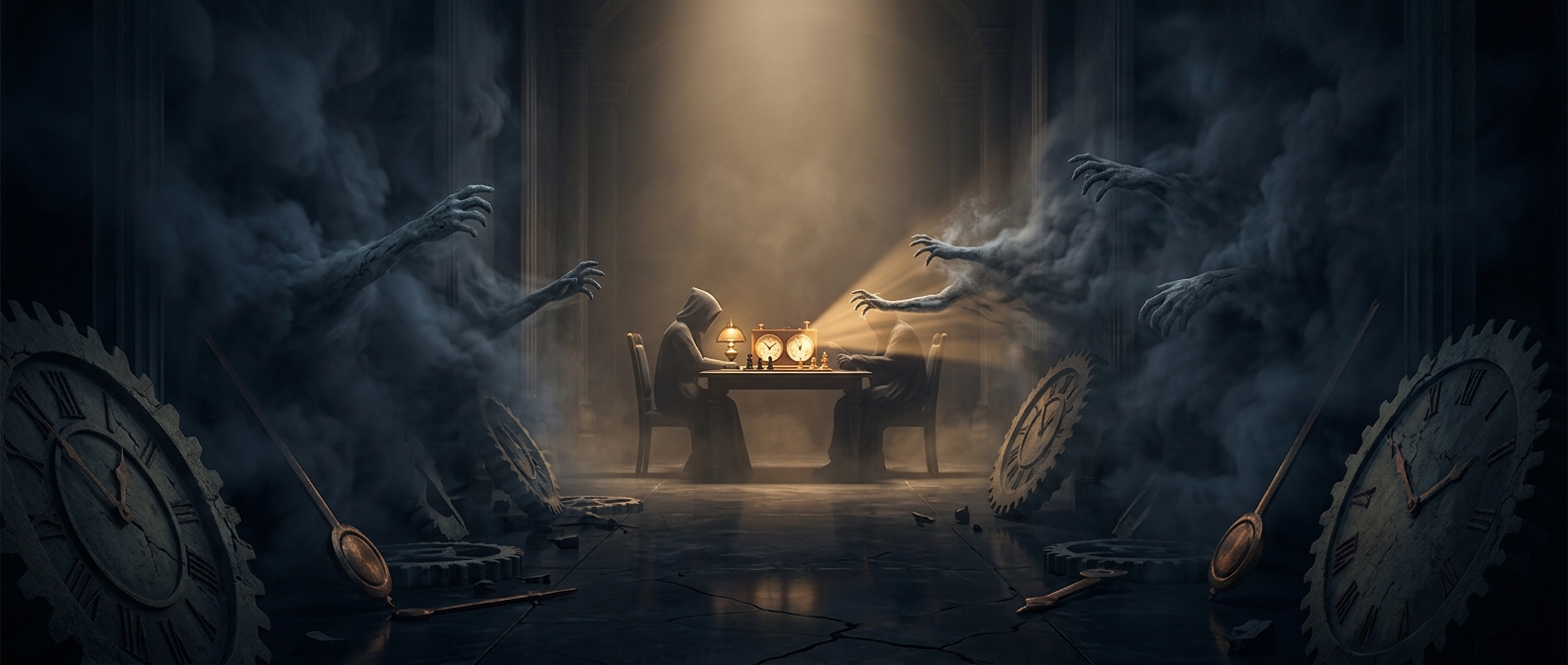
A mechanical chess clock put two timers side by side, one for each player. After making a move, a player pressed a button that stopped their own timer and started the opponent’s. The clock did not make anyone choose quickly; it made the cost of waiting visible and personal. Every extra minute used by one player was time no longer available to that player later.
This turned time into part of the game’s resources, alongside the pieces on the board. Players had to decide not only which move was best, but how much thought it deserved. A complicated position might justify spending precious minutes; an obvious reply usually did not. Organizers could set an overall time allowance, giving games a practical endpoint without dictating how long any individual move should take.
A new kind of pressure
The clock solved the problem of endless delay, but it also created a strategic tradeoff: think deeply now, or preserve time for the difficult decisions ahead. In timed chess, a strong position can still become dangerous if its player has too little time left to handle it. The clock did more than keep games moving—it made time another thing players could win or lose.