The mind follows the next goal
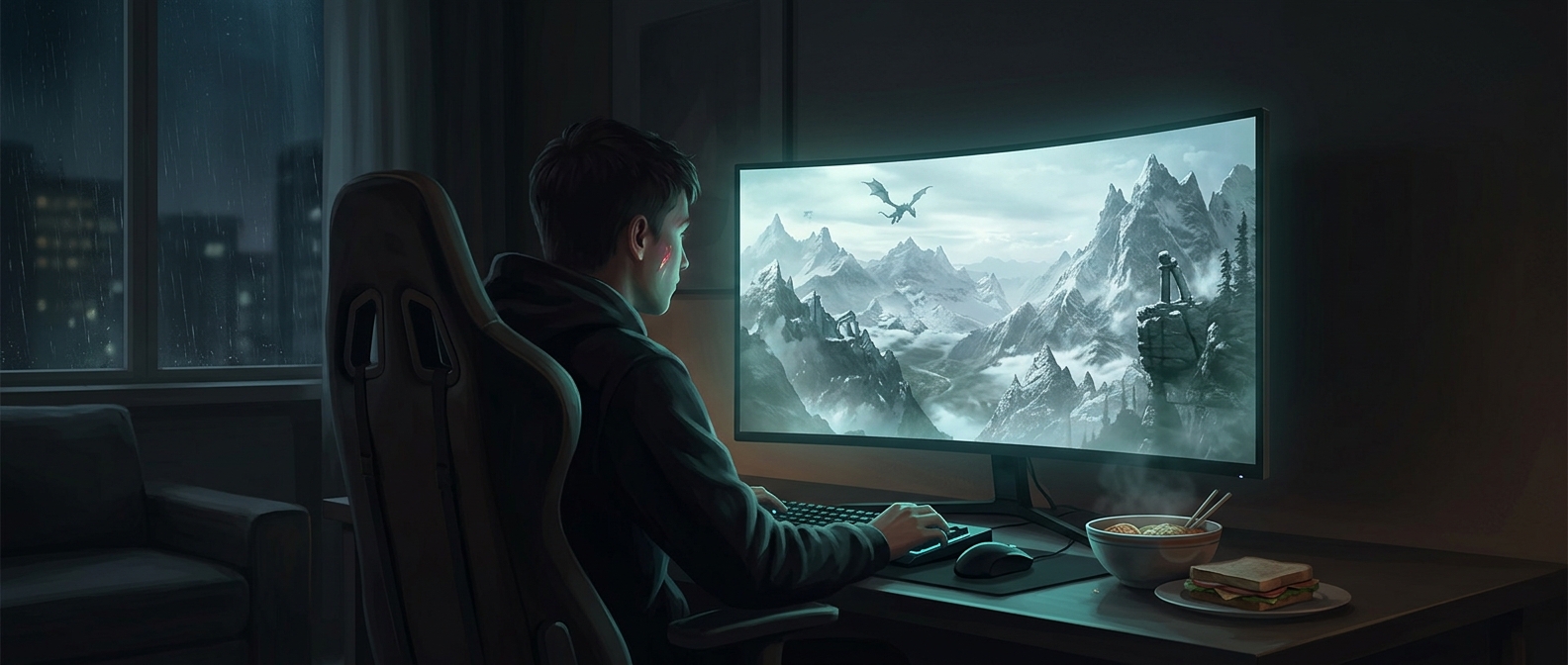
In Skyrim, an unfinished objective can quickly lead to another: a road branches toward a ruin, a fight leaves loot to inspect, and a discovered cave invites a search. Each new cue gives attention somewhere specific to go. Instead of repeatedly checking the time or asking whether you are hungry, your mind is occupied with the next decision in the game.
This is a shift in attention, not a shutdown of bodily signals. Hunger and fatigue can still be present; they are simply less likely to reach conscious notice while a demanding, absorbing activity is taking priority.
Why one more task can stretch into hours
The game’s rewards help keep that attention in place. Finding an item, completing an objective, or reaching a new location offers a small payoff, while the open world supplies more possible goals. Because many tasks are optional and easy to start, there is rarely a clear point when the game says, “You are done.”
That creates a familiar loop: act, get a result, notice another opportunity, and act again. When the next goal appears before attention has drifted back to the room, time can pass with few conscious check-ins. A player may not feel that minutes have vanished; they may simply have spent those minutes pursuing one connected task after another.
The boundary is easy to miss
A strong sense of involvement can make outside needs less noticeable, but it does not make them disappear. A pause between quests—or a reminder from someone nearby—can bring the clock and the body back into focus. The striking trick is not that Skyrim stops time; it gives the mind enough appealing next steps that checking the time can keep getting postponed.