A laugh is live feedback
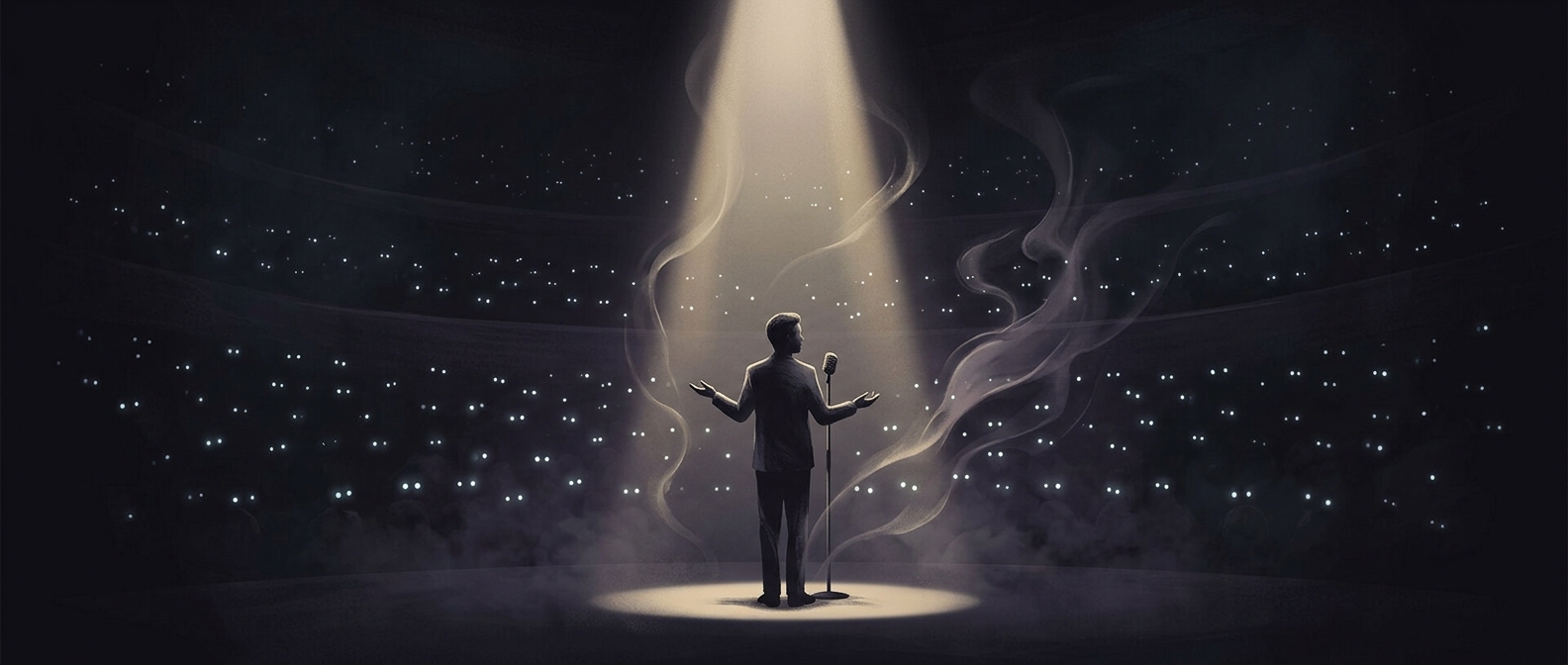
A stand-up set is built in real time. A comic delivers a line, then listens: laughter tells them the audience caught the idea and found it funny. A pause can give a laugh room to grow; talking over it may bury the next line. If the response is weak, the comic has to keep moving, adjust the pace, or try a different angle without stopping the show to explain the joke.
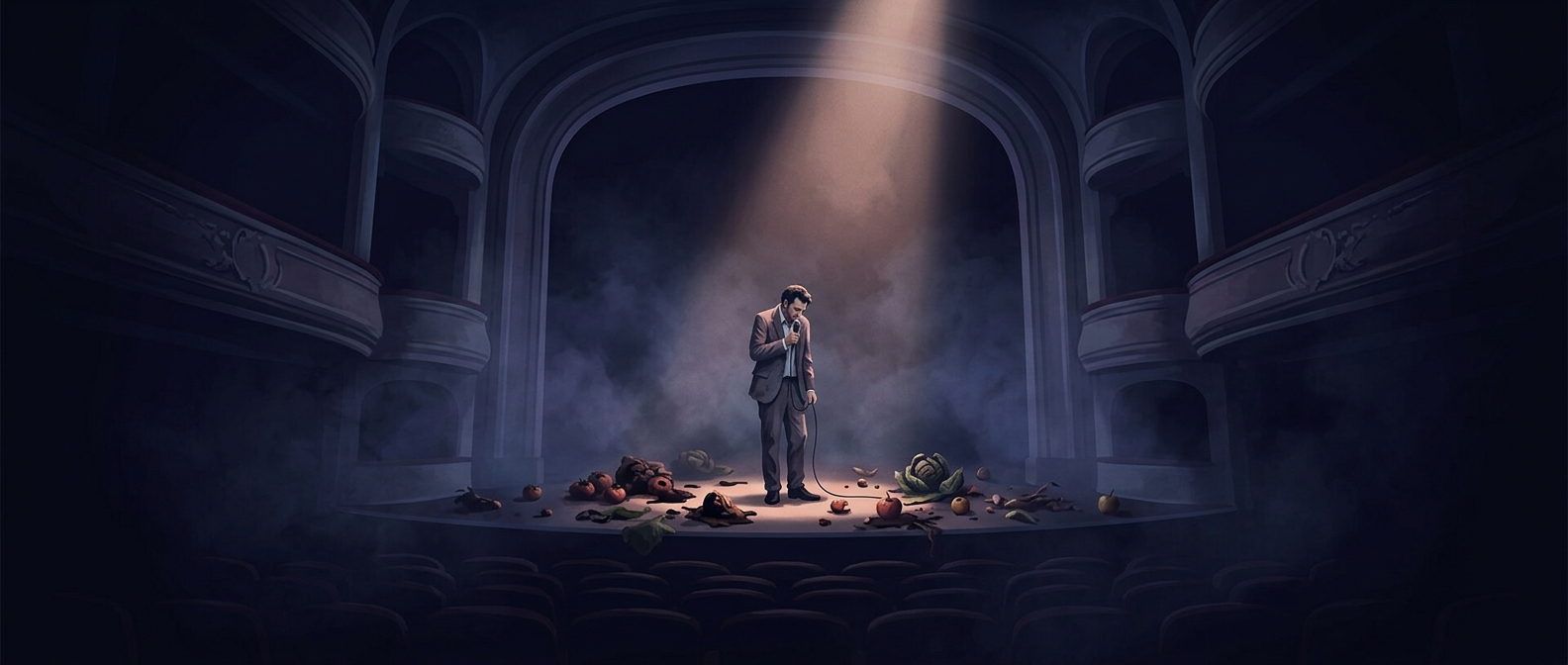
That feedback is unusually public. In a quiet room, each person can hear that nobody has laughed yet. The comic cannot edit the performance afterward, as a filmmaker can, or rely on a laugh track to smooth over a flat moment. The audience’s response becomes part of the material’s rhythm.
The room changes the performance
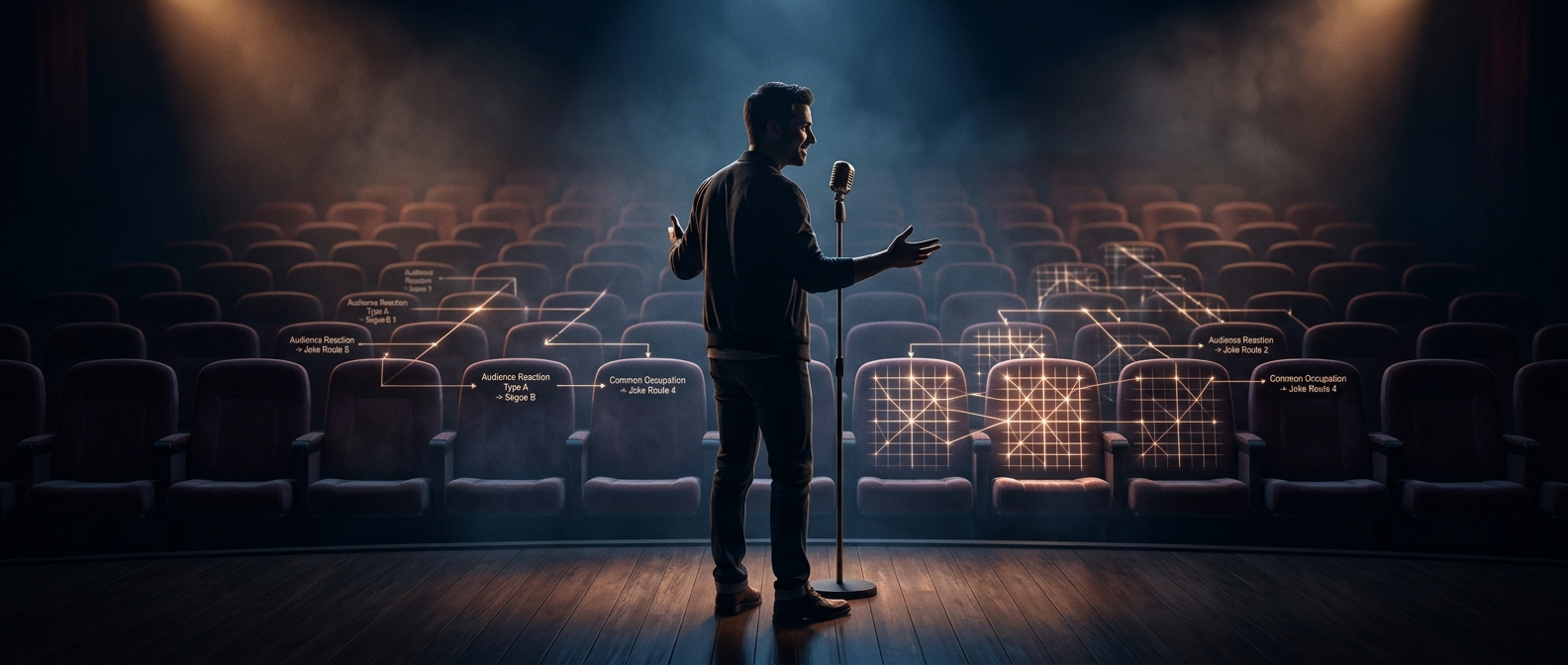
Strangers do not arrive with a shared sense of humor. One crowd may respond to a reference another barely recognizes; the room’s mood, attention, and expectations can shape how a line lands. Comics therefore learn not just which jokes work, but when and for whom. Repeating material lets them refine wording and timing, while trying new material means accepting that some experiments will fail in front of the people they are meant to entertain.
A laugh also affects what comes next. Strong laughter can stretch a beat and give a comic confidence to stay with a topic. A subdued response may prompt a quicker transition. Reading the room is not a separate trick from performing: it helps determine the performance as it unfolds.
Why the stakes feel immediate
For many comics, a set is also work whose future opportunities or pay can depend partly on how the performance goes. That makes laughter more than applause at the end. It is an immediate, imperfect signal—useful, but never a guarantee of what another audience will think.
The central gamble is that a carefully shaped joke must survive contact with a particular room, on a particular night. A comic can prepare the words; the strangers decide the timing.