The Office’s Most Ordinary-Looking Choice
The pilot’s real office setting helped make its awkwardness feel less like a comedy set and more like a place a viewer might recognize. On a soundstage, a production can build rooms around camera positions and adjust every light. In an existing workplace, the rooms and their overhead fixtures are already there. That gives scenes a slightly cramped, unpolished quality: the environment feels like part of the story, not a backdrop arranged to flatter the cast.
Why the Harsh Light Matters
Fluorescent office light is broad and flat. It tends to reveal every surface without the soft shadows or warm tones that make a space feel inviting. Here, that visual plainness supports the joke: the characters’ workplace is not glamorous or especially cinematic. It is a place of desks, routine, and social discomfort.
That choice also fits the show’s mock-documentary form—a fictional story presented as if a camera crew were observing real people. A familiar, imperfect-looking office makes that conceit easier to accept. The camera seems to have arrived at work, rather than entered a carefully polished television world.
From Workplace Texture to Comfort Viewing
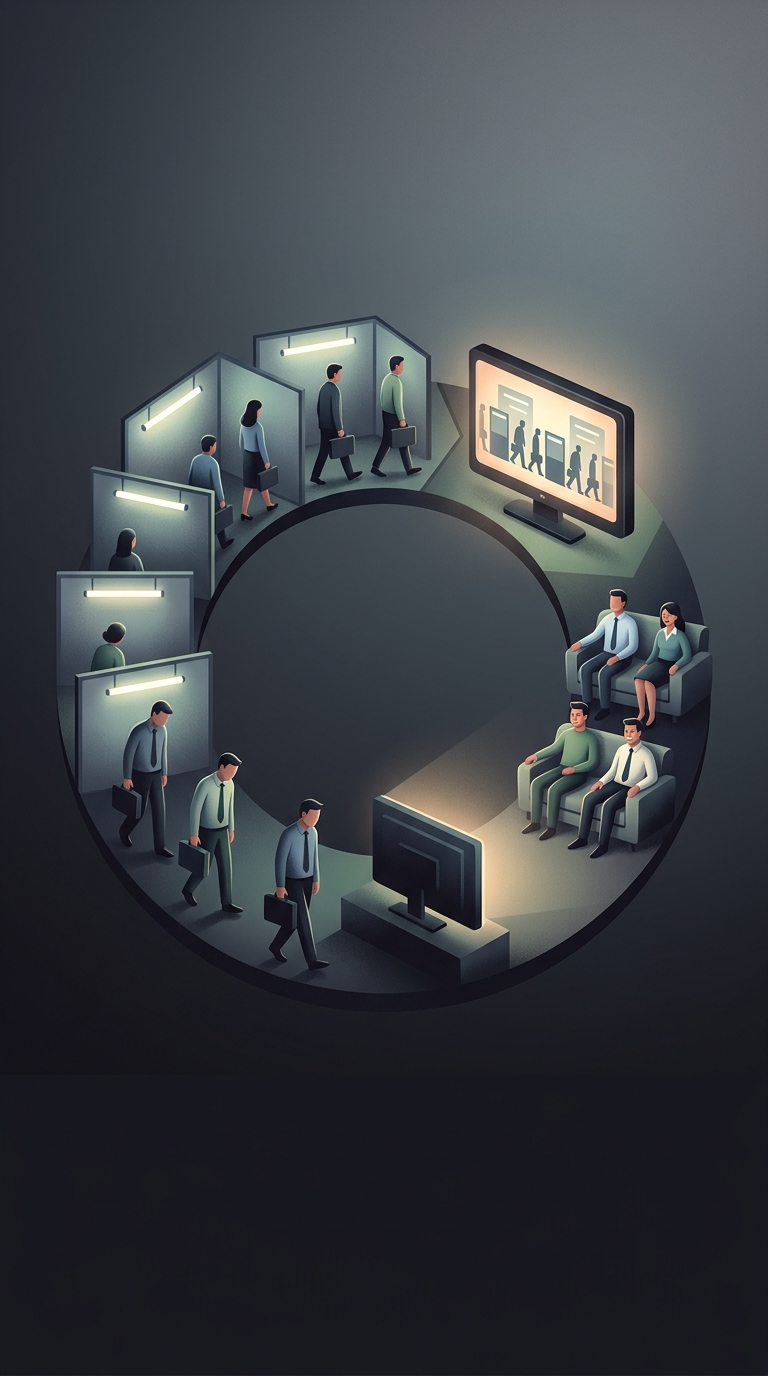
The same drabness can work differently for viewers outside the office. In the story, the setting makes the characters’ daily frustrations feel immediate; at home, its recognizable routines can become reassuringly predictable. The setting does not have to look pleasant to feel familiar. Its plain fluorescent rooms help turn the show’s workplace into a place viewers can revisit without having to go back to their own.