Why the pause screen still has work to do
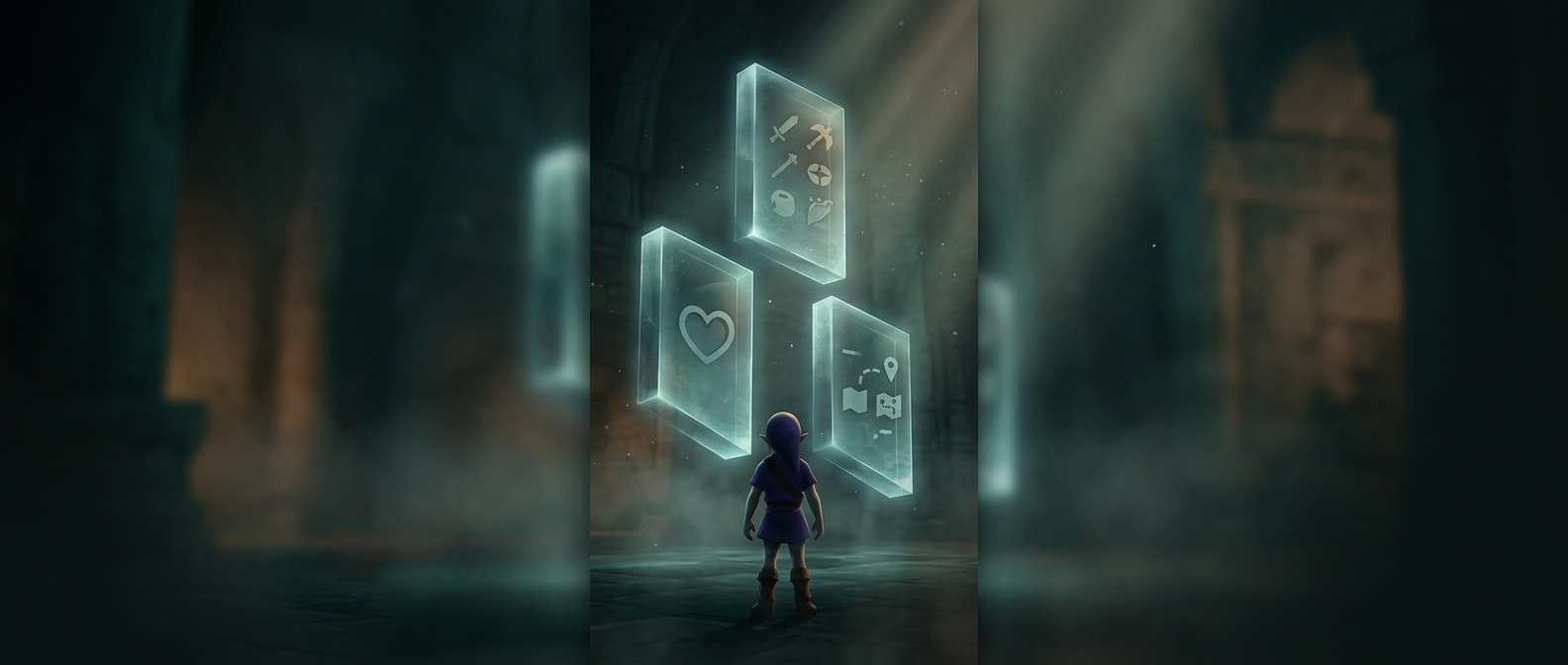
A pause menu can look like a break for the hardware, but Ocarina of Time’s item screen is not simply a flat picture laid over a stopped game. It has to draw a 3D version of Link, whose appearance changes with his equipped tunic and gear. That means the console must keep processing and drawing a character model even while the adventure itself is paused.
A small scene on a tight budget
On the Nintendo 64, the same limited processing capacity had to serve the game’s world and its interface. Drawing a 3D model involves more than placing a portrait on screen: the console must work out how the model appears from the menu’s viewpoint and render its visible surfaces. The item screen therefore spends some of the machine’s graphics budget on a scene the player might not expect to be computationally demanding.
The slowdown is a reminder that “paused” describes the game’s action, not necessarily the work the console is doing. Link may be standing still in the adventure, but the menu still has to present him as a properly equipped 3D character. On hardware with little spare capacity, that extra rendering can make the screen feel as if time has nearly stopped.