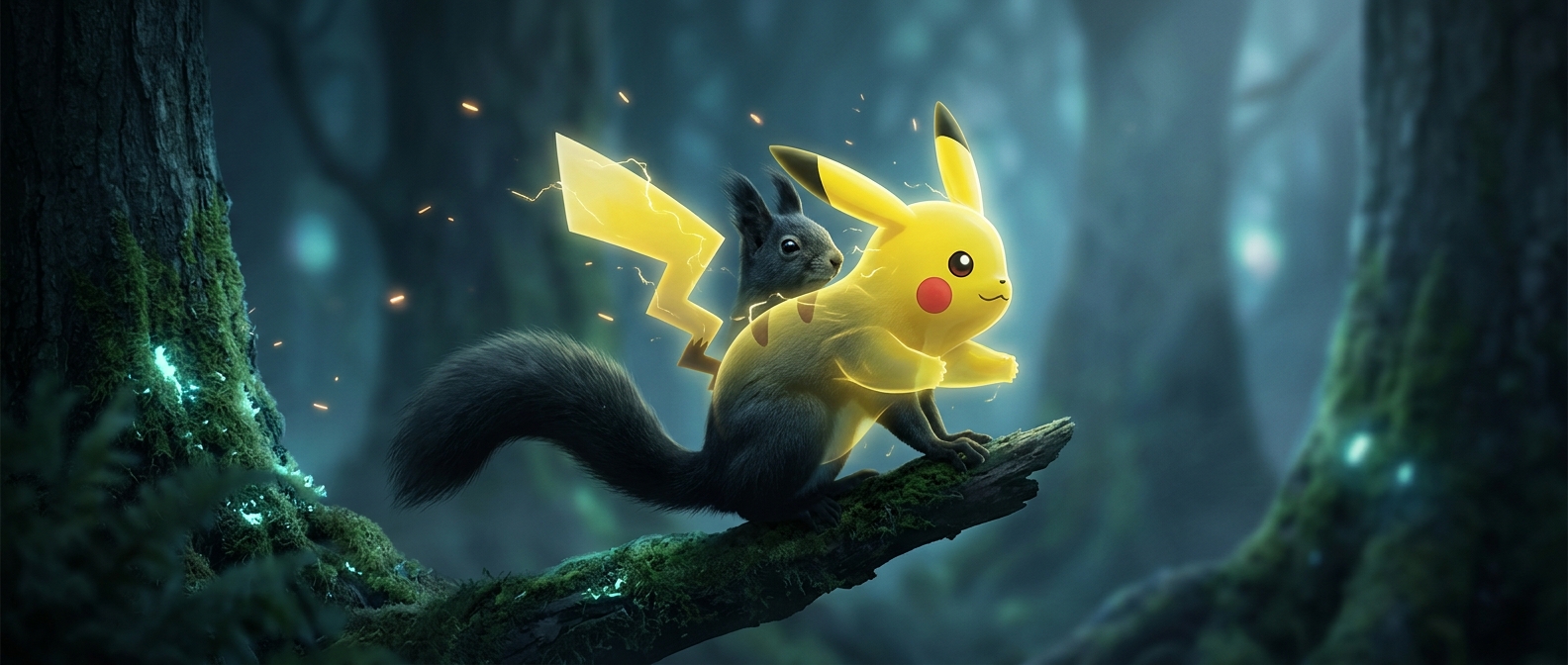
A squirrel’s silhouette, an electric mouse’s name
Pikachu’s design brings together two different kinds of identity. Designer Nishida drew on squirrels for the character’s rounded cheeks and lightning-bolt tail, while the Pokémon franchise classifies Pikachu as a mouse Pokémon. The first describes an artistic influence; the second is the creature’s official category within the fictional world. They do not have to match.
That distinction matters because character design often borrows recognizable features without aiming for a precise animal portrait. Pikachu’s cheek circles and dramatic tail help give it a distinctive outline, while its mouse classification connects it to the franchise’s animal-based naming system. The result can read as squirrel-inspired to someone looking at its shape and still be a mouse Pokémon in the story.
One design can carry several signals
The tail is especially useful as a visual cue: its sharp, zigzag form suggests electricity, while its overall shape also contributes to the squirrel influence. The cheeks, meanwhile, make Pikachu’s face easy to recognize. These details let the design communicate personality and power without requiring the character to resemble just one real animal.
So the apparent contradiction is part of the design’s layered identity. Pikachu can borrow its look from a squirrel and remain a mouse Pokémon. The classification tells you what the franchise calls it; the visual inspiration helps explain why its silhouette feels different from a conventional mouse.