A painted stripe became a robot’s road
Early line-following robots did not need a map of a room. A strip of paint on the floor supplied a simple route, and sensors underneath the machine checked whether that strip was still where the robot expected it to be.
Many designs used light-sensitive components: a bright floor reflected more light than a dark line, or vice versa. Comparing the readings from sensors on either side of the stripe let the robot detect when it had drifted off center. The sensors did not recognize places or understand destinations; they reported only the line’s position beneath the chassis.
Small corrections kept the robot on course
A basic controller turned those readings into steering. If the line appeared more strongly on the left, the robot adjusted the relative speeds of its two drive wheels so it curved left; a rightward reading prompted the opposite correction. Because the wheels could turn at different speeds, the robot could steer without a separate steering wheel.
This was a feedback loop: sense the error, correct it, then sense again. With frequent, modest corrections, the machine could trace bends in the stripe. But the route had to be physically marked and visible to its sensors. A gap, a sharp turn, or changing light could confuse a simple setup, and the robot could not choose a new path around an obstacle just because the stripe led there.
A route you could see—and redesign
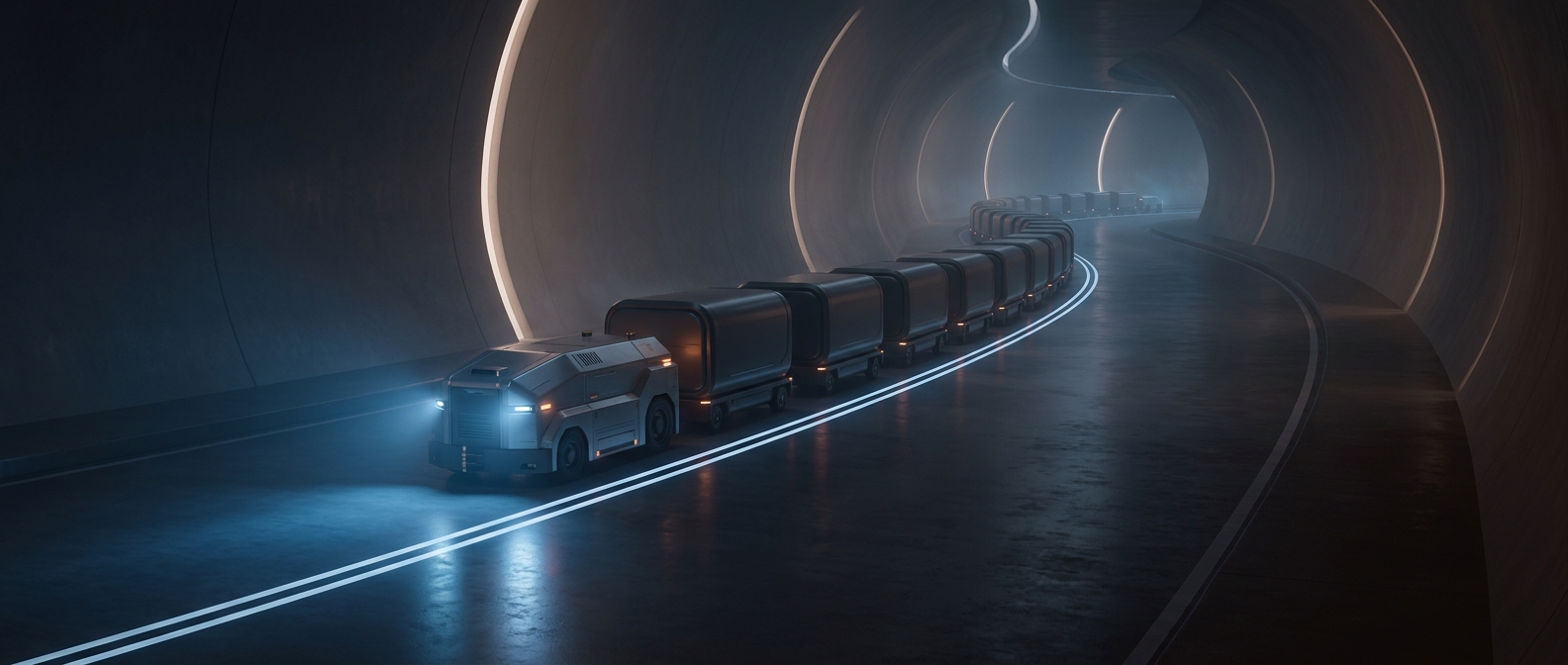
That limitation was also useful. To change where a small robot went, an operator could alter the line rather than program a detailed map. The same principle made line-following a clear demonstration of autonomous control: the machine moved on its own, but only within a carefully prepared environment.
Its “road” was literally under its wheels. Unlike a car that must infer lanes from a complex scene, the robot followed a high-contrast cue deliberately laid out for it—an approach well suited to simple, controlled routes, not open streets.