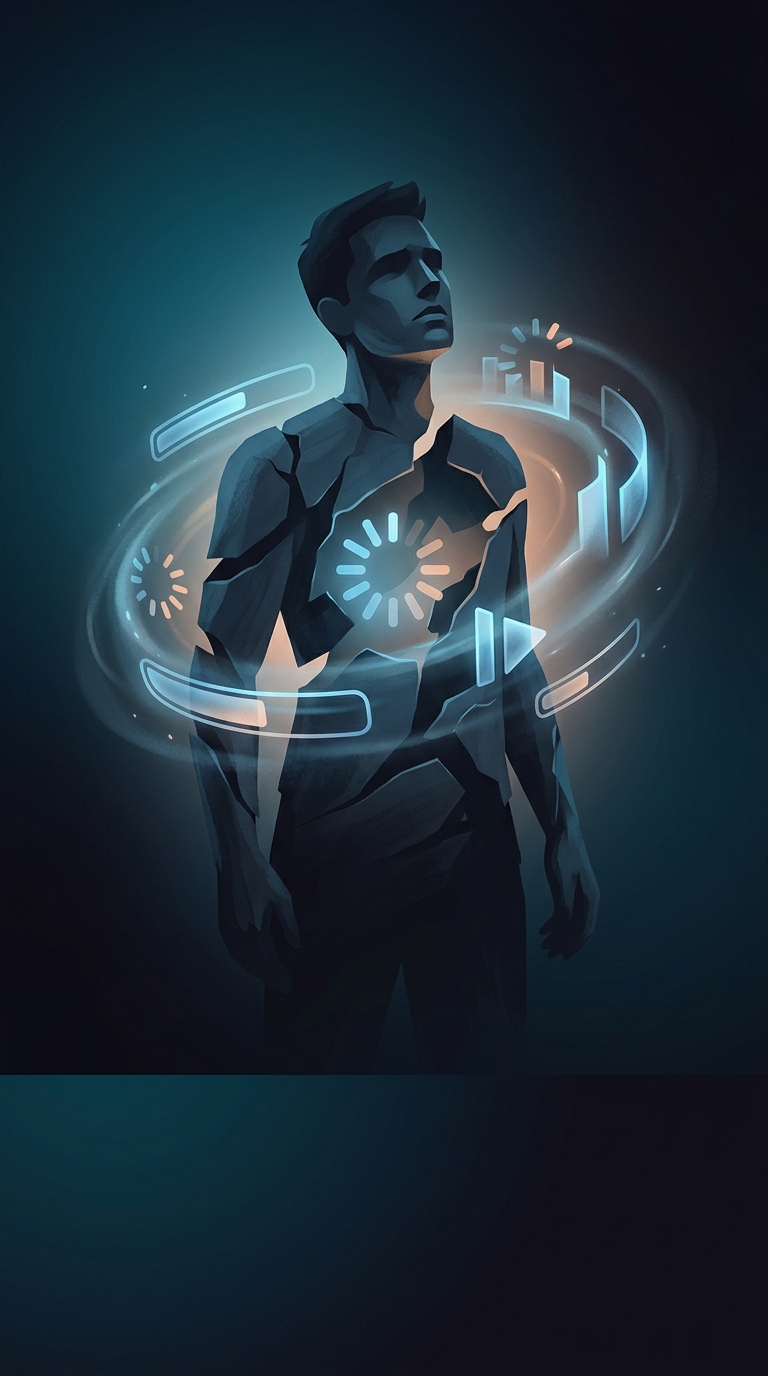
Turning a Wait Into a Walk
A loading screen does not have to look like a loading screen. In many modern games, the player is guided through a slow, narrow, or otherwise constrained stretch of play while the game loads the next area in the background. An elevator ride, a long corridor, or a character squeezing through a gap can serve as a disguised pause: the world appears to keep moving, but the game has time to prepare what comes next.
Why the Illusion Works
Games cannot always bring an entire detailed world into memory at once. As the player moves, the system may need to fetch and organize scenery, sounds, characters, and other data. A sudden transition could expose that work as a frozen screen or a visible pop-in, when objects abruptly appear. A slow sequence gives the system time—and gives designers control over what the player can see and do during that interval.
The restriction is part of the trick. In a tight passage, the player cannot sprint ahead into an area that is not ready. On a lift, the camera can stay focused on the character rather than revealing scenery still being assembled. The scene feels like a deliberate moment in the story, even as it also serves a technical purpose.
Keeping the Player Involved
These sequences are not always completely passive: a game may let players move, look around, or interact while the transition runs. But the key design choice is to make waiting feel like part of the journey. Instead of stopping at a progress bar, the player crosses a threshold—and the next world is ready by the time it opens up.