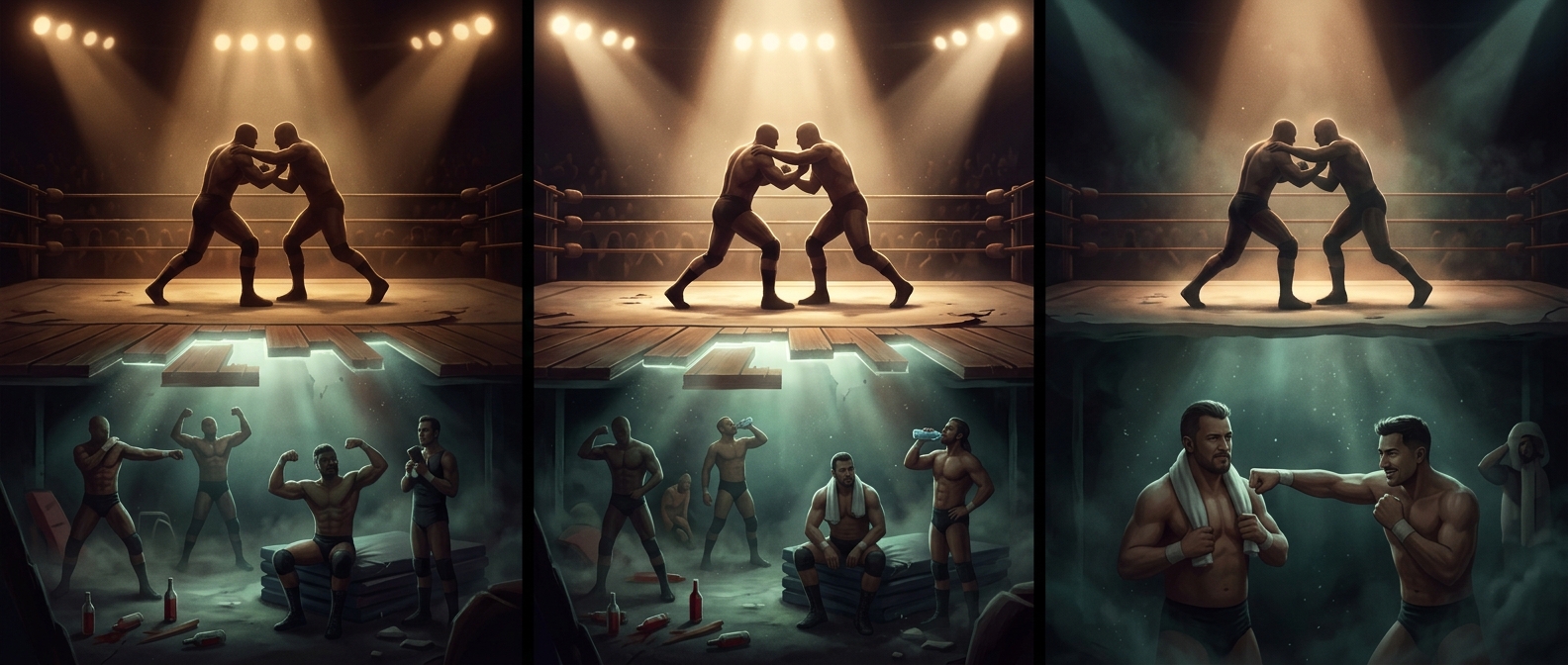
How the Space Beneath the Ring Helps Stage a Surprise
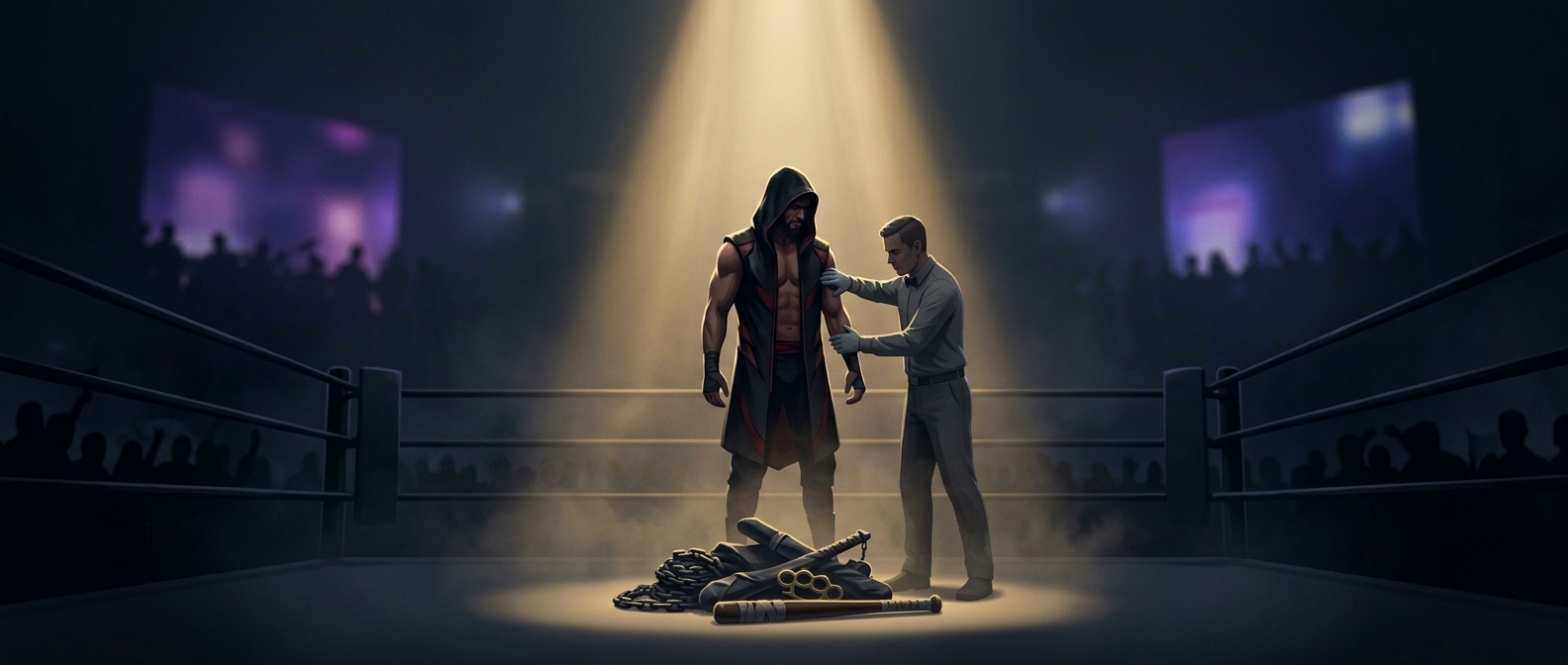
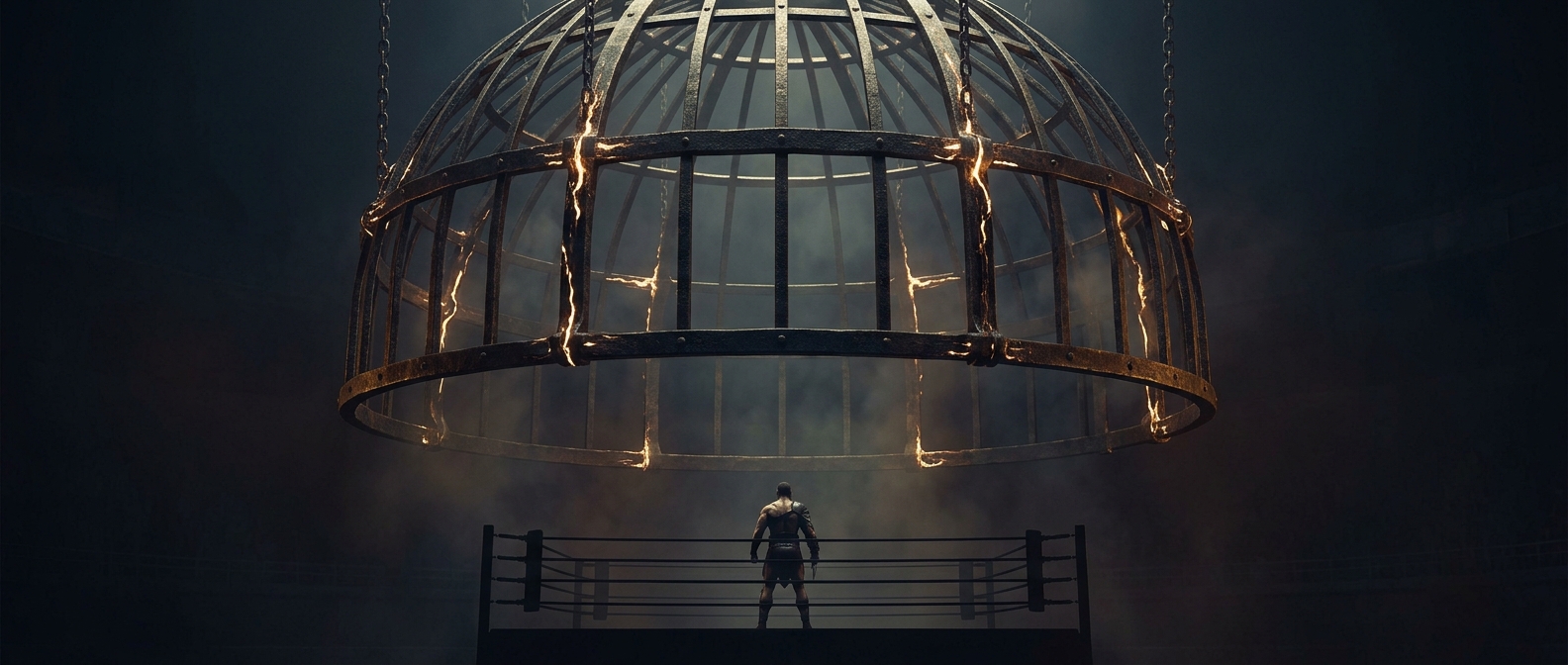
A wrestling ring is raised on a frame, leaving a low, shadowed gap between its canvas and the floor. That space can serve as a backstage pocket during a match: a performer can slip out of sight while the action above keeps the audience’s attention. It is not a secret tunnel or a special effect by itself. The illusion depends on the ring’s construction, the sightlines in the venue, and careful timing.
A Hidden Reset Between Moments
While out of view, a wrestler may catch their breath, prepare a visual effect such as fake blood, or wait for a cue to return. The pause lets the performance continue without showing the audience every practical step. Because the crowd is watching a live event, the rest of the show has to cover that reset: movement in the ring, commentary, and the audience’s focus all help keep attention elsewhere.
A twin substitution takes more coordination. The two performers need to look alike enough for the audience’s view, and the change has to happen where it will not be plainly visible. The under-ring area can provide cover, but it cannot make an obvious mismatch disappear; the reveal works only if the switch is timed and staged convincingly.
The Ring Is Part of the Set
These tricks show how wrestling uses the venue as well as the ring itself. The space beneath the platform is practical working room, but it also supports the story being told above it. What looks like uninterrupted chaos is often a sequence of entrances, exits, and concealed resets, arranged so the audience sees the dramatic moment rather than the preparation behind it.