A beard made for the throne
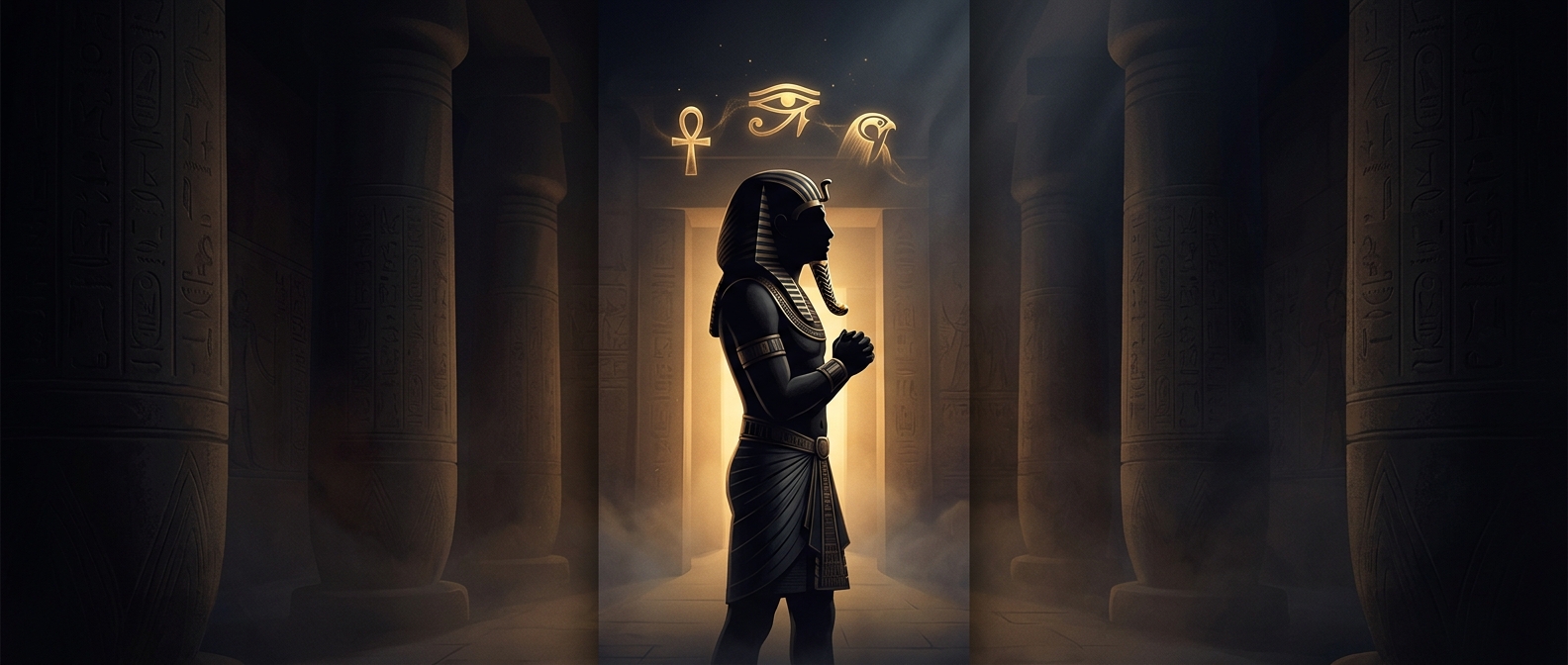
In ancient Egyptian images, the pharaoh’s beard was not ordinary facial hair. It was a carefully shaped piece of royal regalia, often shown as a narrow, braided beard extending from the chin. Rulers could wear artificial versions for formal appearances, making the beard part of the visual language of kingship rather than a sign of their age or personal appearance.
That distinction mattered because Egyptian kingship carried a sacred role. The pharaoh was understood as a link between people and the gods, responsible for maintaining order in the world. Ceremonial objects helped make that authority visible. The beard associated the ruler with divine power and with the established image of a king; it was one element in a larger set of symbols that could include a crown and a ceremonial crook or flail.
When the symbol mattered more than gender
Hatshepsut, who ruled as pharaoh, was represented wearing the beard in formal images. The regalia presented her in the role of king, a position conventionally depicted with masculine features. It did not mean that the beard was simply a disguise: it identified the office she held and the authority attached to it.
This is why Egyptian royal portraits can look less like snapshots of an individual than carefully composed statements about rule. A beard, crown, or staff told viewers how to read the figure. For Hatshepsut, the artificial beard made a familiar sign of pharaonic authority available to a woman on the throne.