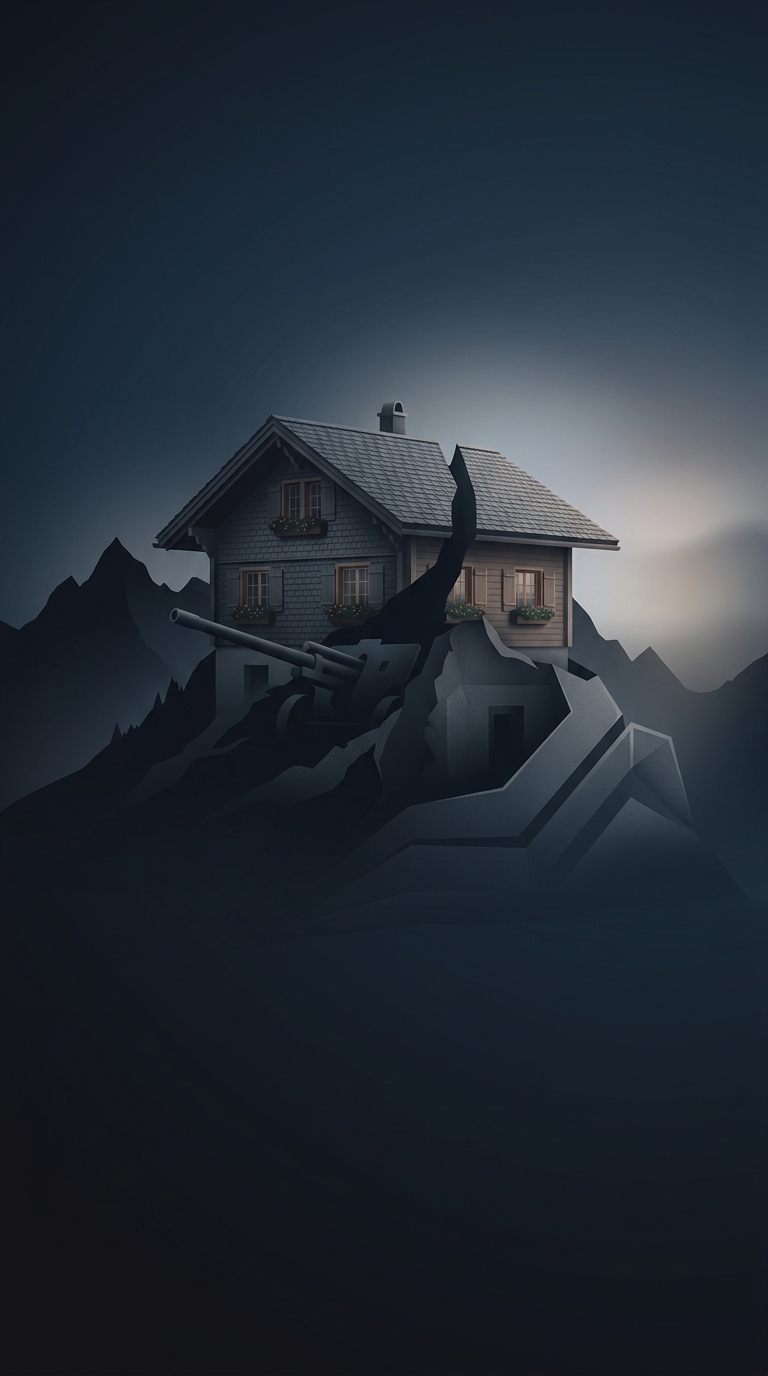
A Familiar Shape in the Alpine Landscape
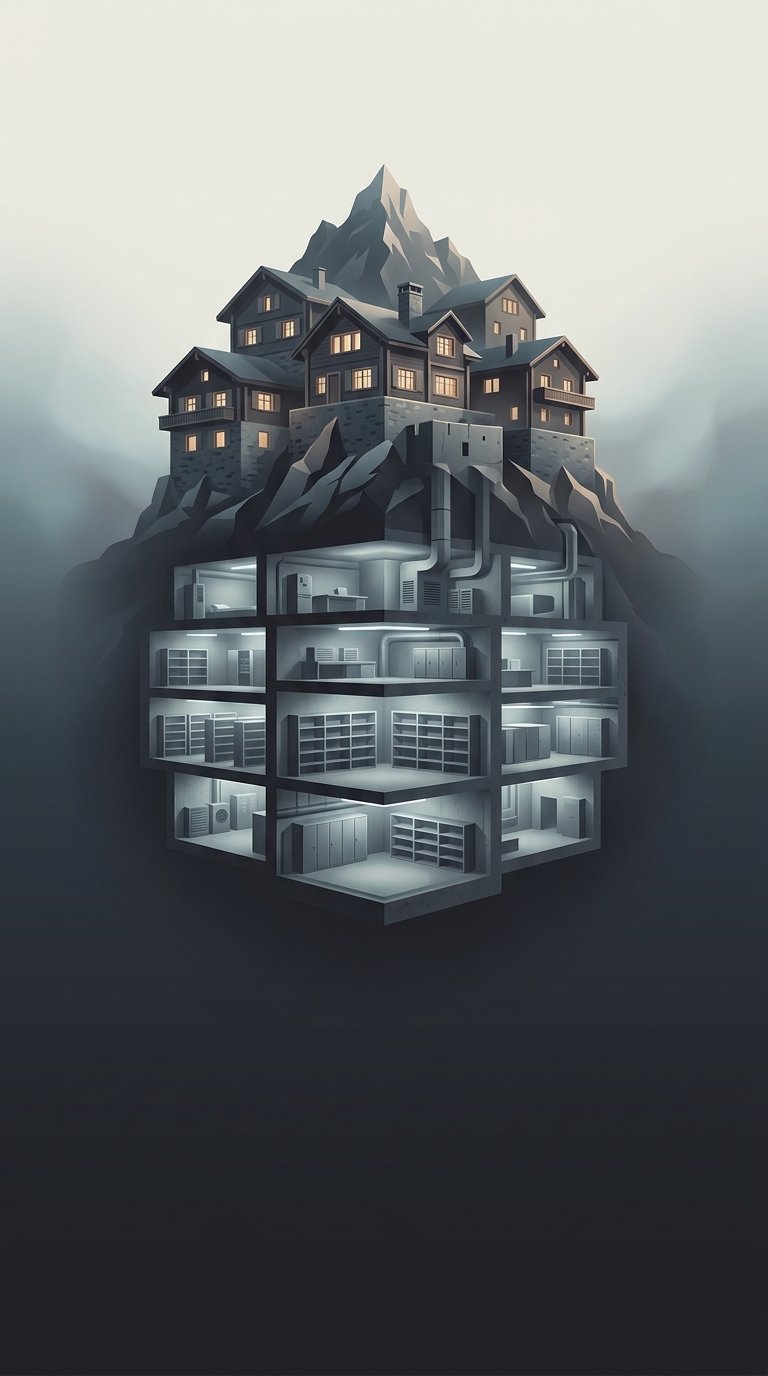
A chalet façade worked because it belonged. In a mountain valley, a wooden house with shutters and flower boxes looked less conspicuous than a bare concrete structure—especially from above, where aerial observers had to interpret the shapes and patterns they could see. The disguise borrowed from the visual language of ordinary settlement: timber, domestic details, and a roofline that fit the surrounding scenery.
Camouflage Had to Leave the Fortification Usable
The chalet was a surface, not the whole building. Behind it sat a military position built to shelter artillery and support its operation. That created an engineering challenge: openings and other functional features had to remain usable without making the structure look unmistakably military. False windows, shutters, and flower boxes helped make the visible face read as a home rather than a gun position.
The trick depended on the difference between what a structure needed to do and what an observer could see. From the ground, a passerby might notice a plausible wooden exterior; from the air, the intended impression was simply another building among the mountainside’s familiar forms.
The Landscape Became Part of the Concealment
These disguises show how military infrastructure could be folded into a place’s everyday appearance. The chalet was not merely decoration: it helped a working fortification blend into a landscape where a house looked more natural than a bunker. A seemingly ordinary detail—shutters or a flower box against Alpine scenery—could therefore serve a very different purpose than it suggested.