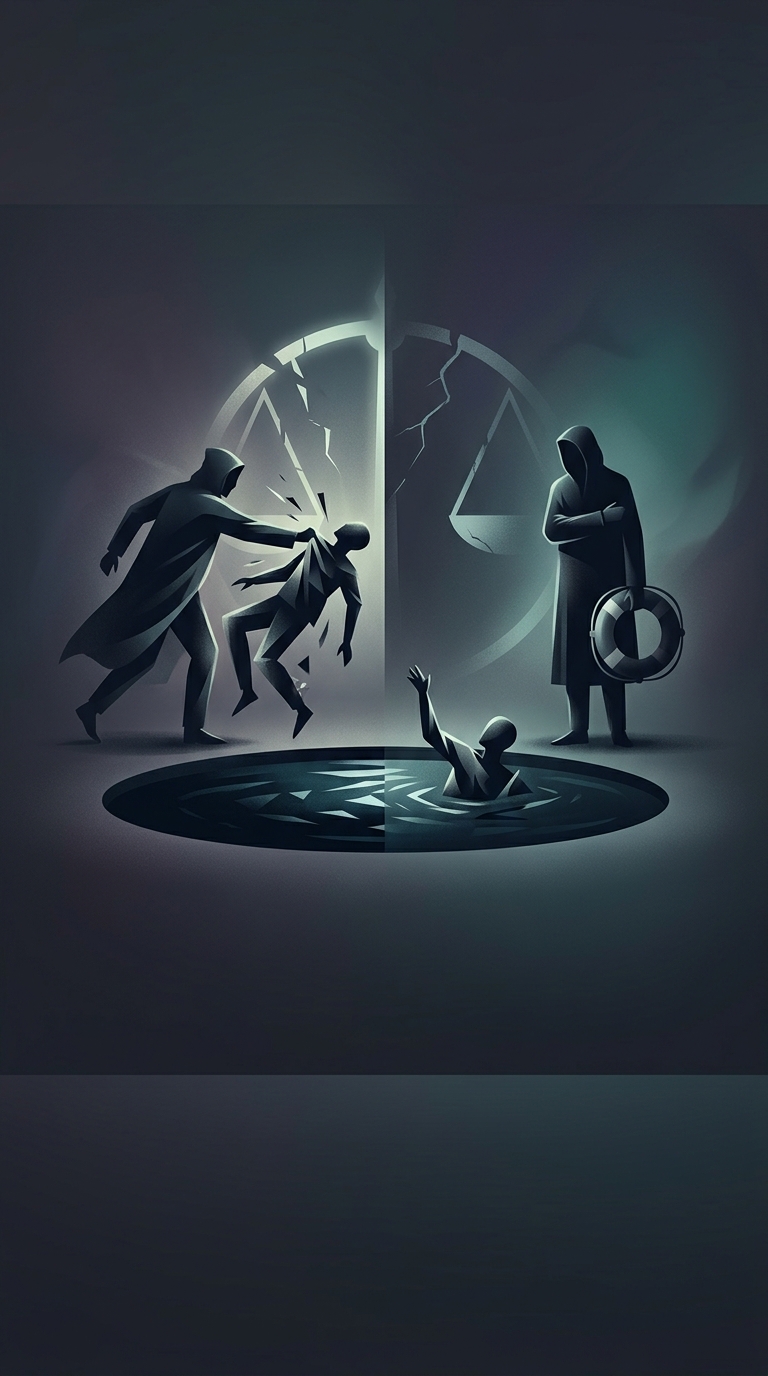
Why outcomes distort judgments of a decision
Imagine two people make the same risky choice with the same information. One causes a serious injury; the other gets home without incident. The injury is impossible to ignore, so observers may judge the first person more harshly—even if neither could predict which outcome would follow.
Psychologists call this outcome bias: evaluating a decision partly by what happened afterward instead of by the information and reasoning available when the choice was made. A vivid consequence can pull attention away from the risks that were knowable beforehand. Once the bad result is known, it can also feel as if it should have been predictable all along, a hindsight effect that makes uncertainty harder to remember.
Why punishment can follow the result
Punishment is not based on a single judgment. People may be weighing how careless someone seemed, how much harm was done, and what response feels appropriate. A harmful outcome makes the damage concrete and can increase the desire for accountability or compensation. When nothing bad happens, the same risky act may seem less serious simply because its danger never became visible.
That difference can make punishment track moral luck: circumstances outside a person’s control change how blameworthy the same conduct appears. The term does not mean consequences are irrelevant. Actual harm matters to victims and may create a need to repair damage. But harm alone does not show that a person made a worse decision; that requires looking at what they knew, what risks they took, and whether they had safer alternatives.
Separate the choice from the damage
A fair evaluation asks two questions: Was the decision reasonable given what was known at the time, and what harm actually resulted? Keeping those questions apart helps prevent a lucky outcome from excusing recklessness—or a disastrous outcome from making an otherwise identical choice seem more blameworthy. The same act can still warrant different responses because the damage differs, but the outcome should not silently rewrite what the decision-maker could have known.