Why doing something can feel more blameworthy
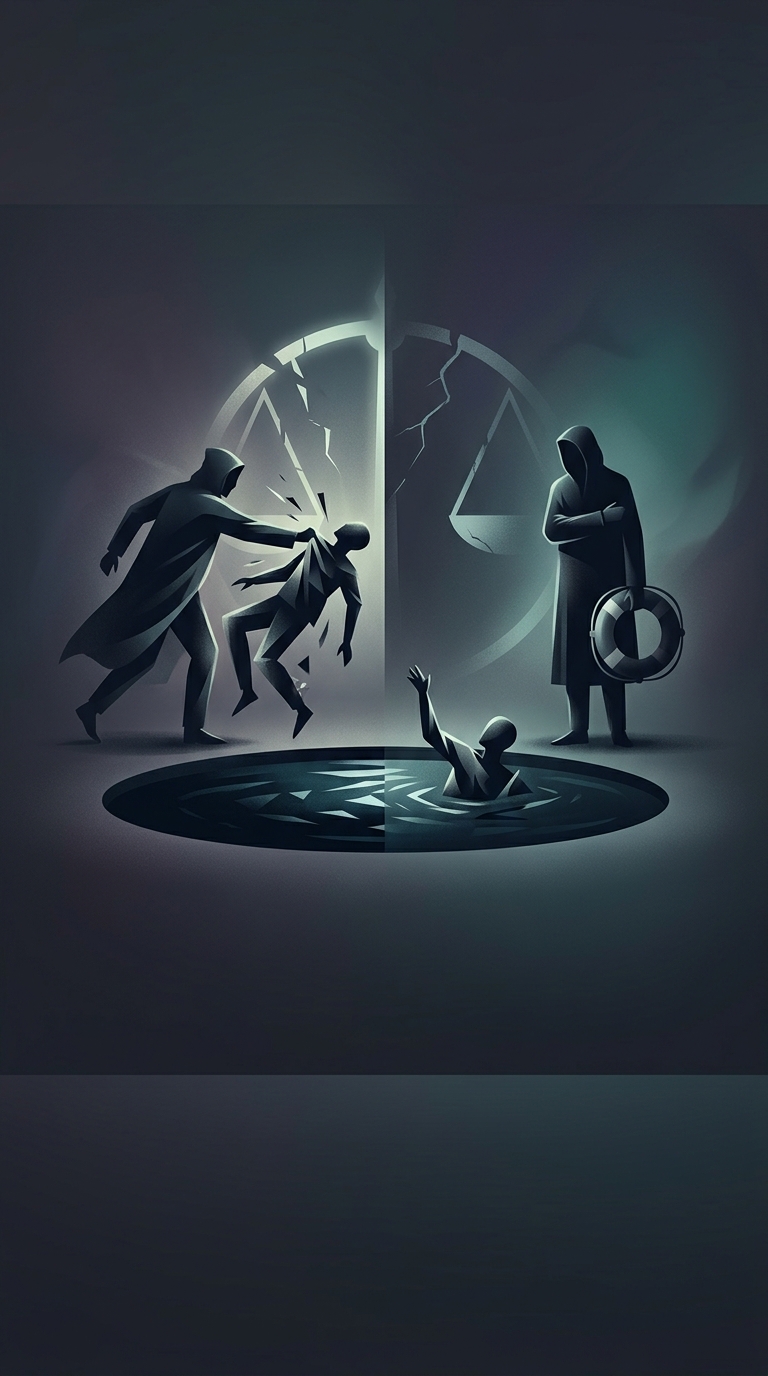
When harm follows an action, the link is visible: someone chose a step, and the result came after it. When harm follows inaction, the chain is less obvious. The person may seem to have merely watched events unfold, even if acting could have changed the outcome. This difference in how people judge the two cases is called omission bias.
A key part of the bias is counterfactual thinking: imagining what would have happened if someone had made a different choice. After an action, the alternative can seem simple—“they should not have done that.” After inaction, the alternative may feel less definite: Would stepping in really have helped? Was it the person’s responsibility? Uncertainty can make passive choices seem less culpable than active ones, even when the resulting harm is the same.
How responsibility changes the judgment
People do not assess only the outcome. They also consider whether someone had a duty to act, understood the danger, and had a realistic chance of preventing it. A bystander with no clear way to help may be judged differently from someone entrusted with another person’s safety. Those details matter; omission bias describes a tendency, not a rule that action and inaction are always morally equivalent.
The bias can also favor the familiar option. Changing course makes a person feel like the author of whatever follows, while leaving things as they are can feel safer because the decision is less visible. That sense of safety is not proof that inaction is harmless. When judging a choice, asking what the person knew, what alternatives were available, and what would likely have happened otherwise can bring the overlooked decision back into view.