Why direct harm feels different from letting harm happen
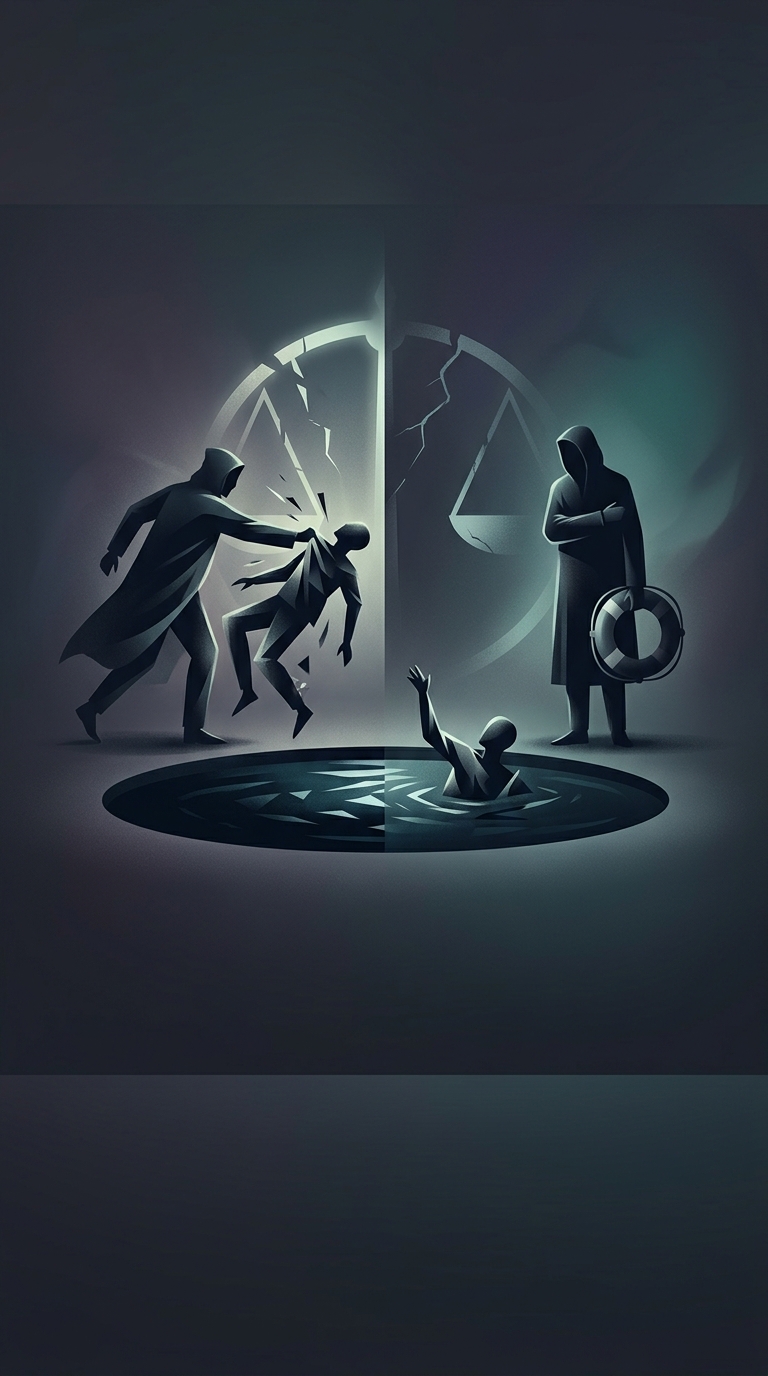
When someone pulls a lever that sends danger toward a person, the harm has a clear human link: a deliberate movement, a foreseeable result, and an identifiable victim. Watching a person get hurt can feel less blameworthy because the observer did not set that chain in motion. The outcome may be equally terrible, but the role the person played is different.
That difference engages more than a calculation of lives saved or lost. People judge not only what happened, but how they caused it. Directly using someone as a means to prevent a worse outcome can feel especially troubling: the person is no longer merely at risk but has been made part of the plan. By contrast, allowing an existing danger to continue can seem like failing to intervene rather than choosing a victim.
The mind weighs action, intention, and responsibility
A lever makes agency unusually visible. The person must decide, reach out, and act; the consequence follows immediately. That can intensify emotional reactions such as aversion and guilt, while making responsibility harder to pass off as chance. In a watching scenario, by comparison, people may feel less personally involved—even when they could have changed what happened.
This is not simply a rule that action is always worse than inaction. People may condemn an omission when someone had a clear duty or easy opportunity to help. And if pulling a lever prevents more harm without using anyone as a tool, many people judge the intervention differently. Details such as intention, control, and whether the victim is deliberately targeted can change the response.
Why the distinction matters
The contrast exposes a tension in moral judgment: outcomes matter, but so does the route by which they occur. In real life, that can shape how people assess a doctor’s decision, a bystander’s failure to help, or a policy that imposes a cost on some people to protect others. A clean tally of benefits and harms may miss the question that makes the choice feel personal: who was made to bear the harm, and who chose it?