Why physical action changes the trolley problem
In the classic thought experiment, a runaway trolley is headed toward several people. You can divert it onto another track, where it will kill one person instead. On paper, the choice can look like a calculation: accept one death to prevent more. But a version in which you must physically push someone into the trolley’s path often feels harder, even if the number of lives saved is the same.
The difference is not the arithmetic. It is how vividly the choice makes you experience your own role in the harm.
The mind distinguishes doing from allowing
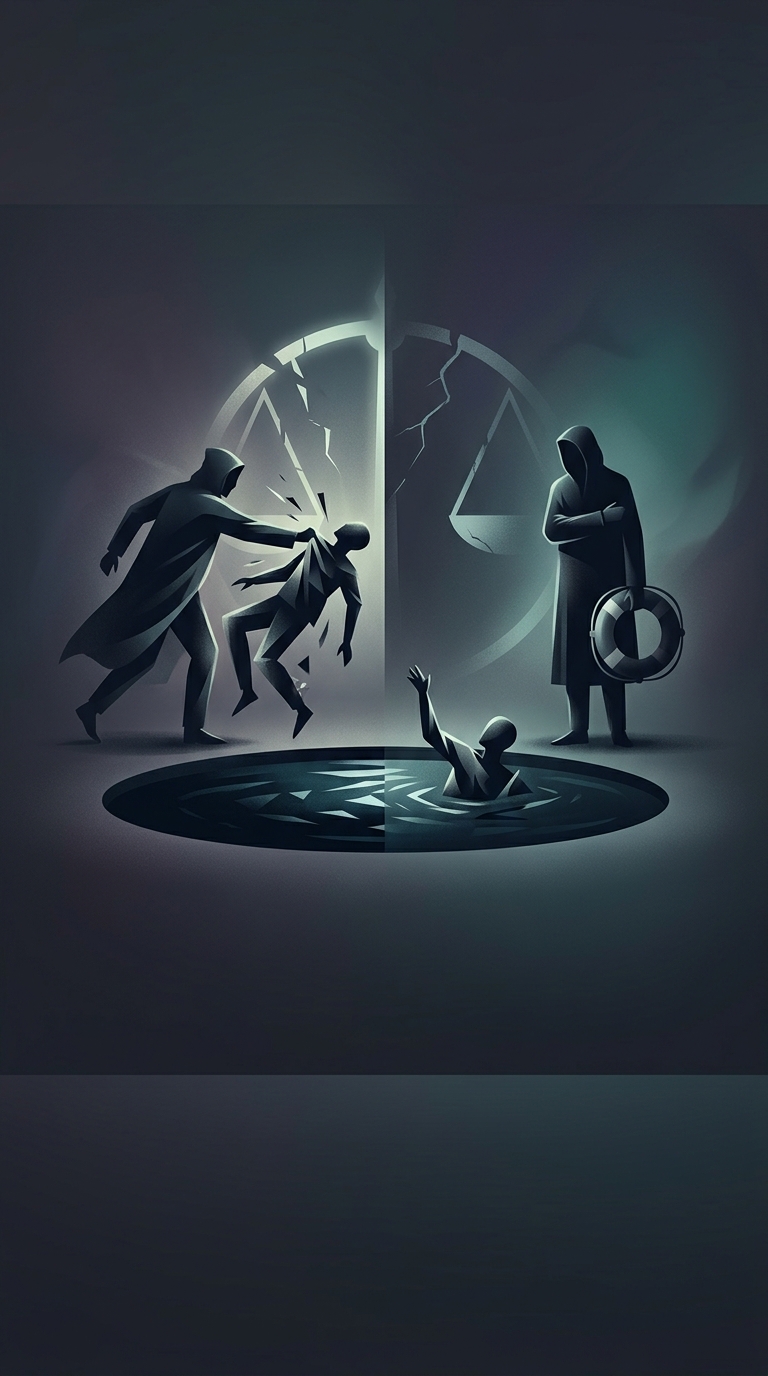
People often react more strongly to harm they cause directly than to harm that follows from redirecting danger or failing to stop it. A physical act—especially one involving force or close contact—can make the victim’s suffering feel immediate and make the decision-maker’s responsibility feel personal. By contrast, pulling a distant lever can feel more like changing the course of an existing danger.
That distinction can shape moral judgment before deliberate reasoning has fully weighed the outcomes. The emotional response is not simply a verdict that the action is wrong; it is a signal that the choice involves direct agency, bodily harm, and a person rather than an abstract number.
Why the reaction matters
The trolley problem separates two questions that ordinary decisions often blur: How many people will be harmed, and what am I doing to bring that harm about? When the scenario puts your hands on the victim, the second question becomes impossible to ignore. That does not settle the dilemma, but it explains why identical outcomes can feel morally different—and why a neat calculation on a page may not predict how a person responds when the harm feels immediate.