Plenty of food did not mean plenty of social space
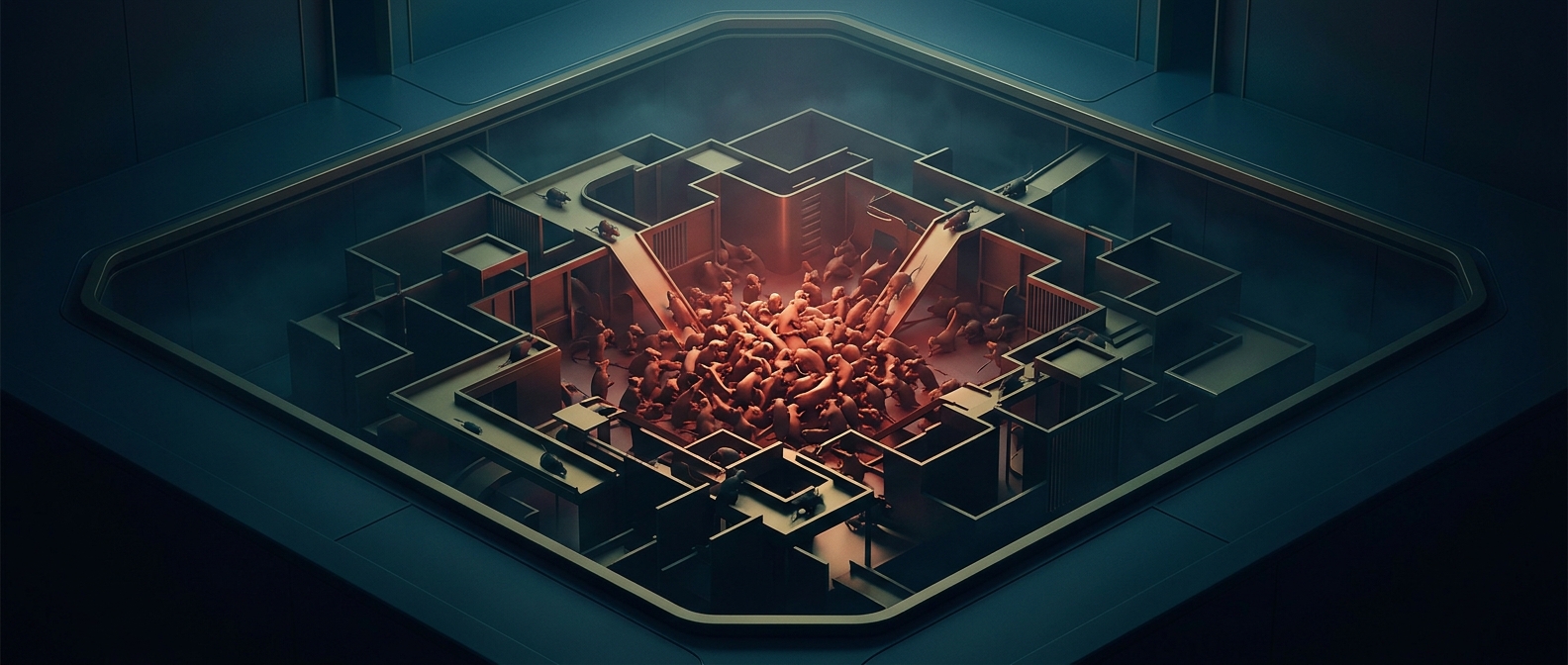
The “mouse utopia” experiments are often remembered as a test of what happens when animals have everything they need. But food and water were only part of what mice needed. In the enclosure, many animals had to share the same confined environment and repeatedly encounter one another, while opportunities to establish stable social roles and raise young became harder to manage.
As the colony grew, ordinary interactions changed. Some mice withdrew from social life; others failed to mate or care for their young. With fewer successful births and less care for pups, the colony began to decline even though supplies remained available. The enclosure removed scarcity of food, not the pressures created by crowding and disrupted social life.
Why the experiment became a warning
The striking result was not that comfort automatically makes animals collapse. It was that abundant material resources could not prevent deterioration when the colony’s social patterns broke down. For mice, feeding, mating, nesting, and caring for young all involve interaction; a crowded setting can affect those behaviors even when no one is starving.
That makes the experiment a powerful image, but not a simple forecast for human society. Mice in a designed enclosure are not people with the same choices, institutions, or ability to reshape their surroundings. The more grounded lesson is narrower: providing necessities does not, by itself, guarantee a livable social environment. In the experiment, the food stayed available while the colony’s capacity to sustain ordinary social life faded.