How a Tendon Turns Muscle Pull Into Movement
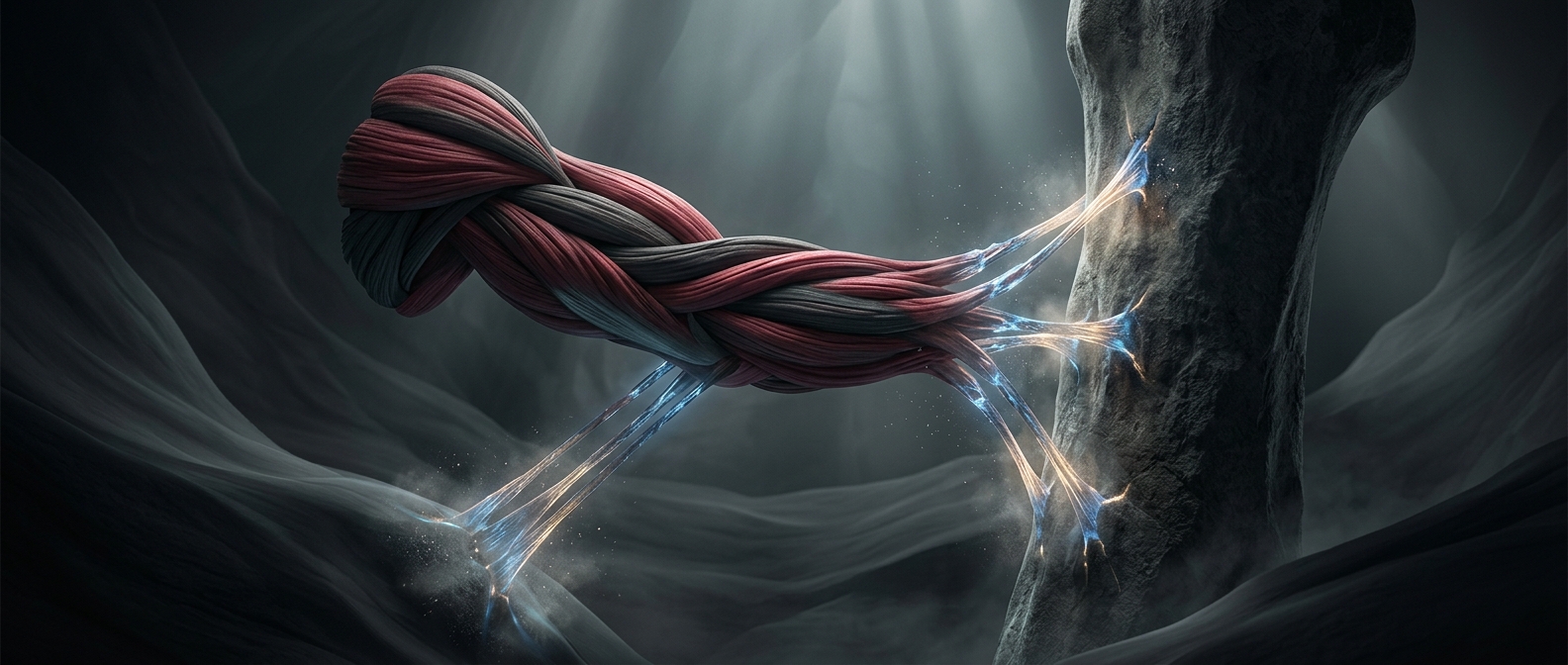
A muscle can shorten, but it cannot move a bone unless its force reaches the skeleton. A tendon provides that link: its fibers continue from the muscle and attach to bone, creating a strong path for the muscle’s pull. When the muscle contracts, tension travels through the tendon and moves the joint.
Tendons are built mainly from collagen, a durable protein arranged in closely packed bundles. This structure makes them strong under tension while allowing a small amount of stretch. That slight give matters: it helps a tendon handle sudden loads rather than behaving like a perfectly rigid cable.
The Achilles’ Springlike Role
With each step, the calf muscles pull on the Achilles tendon, which connects them to the heel bone. As the foot takes weight, the tendon stretches slightly and stores some of the movement’s energy. When the heel lifts and the foot pushes off, the tendon recoils, returning part of that energy to the stride.
This spring effect can make repeated movement more efficient: the calf muscles do not have to supply every bit of push from scratch at the instant of takeoff. But the tendon is not an extra muscle. It does not actively contract; its useful contribution comes from elastic stretch and recoil, coordinated with the muscles that load it.
That distinction is easy to feel when walking or running. The calf creates the pull, while the Achilles transmits it and briefly behaves like a loaded spring—then releases that stored energy as the foot leaves the ground.