Why a Container’s Corners Do the Heavy Work
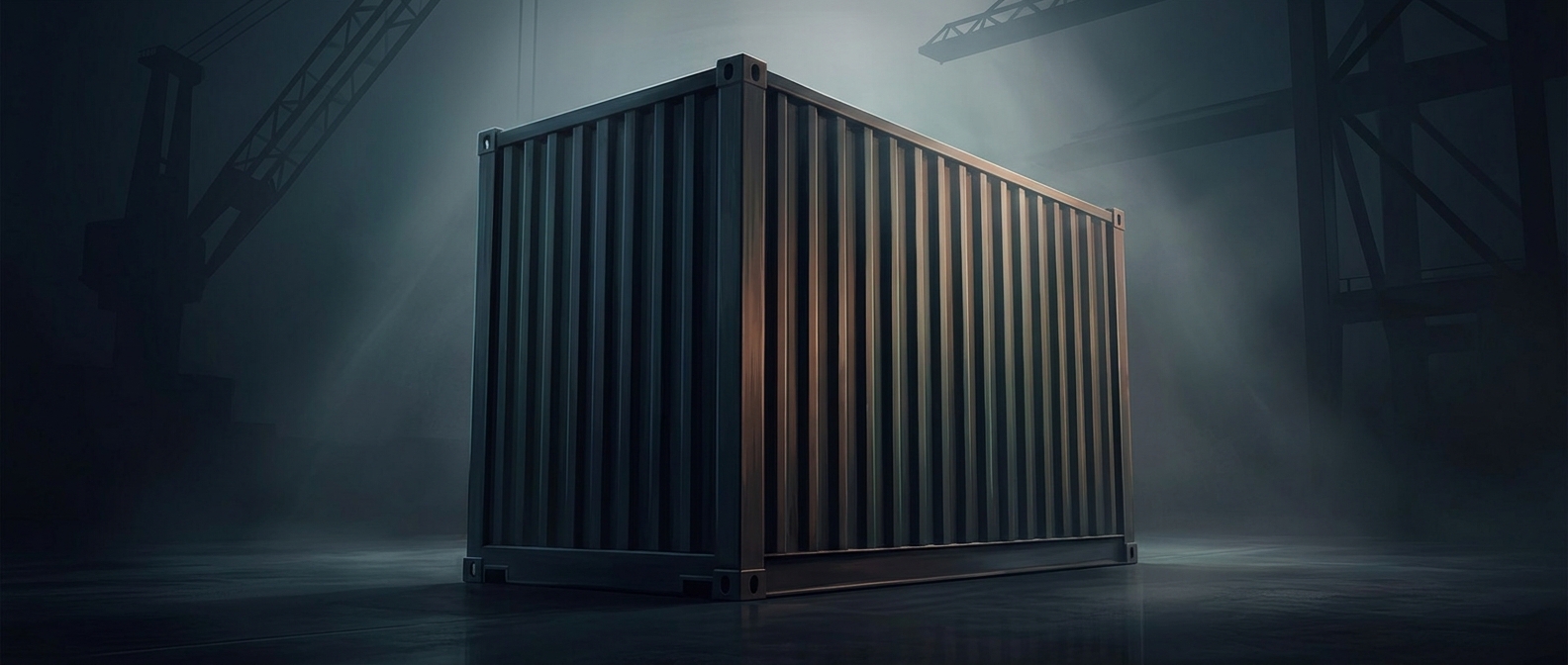
A freight container is built around a simple structural idea: send the force of the containers above it through a small number of strong, aligned points. Vertical corner posts carry that load down to cast-steel fittings at each end. When containers are stacked, the fittings meet at the corners, creating a direct path from one box to the next instead of asking broad stretches of sheet metal to hold up the stack.
That arrangement also helps keep the container’s shape. Its walls and roof enclose the cargo and contribute to the structure, but they are not meant to serve as the main supports for the weight piled overhead. If a container lands unevenly, or its corners are damaged, forces can concentrate where the structure is least able to handle them.
One Fitting, Several Jobs
Each corner casting has openings shaped to work with different pieces of handling equipment. A crane’s spreader can grip the fittings to lift a container; on a ship or at a terminal, a twistlock—a metal fastener that turns into an opening and locks in place—can connect containers or secure them to the deck. The same reinforced points therefore serve as both the container’s lifting handles and the places where stacks are joined.
Because these fittings sit at standardized corners, cranes, chassis, ships, and containers can work together without gripping the walls. The design makes a box that may be packed with varied cargo behave, from the outside, like a predictable structural unit.
The practical consequence is that a container’s most important load-bearing parts occupy very little of its surface: damage to a corner can matter more than a much larger dent in a wall, because the corner is where lifting, stacking, and securing forces converge.