The Mirror Changes Direction Across Its Surface
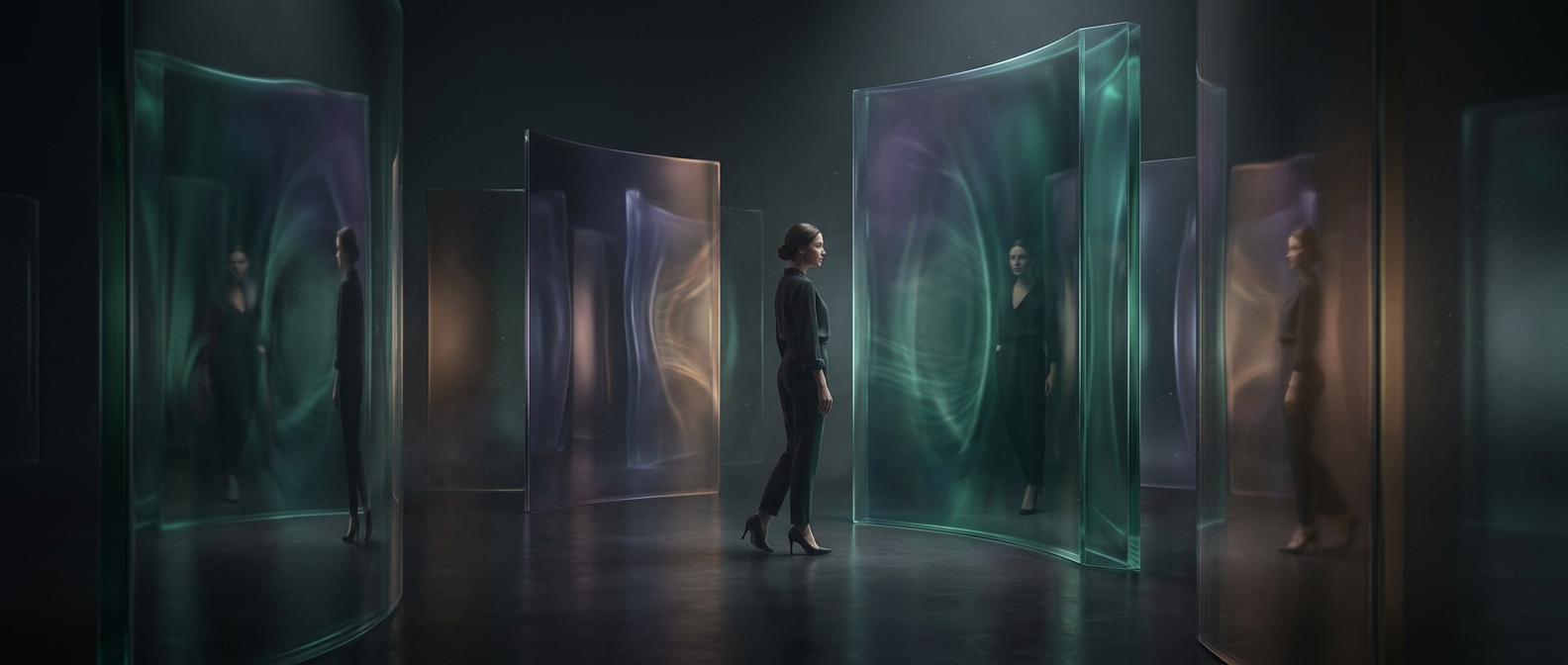
A flat mirror sends light back at a steady angle: light striking one spot leaves at the same angle it arrived. A funhouse mirror has bulges, dips, or ripples, so the surface tilts differently from place to place. Each patch redirects light in a slightly different direction, sending parts of your reflection to different places in your eyes.
That makes the mirror behave like many tiny angled mirrors joined together. A convex bulge tends to spread reflected rays, making the image appear smaller in that region; a concave dip tends to bring rays together, enlarging it. When those curves vary across the mirror, one part of your body can be magnified while the next is compressed.
Why a Small Curve Can Change Your Whole Silhouette
Your eyes assume that light from a reflected point traveled in a straight line after bouncing off the mirror. But the surface’s changing angles redirect those rays, so the apparent locations of your face, shoulders, or legs shift. A gradual curve may make you look unusually tall or short; a sharp change can create a sudden pinch or bulge.
The effect also depends on where you stand. Moving closer changes which parts of your reflection line up with the mirror’s curves, so the distortion can shift across your body. The mirror is not simply enlarging or shrinking your reflection—it is rearranging its proportions, which is why a funhouse image can look recognizable and completely wrong at the same time.