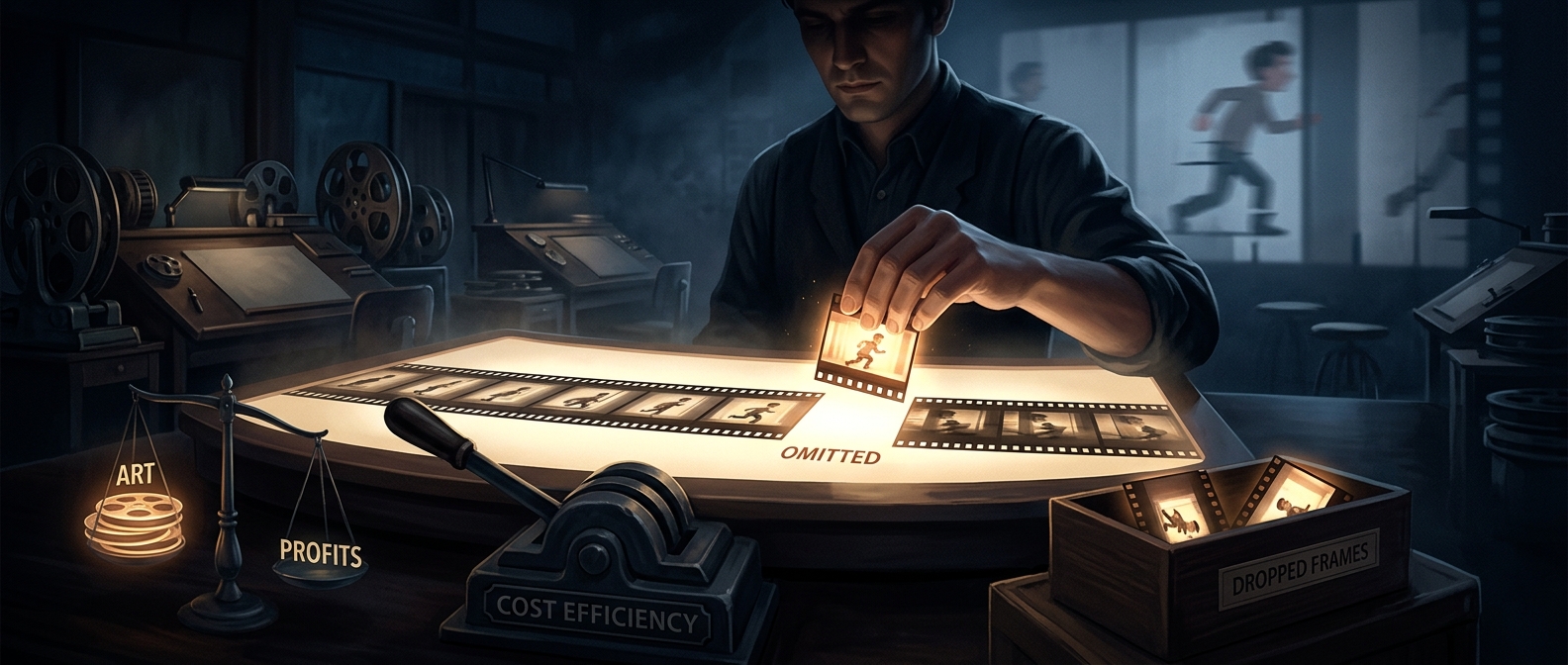
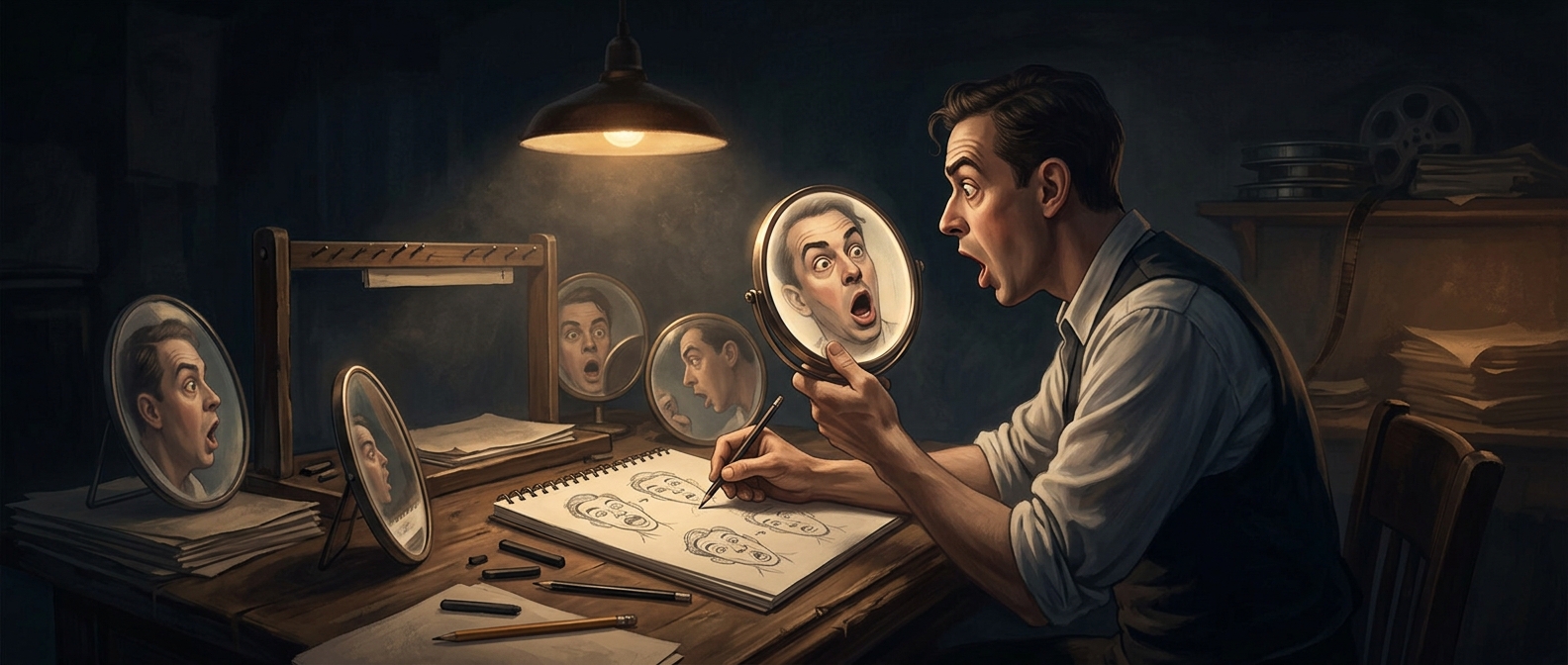
The “mistakes” had to be animated on purpose
The bloopers in A Bug’s Life and Toy Story 2 look like accidents: a character flubs a line, notices a boom microphone, or drops the pretense of being in a scene. But animated characters cannot wander off script or collide with equipment by chance. Artists had to design each gag, animate it, and render the finished images—the same laborious process used to make the films themselves.
Rendering is the stage when a computer calculates an image from a 3D scene, including its shapes, movement, lighting, and surfaces. At the time, that work could be slow and costly. A few seconds of comic “outtakes” therefore meant real production effort, even though the scenes were deliberately fake.
A joke about how movies are made
The gag depends on a familiar Hollywood convention: blooper reels invite viewers to imagine that performers have stepped out of their roles and revealed the messy reality behind a polished production. Pixar borrowed that convention but applied it to characters whose every gesture was already planned by artists. The supposed spontaneity was itself a carefully constructed performance.
That contradiction also made the credits part of the entertainment rather than a pause after the story. The characters seemed to recognize the cameras, crew, and filmmaking process around them, turning a computer-animated world into a playful imitation of a live-action set.
The punchline was built into the production
The effort behind the scenes sharpened the humor: Pixar used painstaking digital craft to make its characters appear to behave carelessly. The “mistakes” were not leftover accidents from production; they were new scenes made for the joke. Even the moment that seemed to break the illusion depended on the very animation process it pretended to interrupt.