A funeral became a political journey
When Philip of Burgundy died in 1506, Joanna was not merely his widow: she was queen of Castile, and their marriage had placed him at the center of its government. His death left a question of who would rule in her name. Joanna’s father, Ferdinand of Aragon, and Philip’s supporters both had political stakes in the answer.
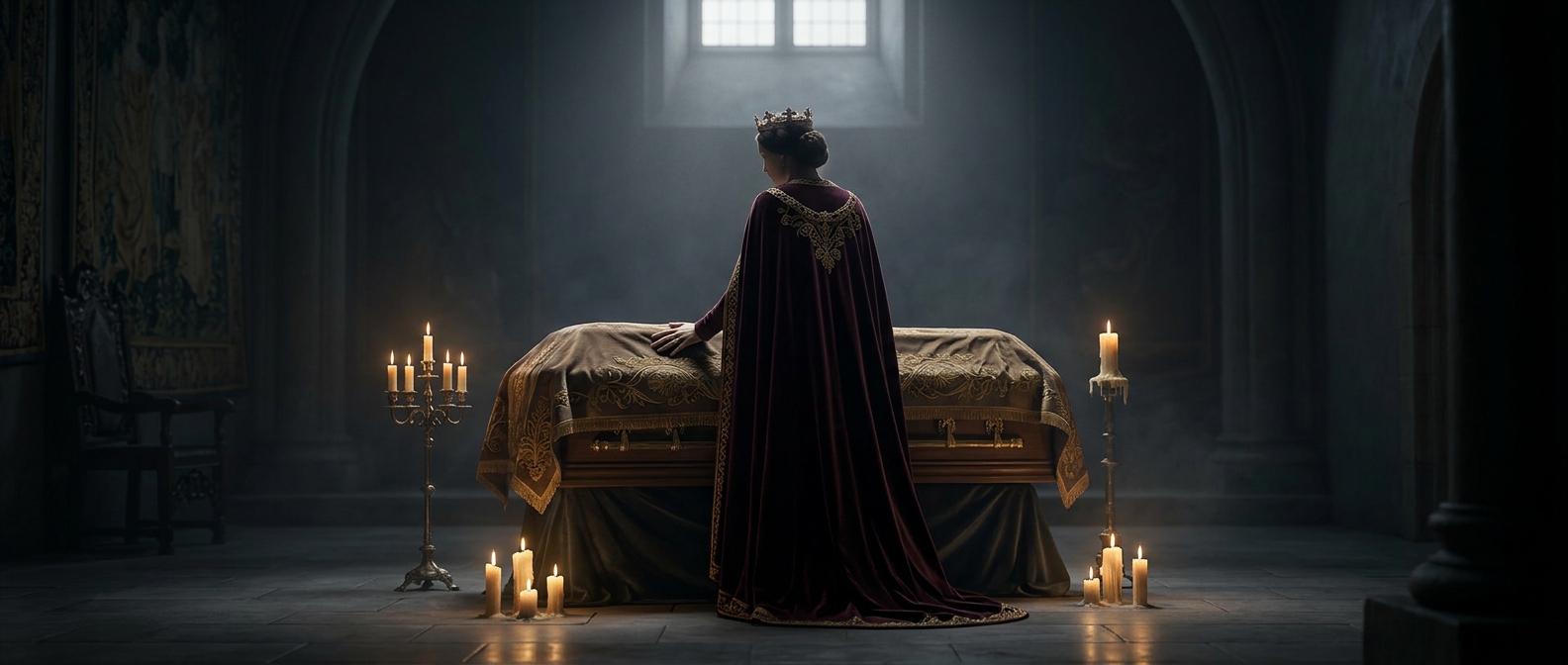
Joanna traveled with Philip’s remains, delaying their final burial. Accounts say she sometimes had the coffin opened to see him. The detail is difficult to separate from the stories later told about her mental state, but it captures how her grief became visible in public rather than remaining a private mourning ritual.
Grief and the struggle to govern
A monarch’s mourning could not simply pause the machinery of government. Castile needed decisions, and powerful relatives and nobles competed to shape them. Joanna’s conduct was treated as evidence that she could not rule effectively; Ferdinand eventually took control as regent, and Joanna was confined at Tordesillas in 1509.
That does not make her grief a simple explanation for her political fate. Her title and inheritance made control of her authority valuable, while reports of her behavior helped others argue that they should exercise it. The stories about the coffin circulated in a world where private distress could become a public case against a queen.
Philip’s body remained unburied for years before being laid to rest with Joanna at Granada’s Royal Chapel. The long interval turned a widow’s attachment into part of the kingdom’s political history: even in death, Philip’s presence was entangled with the question of who had the right to rule Castile.