How a London bathroom shaped a hit recording
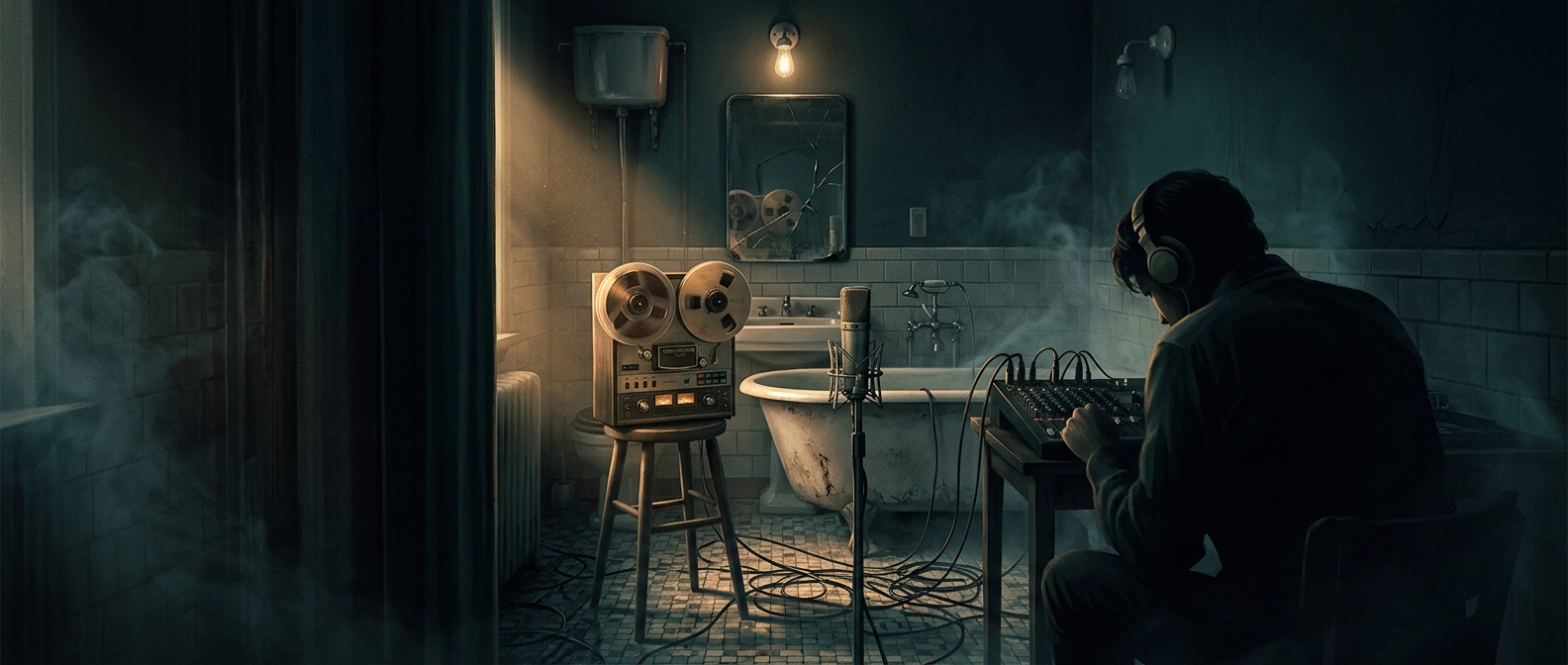
A bathroom can add an audible space to a voice without any electronic effect: sound bounces off hard surfaces such as tile and porcelain, then reaches the microphone in quick reflections. Those overlapping reflections make the voice seem to linger. In a small room, the result can feel close and dense rather than like a grand hall.
Joe Meek used that natural echo as part of the recording, not as a backdrop to hide. The bathroom’s sound gave the vocals an uncanny edge, helping create the eerie character associated with his production. The room itself became a tool: instead of trying to remove its acoustic fingerprint, Meek made it part of the performance.
Turning a flat into an instrument
The staircase offered another sound source. Stomping on the stairs produced a blunt, irregular beat that could serve as percussion. It was not a conventional drum part; its appeal was precisely that it sounded physical and unusual. A footfall carries the character of the place where it happens, just as a bathroom echo carries the character of the room.
Using rooms and objects this way let Meek build a studio sound from what was available in his flat. The important choice was not merely recording at home, but treating the home’s acoustics as compositional material. A singer in a tiled room and a stomp on the stairs could make a record feel haunted without needing a haunted place at all.