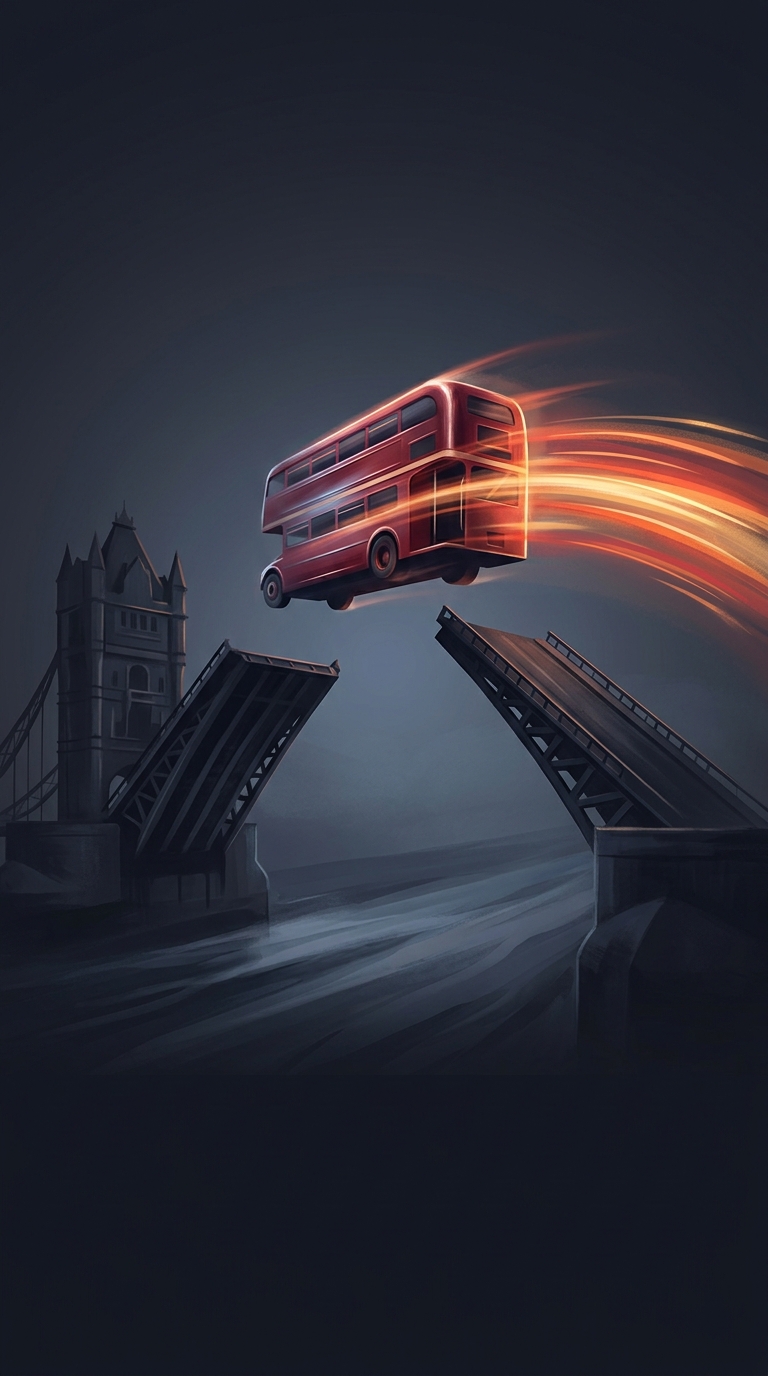
How a rising bridge made a road disappear
Tower Bridge opens by lifting two roadway sections, called bascules, to let ships pass. As a bascule rises, the road at its inner end tilts upward and separates from the roadway opposite it. A vehicle caught near the meeting point can suddenly face a growing gap rather than a continuous surface.
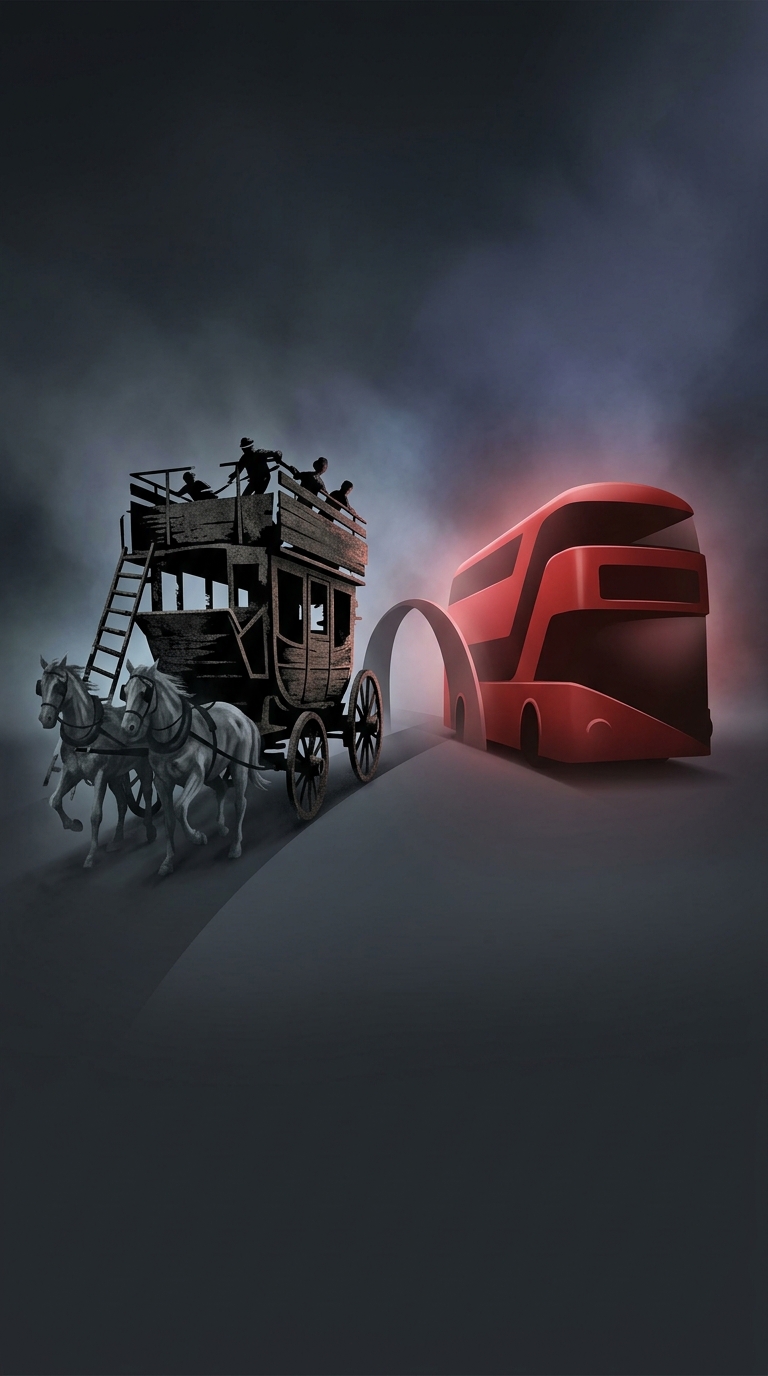
That was the problem confronting bus driver Albert Gunter in 1952. He accelerated toward the opening, using the bus’s forward motion to carry it off the rising roadway and across the gap. For a brief moment the bus was airborne; it then landed on the other side. Momentum did not make it fly like an aircraft—it simply carried it through a short jump before gravity brought it down.
A successful crossing, with a cost
The maneuver worked, but the landing was a violent impact. The bus’s conductor was injured, a reminder that the people inside had no control over the improvised leap and no protection designed for it. A double-decker’s size made the episode especially striking, but it did not change the basic mechanics: speed carried the vehicle across; gravity and the far roadway determined what happened next.
The bridge’s movement turned an ordinary drive into a split-second decision. Gunter’s response got the bus across, but the injured conductor shows the difference between clearing an obstacle and making a safe crossing.