Why one case can reach many cabins
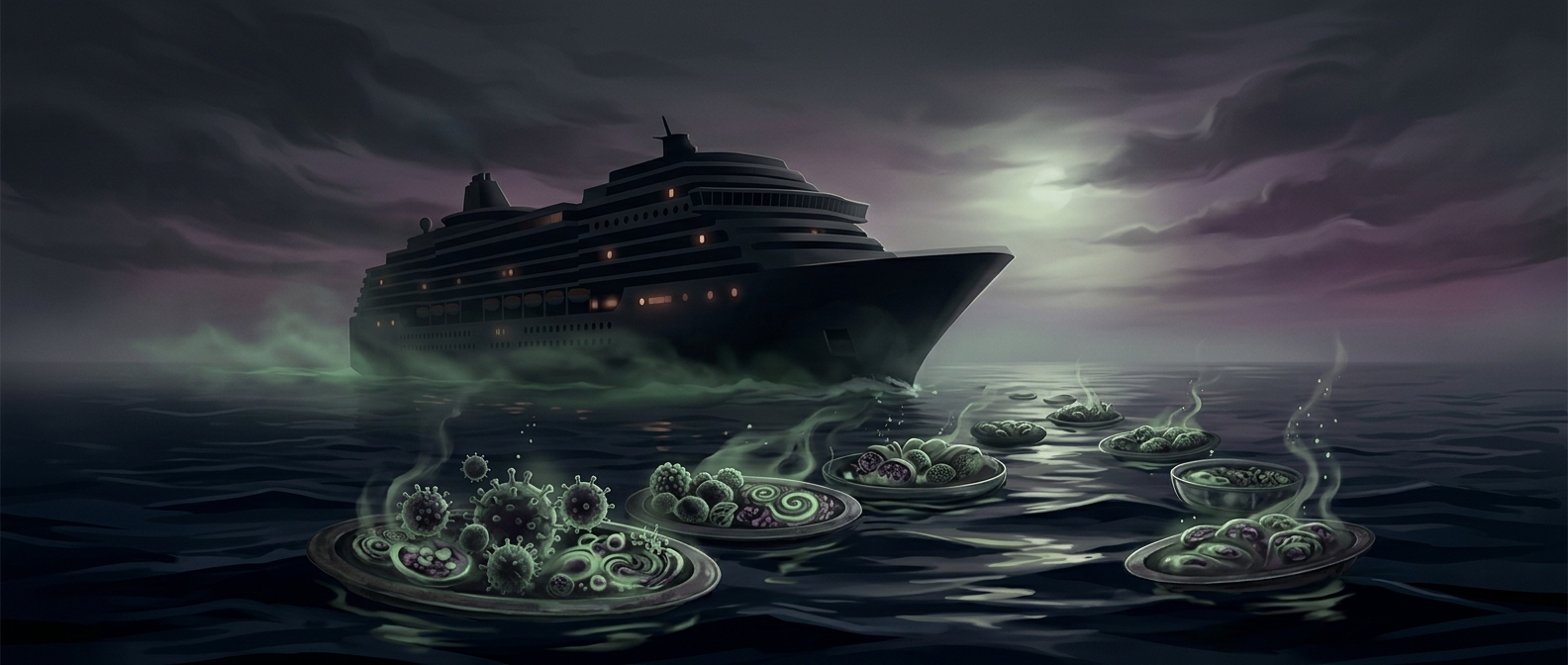
Norovirus outbreaks are less about a ship being uniquely dirty than about how many people share its routines. Passengers move through the same dining rooms, restrooms, elevators, and entertainment spaces, touching the same surfaces and returning to the same close quarters. A person can spread the virus before realizing they are ill, and the delay before symptoms appear gives exposure time to travel through those shared spaces.
The chain is unusually easy to sustain. Norovirus can spread when tiny traces of contaminated stool or vomit get onto hands, food, or surfaces and then reach someone’s mouth. A contaminated hand can pass germs to a serving utensil; a shared handrail can connect passengers who never met. In a crowded setting, many ordinary contacts create many chances for transmission.
Breaking the chain takes more than cleaning
The practical challenge is interrupting several routes at once. Sick passengers and crew may need to stay away from others, while staff clean contaminated areas with products effective against norovirus and reinforce careful food handling. Handwashing with soap and water matters because hand sanitizer alone is less reliable against this virus.
A ship’s schedule can make response harder: people are moving between common areas, and new passengers may arrive as others leave. That does not mean every voyage will produce an outbreak. It means that when the virus gets a foothold, the same shared routines that make a cruise convenient can also help carry it from one person to the next.