What keeps a cruise ship from tipping over
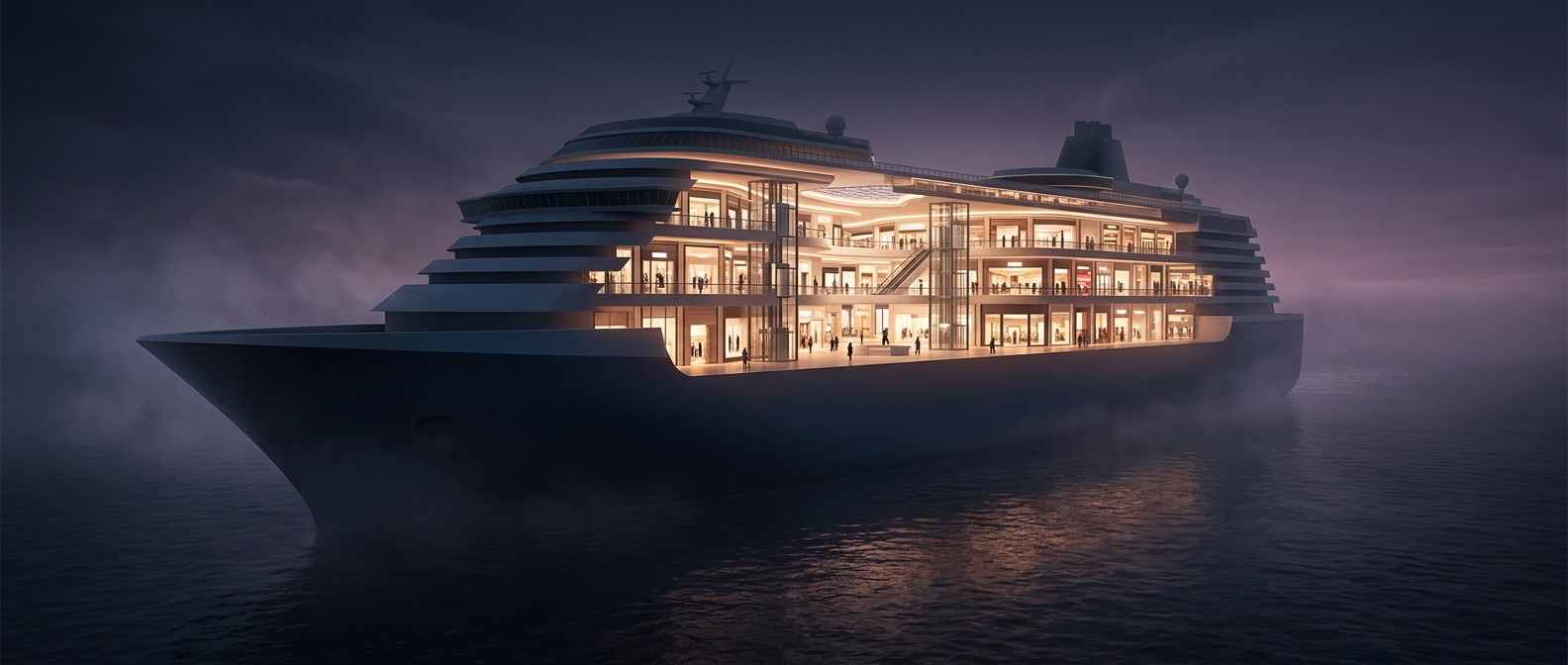
A cruise ship does not need a deep, sailboat-style keel to stay upright. Its stability comes from how its weight and buoyancy work together. Heavy equipment, fuel, and ballast water are kept low where practical, lowering the ship’s center of gravity—the point where its weight effectively acts.
If the ship tilts, the underwater shape changes: more water is displaced on the lower side, shifting the center of buoyancy, the point where the water’s upward force acts. That upward force then pushes off-center from the ship’s weight, creating a restoring turn. Naval architects design the hull so this effect tends to bring the vessel back toward upright. A broad hull can make that shift substantial, though the ship’s full loading and shape matter too.
Fins smooth the motion, not the basic balance
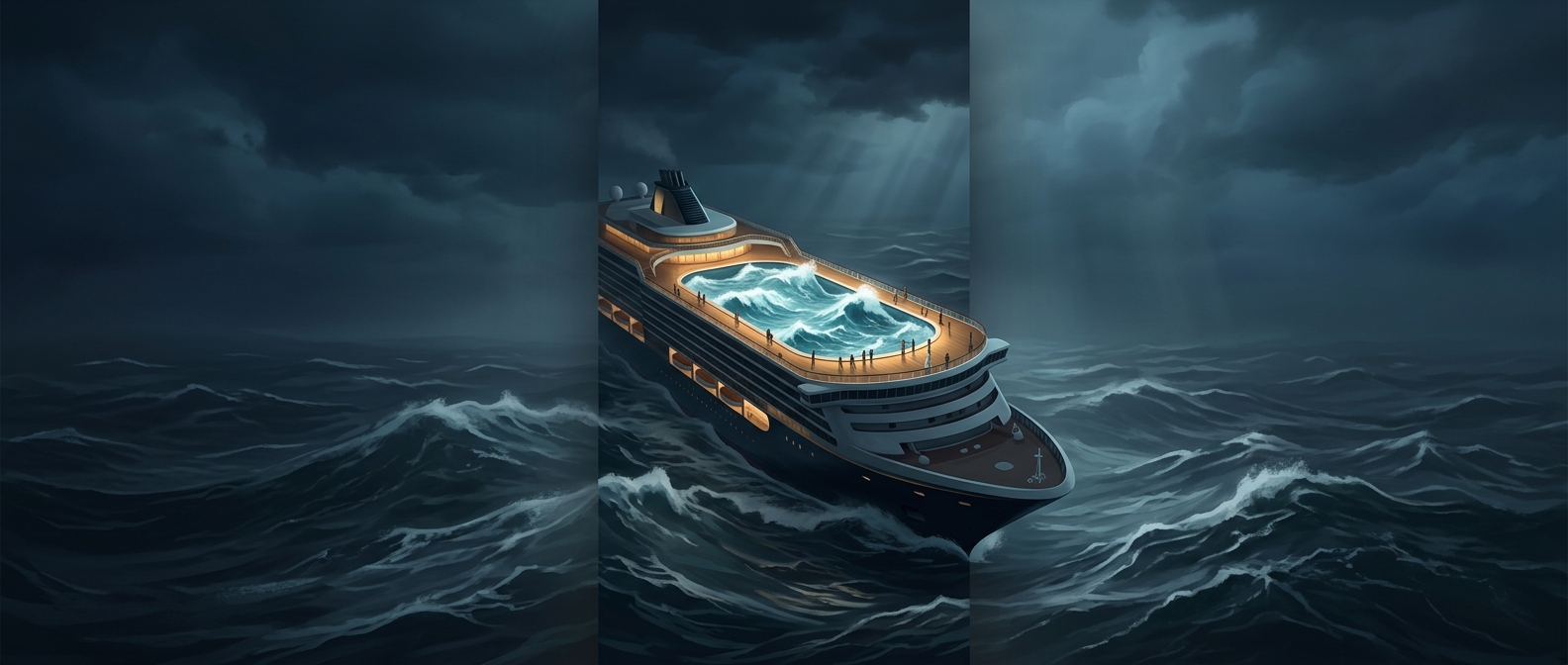
Stability does not mean a ship cannot roll. Waves can still rock it, and passengers may feel that motion even when the vessel remains far from capsizing. Stabilizer fins address this separate problem: reducing the roll people experience.
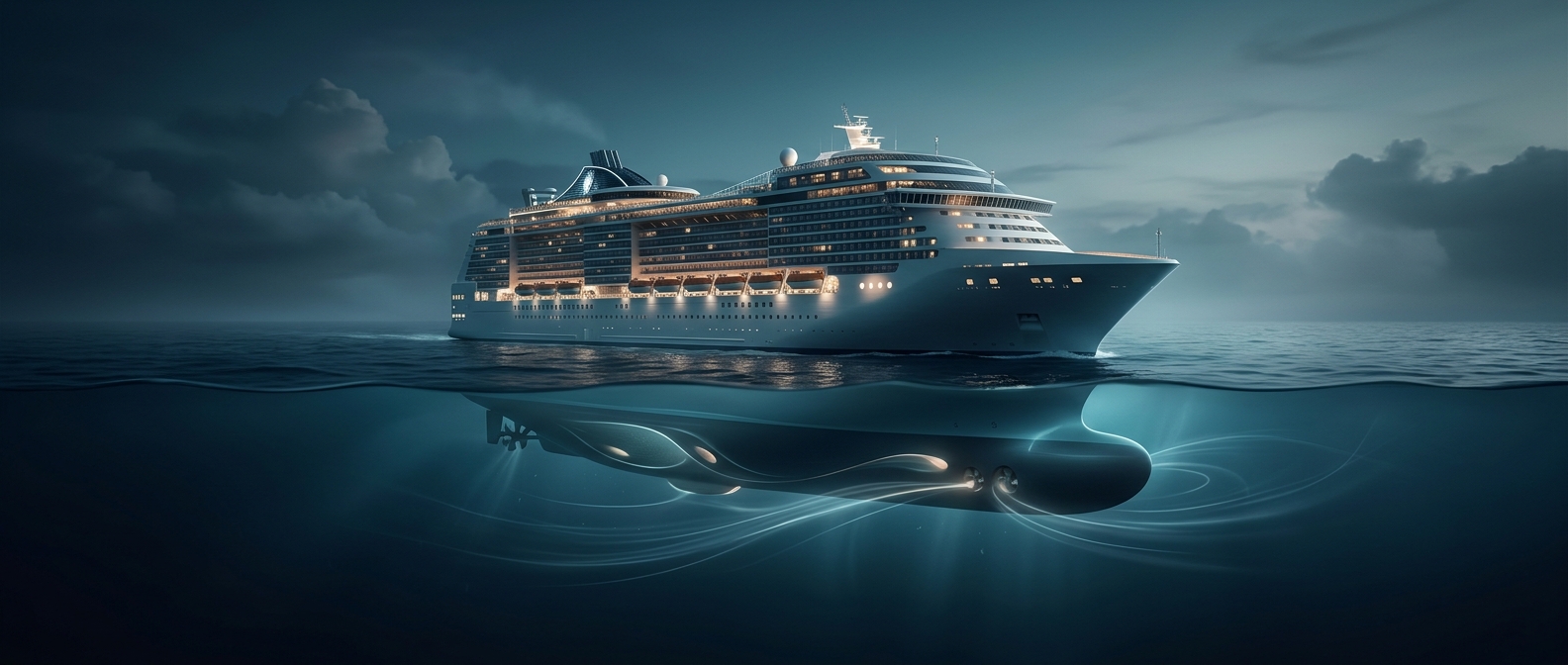
Sensors detect the ship’s rolling, and powered fins beneath the waterline change angle to push against the surrounding water. Their force resists the unwanted rotation, much like a control surface correcting a moving vehicle. They work best when the ship is moving through the water, because forward motion gives the fins water to act against; when the ship is nearly stopped, their effect is limited.
The distinction is useful: low weight and hull geometry provide the ship’s underlying righting stability, while fins help make a rough passage feel less like a pendulum ride.