Why Armored Elephants Could Break a Battle Line
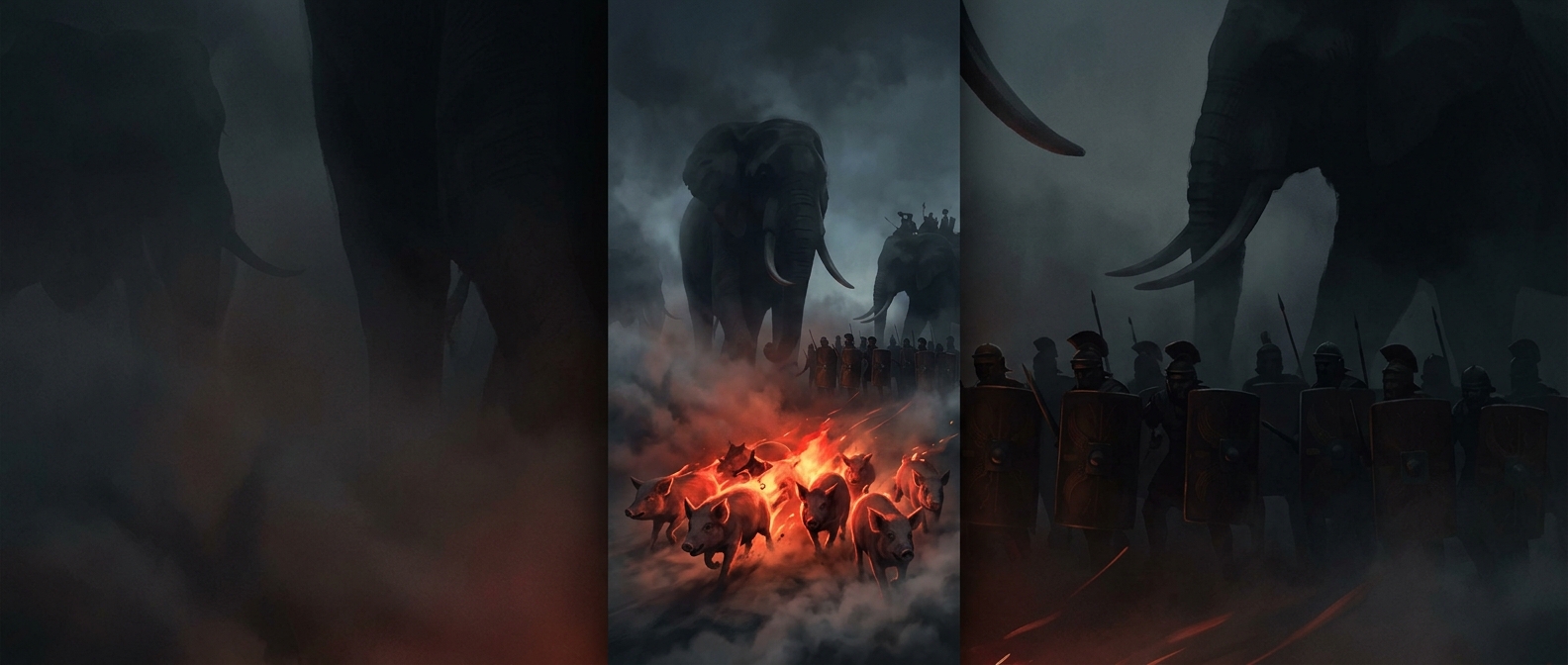
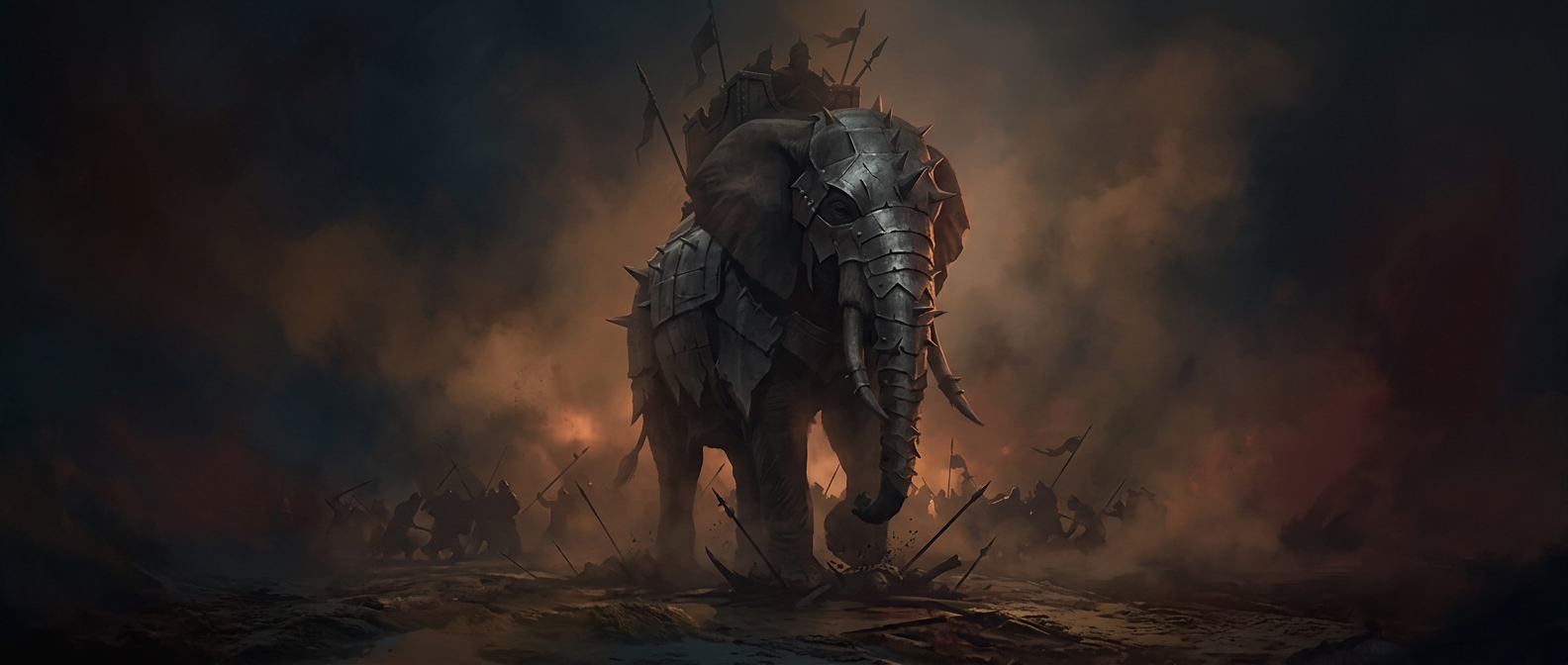
An armored elephant was not simply a large animal protected from arrows. It was a platform whose size, movement, and presence could disrupt an enemy formation before it made contact. Infantry trained to hold a line suddenly faced an animal towering over them; horses, sensitive to unfamiliar sights and sounds, could balk or bolt. Even a brief gap in a formation could expose the soldiers beside it.
Armor was fitted to the animal’s body, with coverage varying by place and period. Some elephants also carried fighters on their backs, turning the animal into a mobile position from which to observe or attack. Equipment had to protect vulnerable areas without preventing the elephant from moving, seeing, or breathing. The animal itself was the main source of force: armor helped it survive long enough to reach the opposing line.
The Weapon Had to Be Managed
An elephant was powerful but not a machine that could be steered precisely through a crowded battlefield. Its handler had to guide it amid noise, weapons, and struggling troops. If it panicked, became injured, or turned around, it could disrupt its own side as readily as the enemy’s. A commander therefore needed space and a suitable moment to commit the animal, rather than treating it like ordinary cavalry.
The tactic also depended on what the opposing army did. Soldiers who held their nerve, opened ranks, or used obstacles and missiles could blunt an elephant’s impact. Rough or confined ground could limit its movement. Keeping elephants fed, trained, and available for war added a substantial burden beyond the battlefield.
That mix of spectacle and risk explains the appeal—and the limits—of the armored elephant. Its success depended not just on armor, but on whether the enemy believed the line would hold when a living wall came toward it.