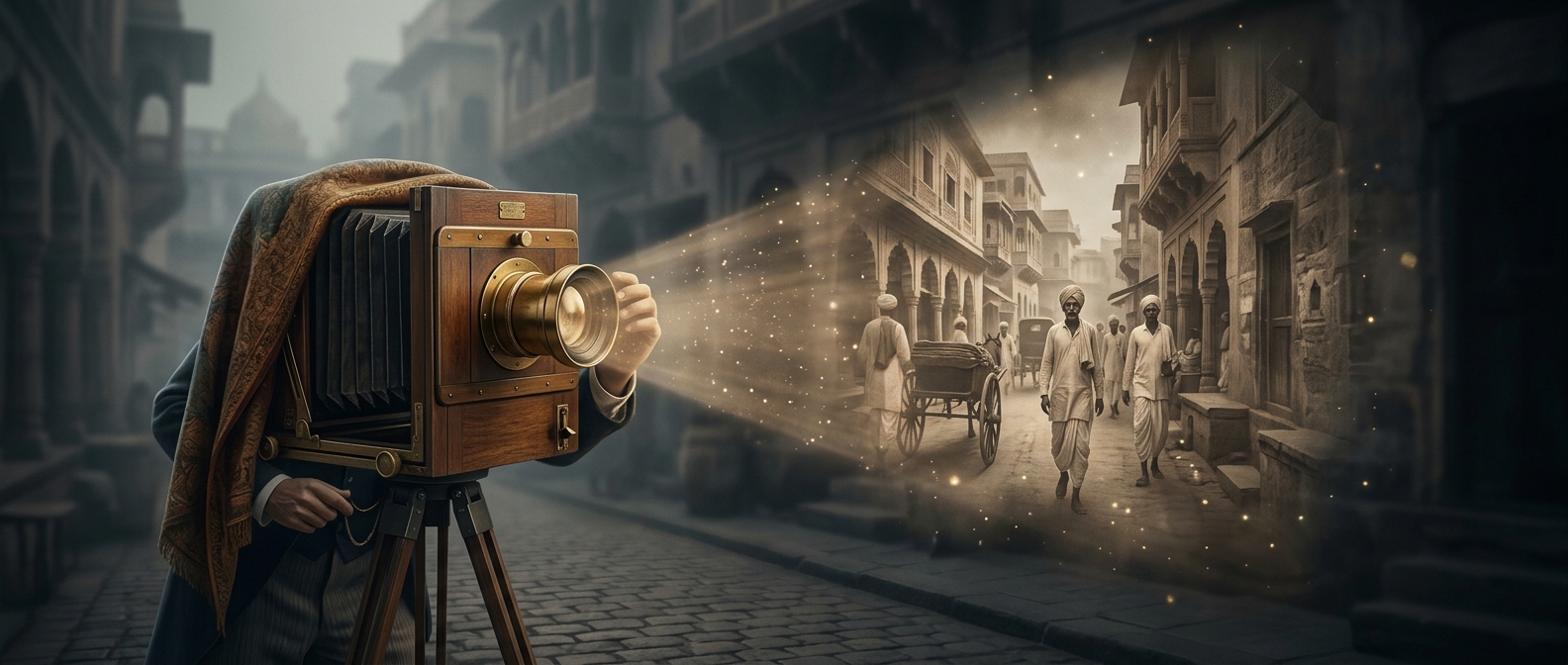
A street held still in Calcutta
In 1840, an exposure in Calcutta recorded a street scene at a moment when photography was still a new technology. A camera formed an image by directing light onto a prepared, light-sensitive surface. Unlike a painter, it did not build the scene by hand: the image emerged from the light reflected by the street itself.
That process made time part of the picture. Early photographic exposures could take long enough that buildings and other stationary features registered clearly, while people or vehicles in motion might blur or fail to appear. A street photograph was therefore not simply a snapshot in the modern sense; it showed what the camera could preserve under the conditions of that particular exposure.
From painted likeness to photographic record
For generations, a painted portrait required an artist’s time and skill, making a likeness something people commissioned rather than casually recorded. Photography offered another route: a camera could capture a person’s appearance as an image produced through light. Early photographs still demanded specialized equipment and careful handling, but the underlying promise was striking—a likeness need not be painted stroke by stroke.
The Calcutta image points to photography’s reach beyond portraiture. A street could become a subject in its own right, preserving a view of a place rather than only the face of someone who could sit still for a portrait. That shift helped make photography a way to record everyday surroundings as well as individual likenesses.