A tiny building loop was enough to test the idea
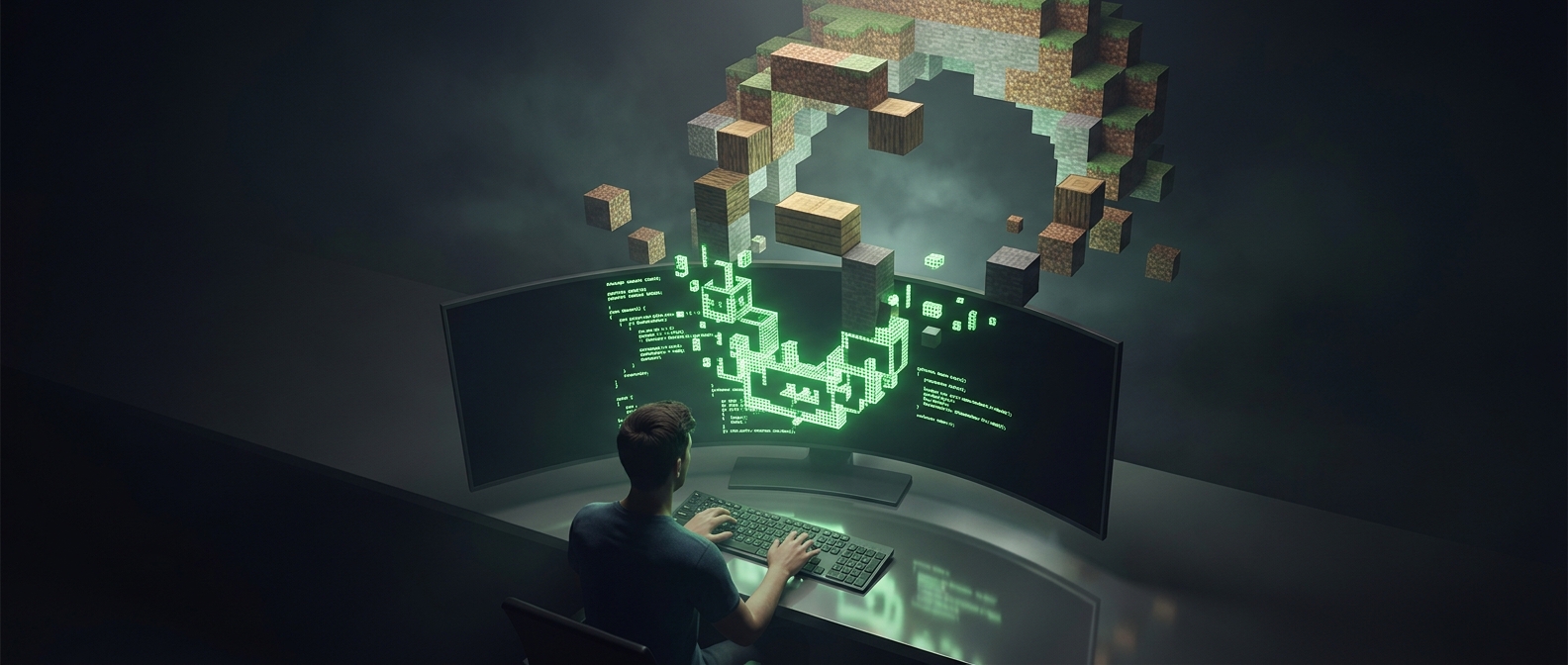
A prototype is an early, deliberately limited version of a game: it tests whether a central interaction works before developers invest in a larger world of features. For Minecraft, that interaction was unusually direct. The world was made of blocks, and players could remove them or place them elsewhere.
That simple rule made the environment both landscape and material. A hill was not just scenery; it was something a player could reshape. A block taken from one spot could become part of a wall or tower somewhere else. The prototype could therefore show whether players found open-ended construction compelling without first needing a long campaign or elaborate progression system.
What six days could—and couldn’t—establish
A working prototype is not the same thing as a finished game. It can demonstrate a playable core, while leaving major questions unanswered: how players will get resources, what challenges will give those resources meaning, and what they will do after the first construction project. Those questions can be answered through later development and playtesting rather than solved all at once.
The distinction matters because Minecraft’s later identity included far more than placing and breaking blocks. Its familiar survival routines and crafting systems built additional goals around that basic interaction. The early version’s value was not that it contained the whole franchise in miniature; it was that it made the central possibility tangible: a player could treat the game world as something to build with, not merely move through.