A portrait rescued as the capital fell
In August 1814, during the War of 1812, British troops entered Washington after American forces were defeated at the Battle of Bladensburg. The government was evacuating, and the president’s residence was in danger. Dolley Madison stayed behind long enough to help secure important belongings before leaving the city.
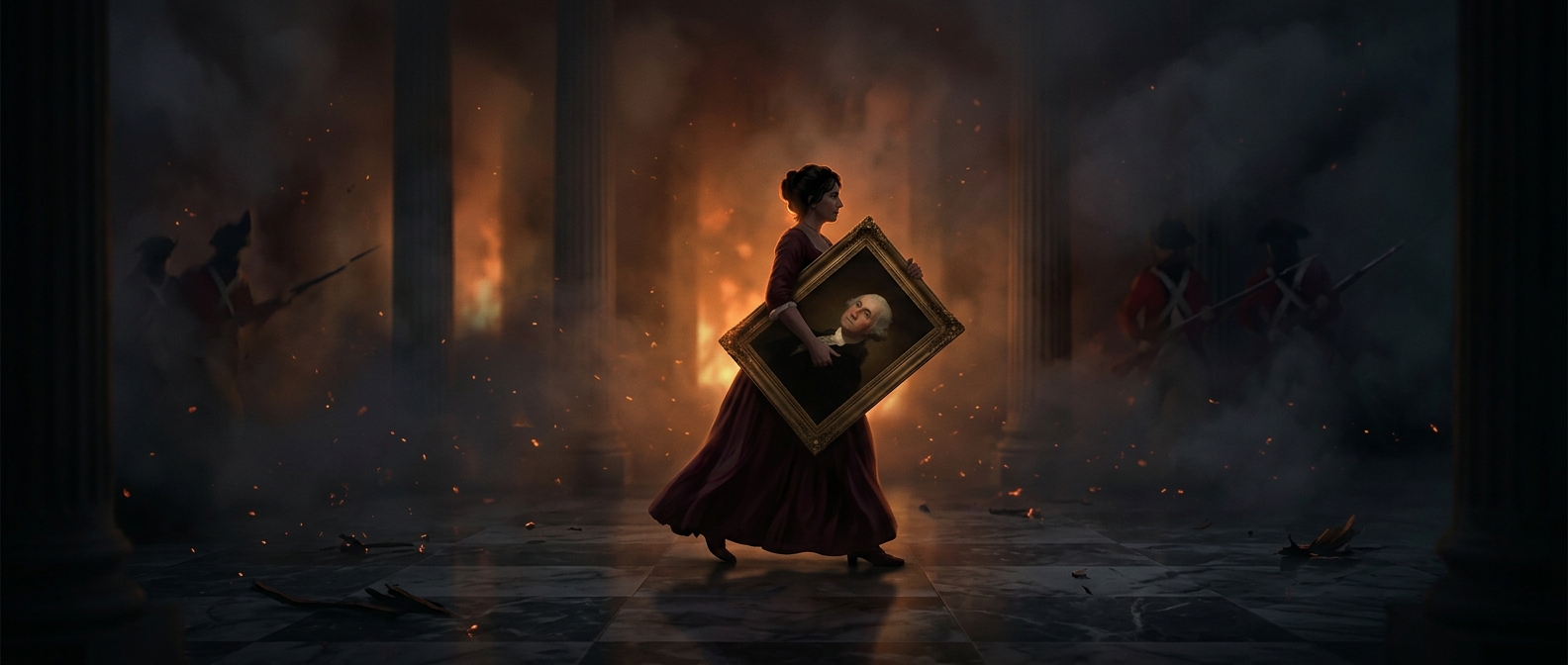
Among them was a full-length portrait of George Washington, painted by Gilbert Stuart. It was more than a decorative likeness: Washington embodied the young republic’s founding, and his image gave the executive residence a visible connection to the country’s origins.
Why the frame was left behind
The painting was large and had been fixed inside a heavy frame. There was no time to move it intact. Madison directed people with her to take it out of the frame so the canvas could be carried away; the frame, too bulky to transport quickly, was abandoned.
That practical choice mattered. A framed portrait might have been difficult to remove and carry in the confusion, while the canvas could be rolled or handled separately. The image survived; the building and its furnishings did not. British troops set fire to the White House and other public buildings that night.
A symbol carried out of the fire
The rescue later became one of the most enduring stories associated with Madison. It is often told as a dramatic personal act, but it also depended on the people who helped remove and transport the painting. The episode shows how, in a sudden retreat, preserving a symbol could mean sacrificing the object that protected it.
The portrait’s survival gave the story a tangible ending: Washington’s likeness escaped the burning capital, while the frame that had held it was left behind.