The vacuum arrived as a mobile cleaning service
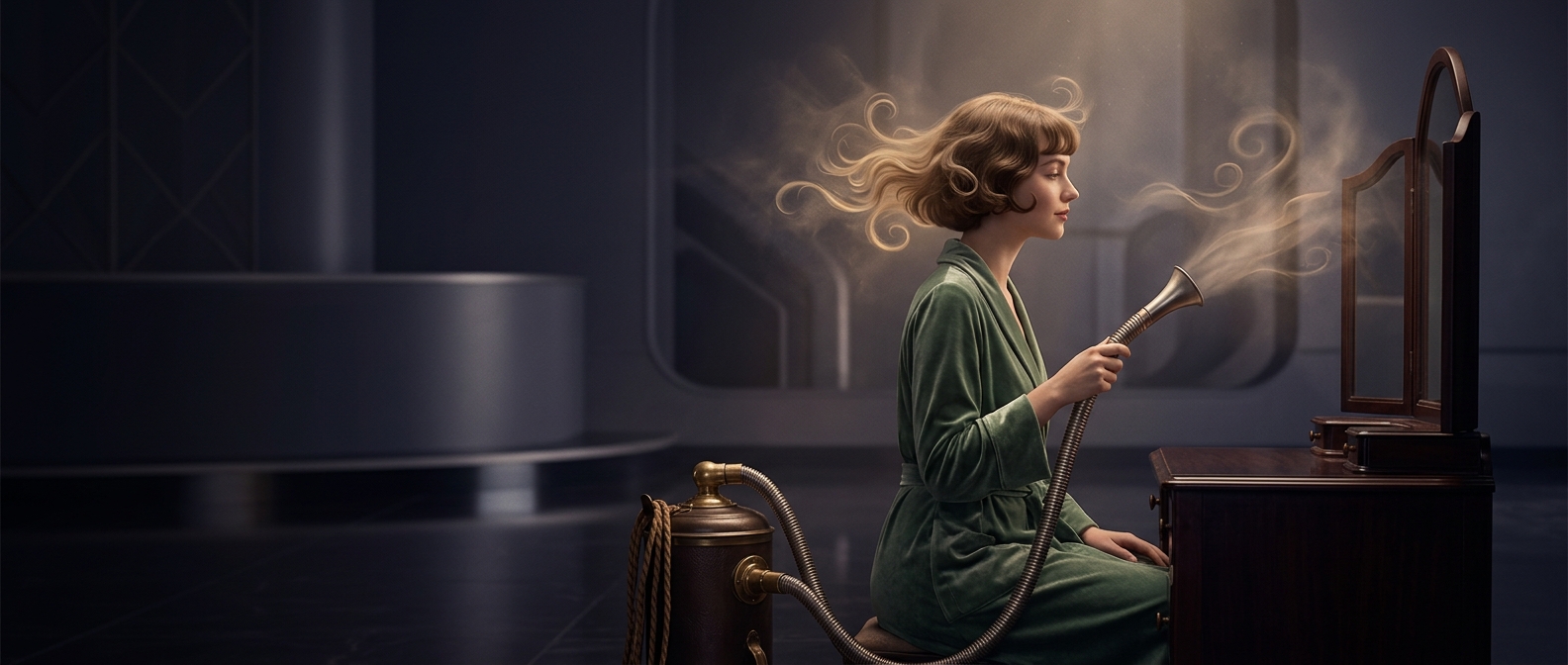
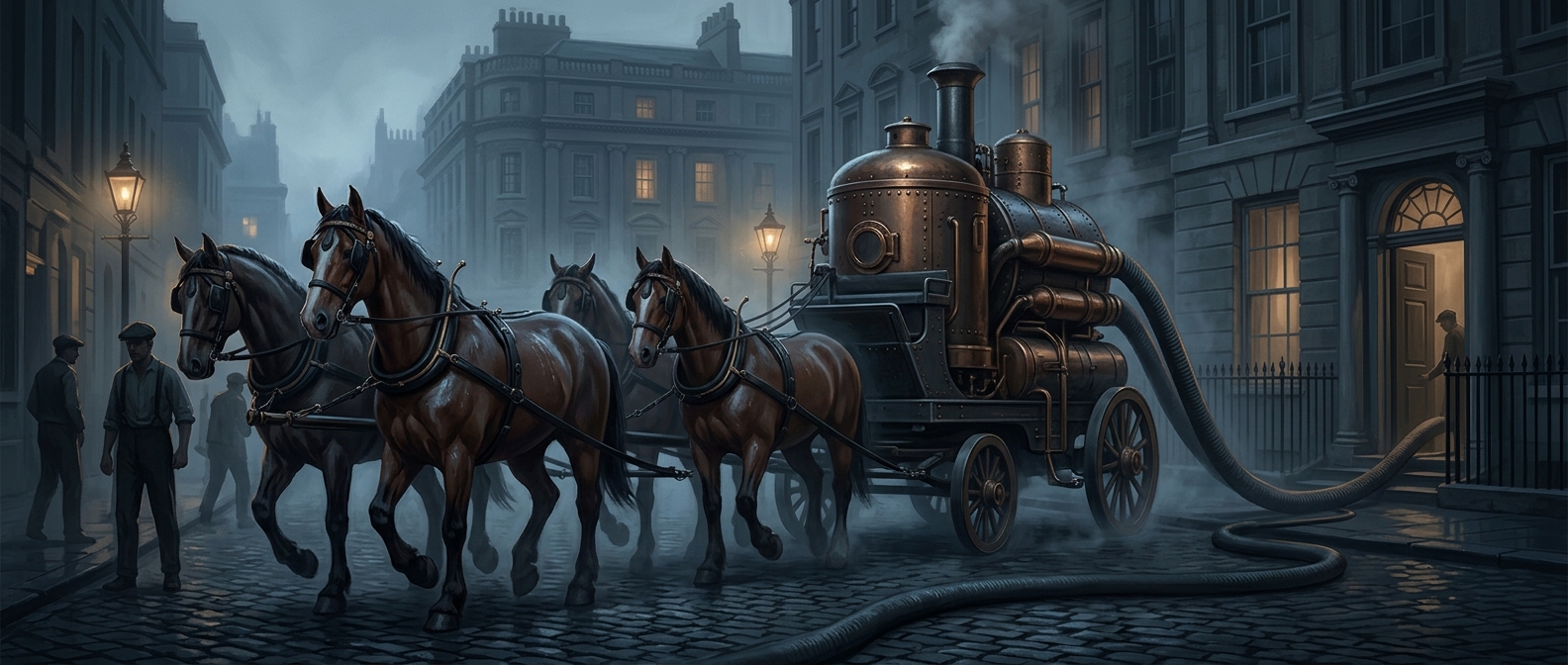
Before a motor could be made small and quiet enough for a household appliance, powered vacuuming worked more like a house call. A crew brought the machinery to the home, while the person indoors handled the hose and nozzle. The arrangement let a powerful motor serve several rooms without requiring it to cross the threshold.
How suction traveled indoors
The motor’s job was to move air through the hose. At the nozzle, that moving air carried dust and debris away from the carpet and toward a collection container on the rig. The hose turned the machine into a kind of remote power source: the noisy equipment stayed outside, but its suction reached into the house.
A long hose also imposed a practical limit. Air had to travel through it, so crews had to manage the hose’s reach and position as they worked. The setup was less convenient than a household vacuum, but it made powered cleaning possible before compact machines were practical.
Cleaning became a job you could call for
This arrangement changed vacuuming from a task done with household tools into a service delivered by a crew with specialized equipment. The striking part is the scale mismatch: a machine too cumbersome to bring indoors could still clean a room through a window, with its power—and its noise—left out on the street.