Why Woody Had to Be Someone the Audience Could Follow
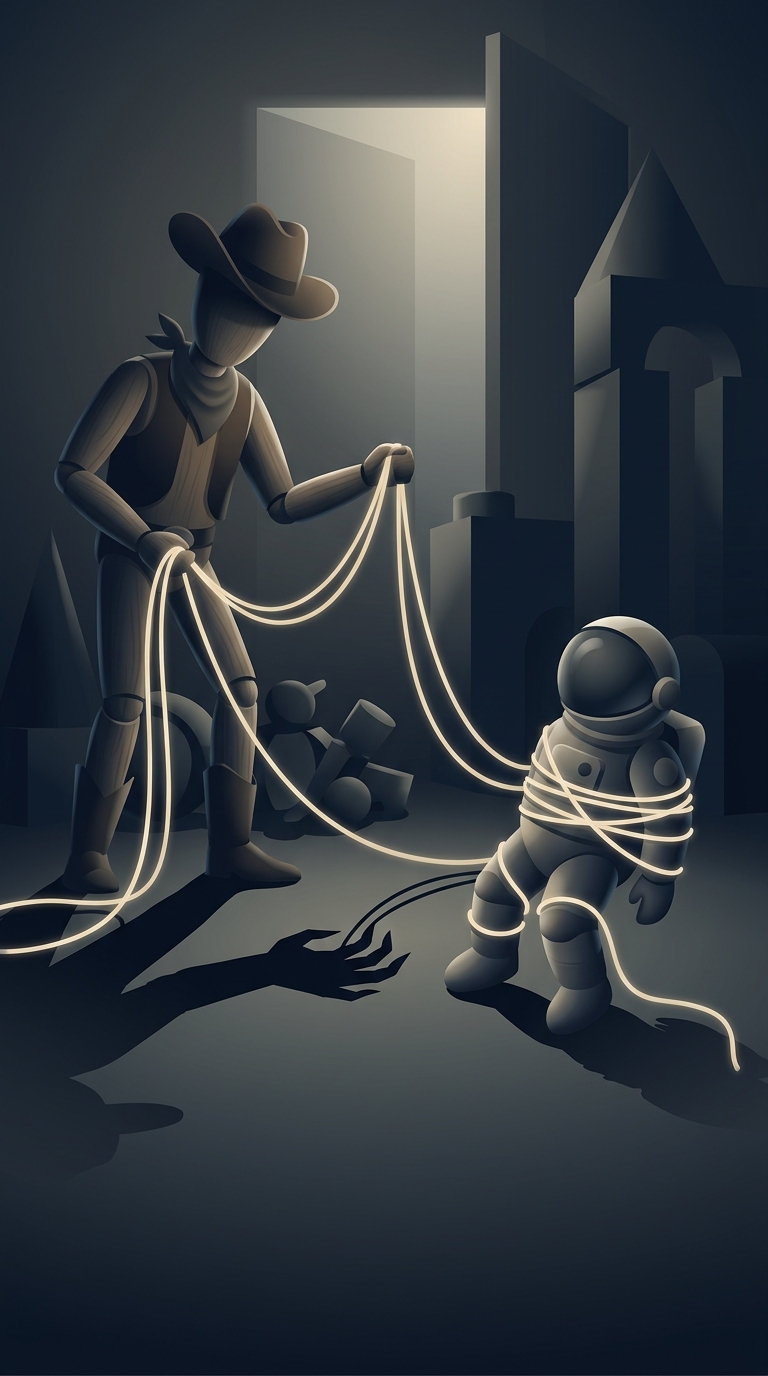
In the early version of Toy Story, Woody’s cruelty made him the toys’ clear oppressor. That gave the story an obvious villain, but it left little room for the central relationship to develop: Woody and Buzz needed to become rivals who could eventually understand and rely on each other, not simply a bully and his victim.
The rewrite changed the source of conflict. Instead of ruling the bedroom through violence, Woody could feel threatened when Buzz arrived and drew the attention he had once received. Jealousy made him flawed without making him impossible to root for. His bad choices could grow out of insecurity, then become the beginning of a character arc.
A Different Kind of Conflict
That adjustment also made the toys’ world more emotionally recognizable. A new arrival can unsettle an established place in a group; Woody’s resentment gave that disruption a personal cost. The audience could see why he acted badly while still expecting him to change.
Tom Hanks had already recorded lines for the harsher version, so the rewrite reached beyond the script: the performance, too, had to serve a less tyrannical and more vulnerable Woody. The change redirected the story from escaping a toy dictator to watching a proud character confront the possibility that his place in the room—and his friendship—might not be guaranteed.